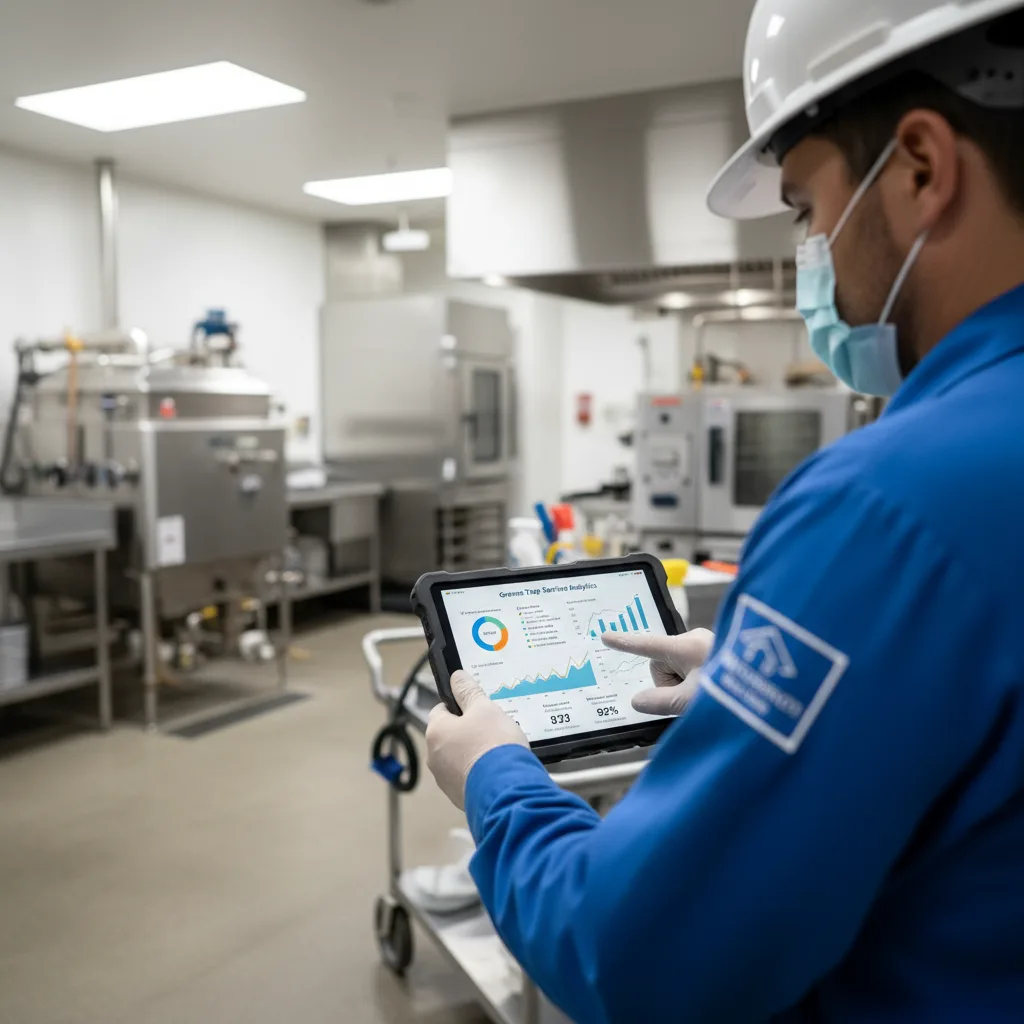

A bakery's grease-control needs depend on its menu, ingredients, production, cleaning methods, fixtures, and local rules. The word “bakery” alone does not establish an exemption, device type, size, or service interval.
Assess the actual bakery operation
Inventory mixers, pans, racks, glazing or filling stations, fryers, sinks, dishwashers, floor drains, mop sinks, and any café or sandwich service. Note where fats, oils, food residue, and wash water are generated and where each fixture discharges.
Metro Vancouver's sewer-use bylaw expressly includes bakeries among food-sector establishments within that local framework. Ontario's building-code materials and local sewer authorities use approved fixture-flow and interceptor rules. These are named examples; they do not create a single North American bakery standard.
Bakery source control
- Scrape and dry-wipe trays, pans, tools, and dishes before washing.
- Keep food solids out of sinks and floor drains using the approved screens and housekeeping procedure.
- Collect used cooking oil from fryers or other equipment in the designated container.
- Do not rely on hot water or additives to replace required interceptor service.
- Document changes in recipes, volume, café service, or equipment that may alter the approved wastewater plan.
Equipment and maintenance decisions
Submit actual fixtures, flows, equipment specifications, and proposed routing to the responsible authorities. An alternative device should be used only when the authority accepts that device and installation. Follow the local service maximum or condition trigger and adjust the working schedule when measurements show faster loading.
Keep the current approval, device information, service and disposal records, inspection correspondence, and corrective actions for the local retention period. Metro Vancouver and Toronto publish different local record rules, which is why a generic fixed period should not be copied between cities.
Related GTL guides
Frequently asked questions
Does every bakery need a grease trap?
No universal answer was found. A local program may cover bakeries or particular food-service discharges. Ask the sewer and plumbing authorities about the bakery's actual menu, fixtures, and wastewater.
Is a bakery automatically a low-FOG business?
No. Business labels do not measure the facility's discharge. Evaluate ingredients, frying, café service, cleanup, production volume, and connected fixtures.
How is bakery grease-control equipment sized?
Use the method accepted by the local authority and the actual connected fixture or flow information it requires. Do not select a size from a generic bakery label.
How often should bakery equipment be serviced?
Meet the applicable local trigger or maximum interval and use measurements to identify faster loading. Preserve the records the local program requires.
General information only: This page is not legal, engineering, plumbing, environmental, health, or safety advice.
Official sources
- U.S. EPA — Controlling FOG Discharges from Food Service Establishments
- Metro Vancouver — Sewer Use Bylaw No. 365
- Ontario — Building Code regulation
- City of Toronto — Food Service Establishment Environmental Code of Practice
- City of Portland — FOG best management practices
Fact-checked August 14, 2026. Government guidance and local rules can change; recheck the authority serving the facility before relying on any requirement.

Author: Grease Trap Locator Editorial Team
The Grease Trap Locator editorial team covers FOG compliance, grease trap maintenance, and commercial kitchen regulations across the US and Canada. Our guides are written for restaurant owners, facility managers, and food service operators who need practical, accurate information without the fluff.
Find local contractors who handle cleaning, pumping, and FOG compliance — in your area.