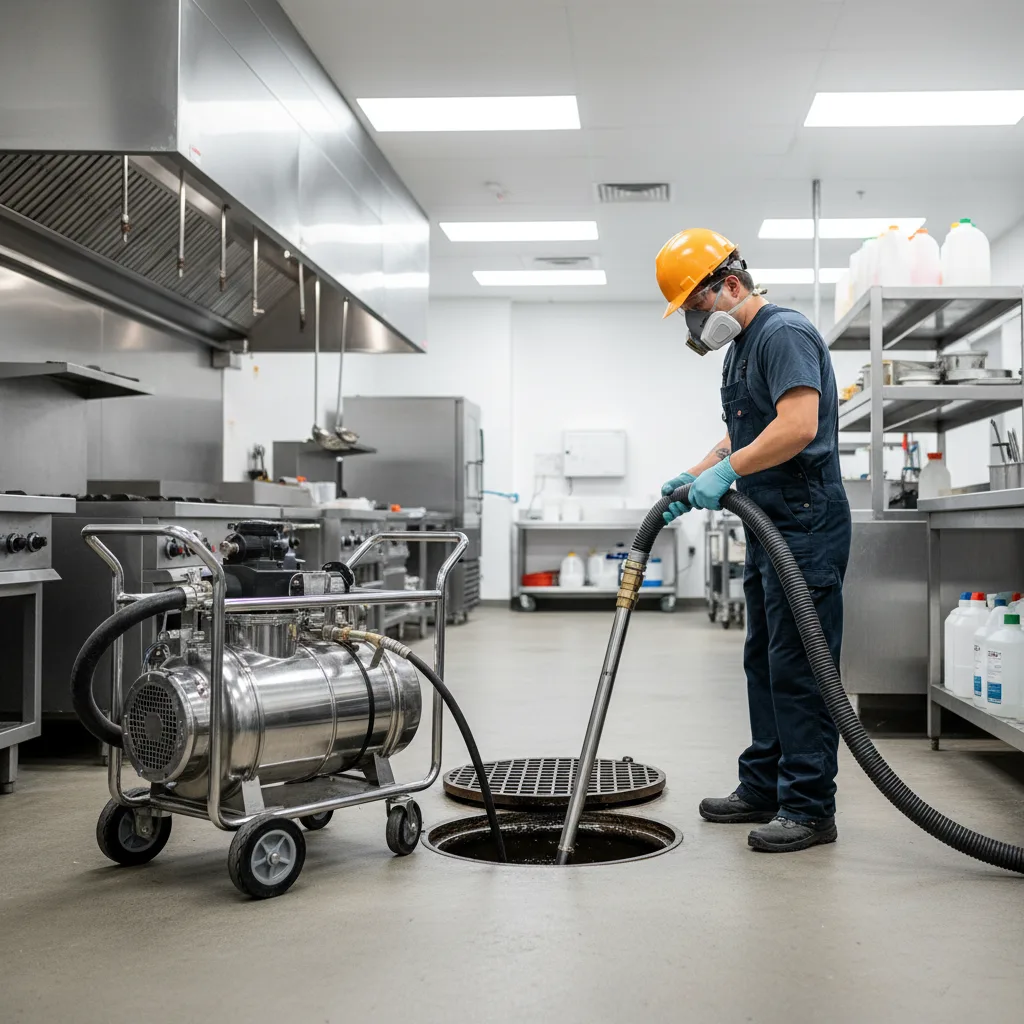

Reviewed August 15, 2026. This page addresses commercial facilities. It is not a step-by-step cleaning procedure and does not authorize a worker to open, probe, enter, pump, scrape, or handle grease-device contents.
Can you clean a commercial grease trap yourself? The answer depends on the controlling local program, installed equipment, property rules, waste requirements, and workplace-safety conditions. Do not use device size alone to decide. Obtain the written requirements before anyone performs the work.
Start with authorization, not tools
Ask the public sewer or pretreatment authority which rules apply to the facility and device. Confirm whether the program requires a registered, permitted, or otherwise qualified provider; which service, transport, disposal, and recordkeeping rules apply; and whether the facility has additional permit or approval conditions.
Check the exact equipment documentation and the facility’s safety program. Property-management rules, food-safety procedures, worker training, and manufacturer instructions may impose additional limits even when a public program allows some owner maintenance.
Safe owner preparation checklist
- Identify the device and gather available installation, manufacturer, permit, and prior service records.
- Obtain the current written requirements from the controlling sewer and waste authorities.
- Keep the normal access route clear without opening or disturbing the equipment.
- Note operational symptoms such as drainage changes, odors, backup, overflow, or reported damage without leaning over or entering the device.
- Confirm which kitchen areas or activities must be unavailable while a qualified provider works.
- Arrange a responsible facility contact to review the written scope and receive required service records.
Conditions that require qualified help
Do not open or enter equipment when there is strong odor, poor ventilation, uncertainty, restricted access, damage, backup, overflow, or any concern about gas exposure. Leave the immediate area, protect workers and customers, and contact a qualified service provider. Never enter an interceptor.
OSHA identifies hazards associated with grease traps and warns that hydrogen sulfide can be toxic and flammable, particularly in low or enclosed spaces. Those sources do not prove that every device has a hazardous atmosphere; they do show why generic DIY instructions are not a safe authorization.
Waste and additives are local decisions
Do not discharge collected material to plumbing. Before arranging any handling or disposal, obtain the written requirements of the local sewer authority and any applicable waste authority. Disposal rules are not uniform: Seattle publishes a local route for material from certain small devices, while Florida has a state-specific hauler and manifest framework.
Do not add chemicals, enzymes, bacteria, or emulsifiers unless the local wastewater authority and installed-device manufacturer expressly permit the specific product and use. Additives do not replace required service or disposal practices.
What to request from a service provider
Ask for a written description of the equipment covered, included and excluded work, access assumptions, records supplied, disposal-related charges, additional fees, and follow-up recommendations. Provider availability, service area, credentials, and response are not guaranteed; verify the requirements directly.
Use the professional service-scope guide to compare proposals and the frequency decision guide to identify the applicable local schedule.
Frequently asked questions
Can restaurant staff clean a small grease trap?
Do not decide from size alone. Confirm the local program, equipment, property, waste, and workplace-safety requirements in writing before assigning any work.
Should staff open the device to check whether it is full?
Not based on this guide. Ask the controlling authority which authorized records or inspection method it accepts. Never enter an interceptor or approach uncertain open equipment.
What if there is a strong odor or poor ventilation?
Keep people away, do not open or enter the equipment, leave the immediate area, and contact qualified help. Follow the facility’s emergency and safety procedures.
Can the waste go into the trash?
There is no safe national yes-or-no answer for every device and jurisdiction. Obtain the written disposal requirements from the local sewer and waste authorities before arranging handling.
Can additives reduce the need for service?
Do not use additives as a substitute for required maintenance. Use a specific product only when both the local wastewater authority and the equipment manufacturer permit it.
Official sources
- OSHA: Grease Trap Hazards
- OSHA: Hydrogen Sulfide Overview
- Seattle Utilities: Commercial Kitchen FOG Guidance (Seattle only)
- Florida Statutes: Grease Waste Removal and Disposal (Florida only)
- Portland: Grease Interceptor Maintenance (Portland only)

Author: Grease Trap Locator Editorial Team
The Grease Trap Locator editorial team covers FOG compliance, grease trap maintenance, and commercial kitchen regulations across the US and Canada. Our guides are written for restaurant owners, facility managers, and food service operators who need practical, accurate information without the fluff.
Find local contractors who handle cleaning, pumping, and FOG compliance — in your area.