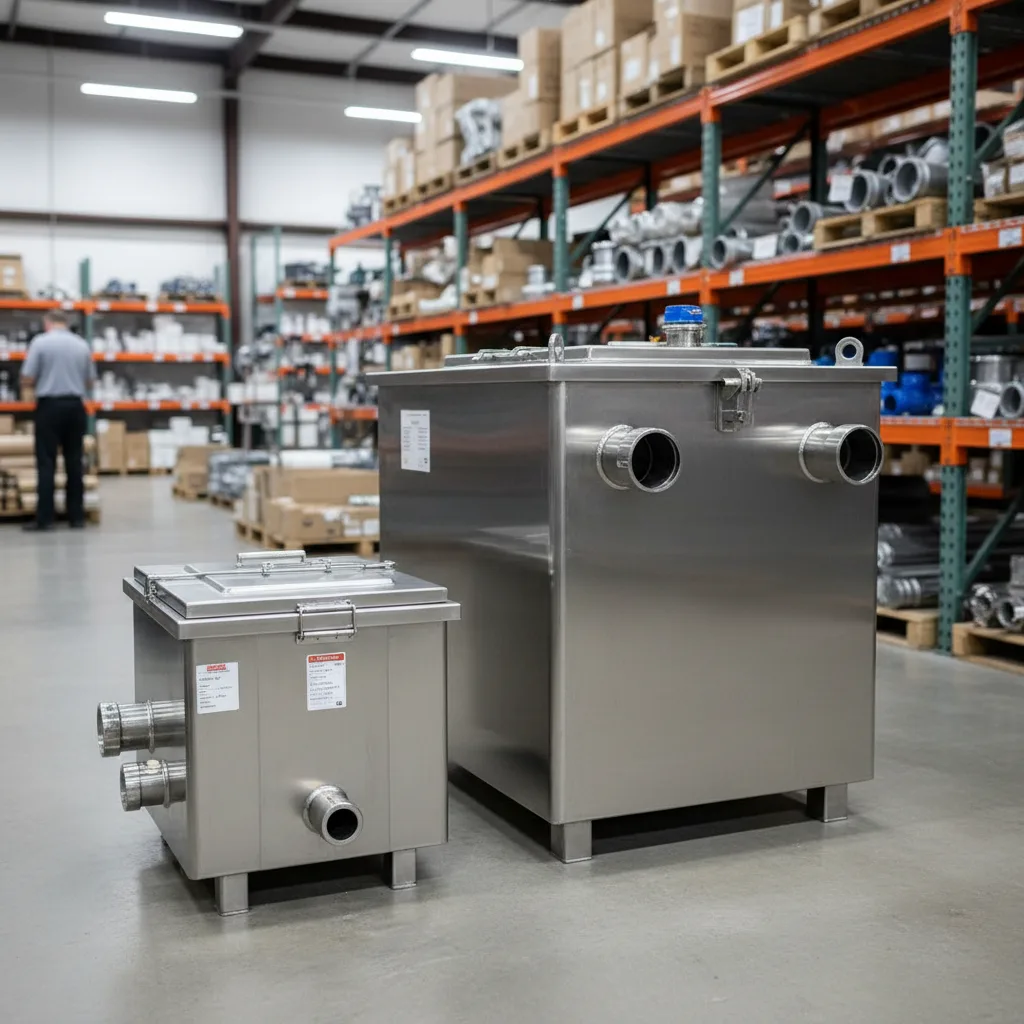
Grease trap service in Dallas typically costs between $150 and $600 per cleaning, with most commercial kitchens paying $250–$400 for quarterly maintenance. Pricing depends on trap size, service frequency, and accessibility, while Dallas municipal codes require regular cleaning to prevent FOG (fats, oils, and grease) violations that carry fines up to $2,000 per day.
This guide breaks down what Dallas restaurant owners and facility managers actually pay for grease trap service, how local regulations affect your costs, and what separates reliable providers from problematic ones in the DFW metro area.
What Affects Grease Trap Service Costs in Dallas?
Dallas grease trap service pricing varies based on five primary factors that determine both labor requirements and disposal complexity. Trap capacity is the dominant cost driver—a 50-gallon under-sink trap costs significantly less to service than a 1,500-gallon outdoor interceptor that requires vacuum truck access and specialized equipment.
Service frequency directly impacts your per-visit cost. Monthly maintenance contracts typically reduce the per-cleaning price by 15–25% compared to on-demand service calls. Dallas providers quote lower rates for predictable, scheduled work because route optimization reduces their fuel and labor costs. A kitchen running at high volume may need biweekly service, while lower-volume operations can often maintain compliance with quarterly cleanings.
Accessibility creates substantial cost variation across Dallas properties. Ground-level traps with clear vehicular access cost less to service than basement installations requiring hose extensions or rooftop units accessed through narrow alleys. Downtown Dallas locations with restricted parking or loading dock scheduling often incur surcharges of $50–$100 per visit due to the logistical complexity.
Schedule your grease trap service during off-peak hours (typically Tuesday–Thursday mornings) to avoid rush-hour traffic delays that can increase service time and costs. Providers often offer 10–15% discounts for mid-week morning appointments.
Waste disposal fees fluctuate based on grease composition and local disposal facility rates. Dallas waste haulers pay tipping fees at authorized facilities, and these costs get passed to customers. Traps with high solid content or contaminated waste (chemicals, non-organic debris) cost more to dispose of properly. Understanding grease trap cleaning cost by city helps contextualize how Dallas pricing compares to other Texas markets.
Emergency service calls command premium pricing—expect to pay 50–100% more than standard rates for same-day or after-hours service. A backed-up trap on a Friday evening before a busy weekend can cost $600–$900 to remediate, compared to $300–$400 for the same work during a scheduled Monday morning appointment.
How Much Do Dallas Grease Trap Services Actually Charge?
Dallas grease trap service costs follow predictable patterns based on trap type and service scope. Small under-sink traps (20–50 gallons) typically cost $150–$250 per cleaning when serviced monthly or quarterly. These units serve single prep stations or small cafés and require 30–45 minutes of technician time.
Mid-sized interior traps (100–500 gallons) represent the most common commercial installation in Dallas restaurants, and service costs range from $250–$450 per visit. These traps handle full-service restaurant kitchens with multiple cooking stations and dishwashing operations. Cleaning requires 1–2 hours and generates 200–400 gallons of waste requiring proper disposal.
| Service Type | Typical Dallas Cost Range |
|---|---|
| Small trap cleaning (20–50 gal) | $150–$250 |
| Medium trap cleaning (100–500 gal) | $250–$450 |
| Large interceptor cleaning (1000+ gal) | $500–$900 |
| Emergency/same-day service | +50–100% premium |
| Monthly maintenance contract (avg) | $275–$425/month |
Large outdoor interceptors (1,000+ gallons) serving high-volume kitchens, hotels, or institutional facilities cost $500–$900 per cleaning. These jobs require vacuum truck deployment, multiple technicians, and 2–4 hours of on-site work. The complexity of pumping, scraping interior surfaces, and ensuring complete waste removal justifies the higher pricing.
Monthly service contracts provide cost predictability for Dallas operators. A typical 300-gallon trap serviced monthly under contract costs $300–$400 per visit, compared to $400–$500 for the same work billed as one-time service. Annual contract costs for most Dallas restaurants range from $3,600 to $5,400 depending on trap size and service frequency requirements.
Additional charges appear for specific services beyond standard pumping and cleaning. Hydro-jetting to clear blocked drain lines costs $150–$300. Trap repairs or gasket replacement add $75–$200 depending on parts and labor. Some providers charge trip fees ($50–$75) for locations outside their primary service radius, though most waive this for contract customers.
Dallas Grease Trap Regulations and Compliance Requirements
Dallas operates under a strict FOG management program administered by Dallas Water Utilities that mandates regular grease trap maintenance for all food service establishments. The city requires food service facilities to install, maintain, and service grease interceptors according to specifications based on fixture unit counts and daily wastewater discharge volumes.
Service frequency requirements depend on trap performance—not arbitrary schedules. Dallas regulations state that traps must be cleaned when they reach 25% capacity of fats, oils, and grease accumulation. Most commercial kitchens reach this threshold every 30–90 days depending on cooking volume and menu composition. High-volume operations serving fried foods may require biweekly service, while bakeries or coffee shops might maintain compliance with quarterly cleanings.
Dallas requires licensed service providers to submit cleaning manifests to Dallas Water Utilities within 30 days of each service. Missing documentation can result in compliance violations even if your trap was properly cleaned. Always verify your service provider handles manifest submission.
Documentation requirements create compliance obligations for both service providers and facility operators. Licensed haulers must complete waste manifests detailing the date of service, waste volume removed, disposal location, and trap condition. Dallas facility operators must retain these records for at least three years and make them available during city inspections.
Permit requirements apply to new installations and significant modifications. Any grease trap installation, replacement, or capacity change requires a plumbing permit from the city's Development Services Department. The permit process includes plan review to verify proper sizing based on fixture units and compliance with the city's FOG control ordinance. Understanding grease trap regulations Texas helps contextualize Dallas-specific requirements within the broader state framework.
Violation penalties escalate quickly for non-compliance. First-time violations typically result in warning notices with 30-day correction periods. Subsequent violations or failures to correct issues trigger fines starting at $500 per day and escalating to $2,000 per day for chronic violators. Severe cases involving sanitary sewer overflows or environmental contamination can result in facility closure orders until compliance is achieved.
The cost of preventive maintenance is always less than the cost of emergency repairs, compliance violations, and business disruption caused by neglected grease traps.
Choosing a Reliable Grease Trap Service Provider in Dallas
Selecting the right grease trap service provider in Dallas requires evaluating credentials, service quality, and business practices beyond just comparing price quotes. Licensing verification should be your first screening criterion—legitimate Dallas providers hold proper hauler permits and maintain commercial liability insurance covering their operations.
Service scope varies significantly among Dallas providers. Full-service companies handle trap pumping, interior scraping, component inspection, drain line maintenance, and manifest submission as standard practice. Budget providers may only pump liquid waste without proper interior cleaning, leaving accumulated solids that reduce trap efficiency and accelerate the need for the next service.
Response time and availability matter for Dallas food service operations where downtime equals lost revenue. Evaluate providers based on their standard service windows, emergency response capabilities, and backup equipment availability. Companies operating multiple trucks can typically accommodate urgent requests better than single-truck operations that may leave you waiting days during busy periods.
Request references from providers and contact at least two current customers operating similar facilities in Dallas. Ask specifically about service consistency, documentation accuracy, and how the provider handled any issues or scheduling conflicts.
Contract terms deserve careful review before signing service agreements. Monthly contracts with 30-day cancellation provisions offer flexibility, while annual contracts with automatic renewal clauses can lock you into unfavorable terms. Understand exactly what services are included in quoted rates—some providers charge separately for disposal fees, trip charges, or after-hours service that others include in base pricing.
Local expertise provides tangible benefits in navigating Dallas-specific regulations and inspection processes. Providers with established Dallas operations understand local inspector expectations, can advise on compliance issues, and maintain relationships with city officials that can expedite permit processes or resolve documentation questions. Exploring grease trap services in Texas helps identify providers with strong regional presence and multi-location service capabilities.
Frequently Asked Questions About Dallas Grease Trap Service
How often do I need grease trap cleaning in Dallas?
Most Dallas commercial kitchens require grease trap cleaning every 30–90 days to maintain the 25% capacity threshold mandated by city regulations. High-volume restaurants serving fried foods typically need monthly service, while lower-volume operations may comply with quarterly cleanings. Your specific frequency depends on cooking volume, menu type, and trap size relative to wastewater output.
What is the average cost of grease trap pumping in Dallas?
Dallas grease trap pumping costs $150–$600 per service depending on trap size and accessibility, with most commercial kitchens paying $250–$400 per cleaning. Monthly service contracts reduce per-visit costs by 15–25% compared to one-time service calls. Emergency or after-hours service carries premium pricing of 50–100% above standard rates.
Do I need a permit to install a grease trap in Dallas?
Yes, Dallas requires plumbing permits for all new grease trap installations, replacements, or capacity modifications issued through the Development Services Department. The permit process includes plan review to verify proper sizing based on fixture units and compliance with the city's FOG management ordinance. Installation must be performed by licensed plumbers familiar with Dallas code requirements.
What happens if I don't maintain my grease trap in Dallas?
Neglecting grease trap maintenance in Dallas results in FOG violations carrying fines from $500 to $2,000 per day depending on severity and violation history. Beyond penalties, unmaintained traps cause drain backups, sanitary issues, costly emergency repairs, and potential business closure orders during health inspections. Preventive maintenance costs far less than violation penalties and operational disruption.
Can I clean my own grease trap in Dallas?
Dallas regulations require licensed waste haulers to pump and dispose of grease trap waste at approved facilities, making DIY complete cleaning impractical for most operators. While you can perform daily basket straining and minor maintenance tasks, proper trap pumping requires vacuum equipment and legal waste disposal that only licensed providers can execute while maintaining compliance documentation.
Finding a reliable grease trap service provider in Dallas protects your operation from compliance violations, prevents costly emergency repairs, and ensures uninterrupted business operations. The investment in professional maintenance delivers returns through avoided penalties, extended equipment life, and elimination of sanitary issues that damage your reputation. Find verified grease trap services in your area.
Find verified, local contractors who handle cleaning, pumping, and FOG compliance — in your area.
