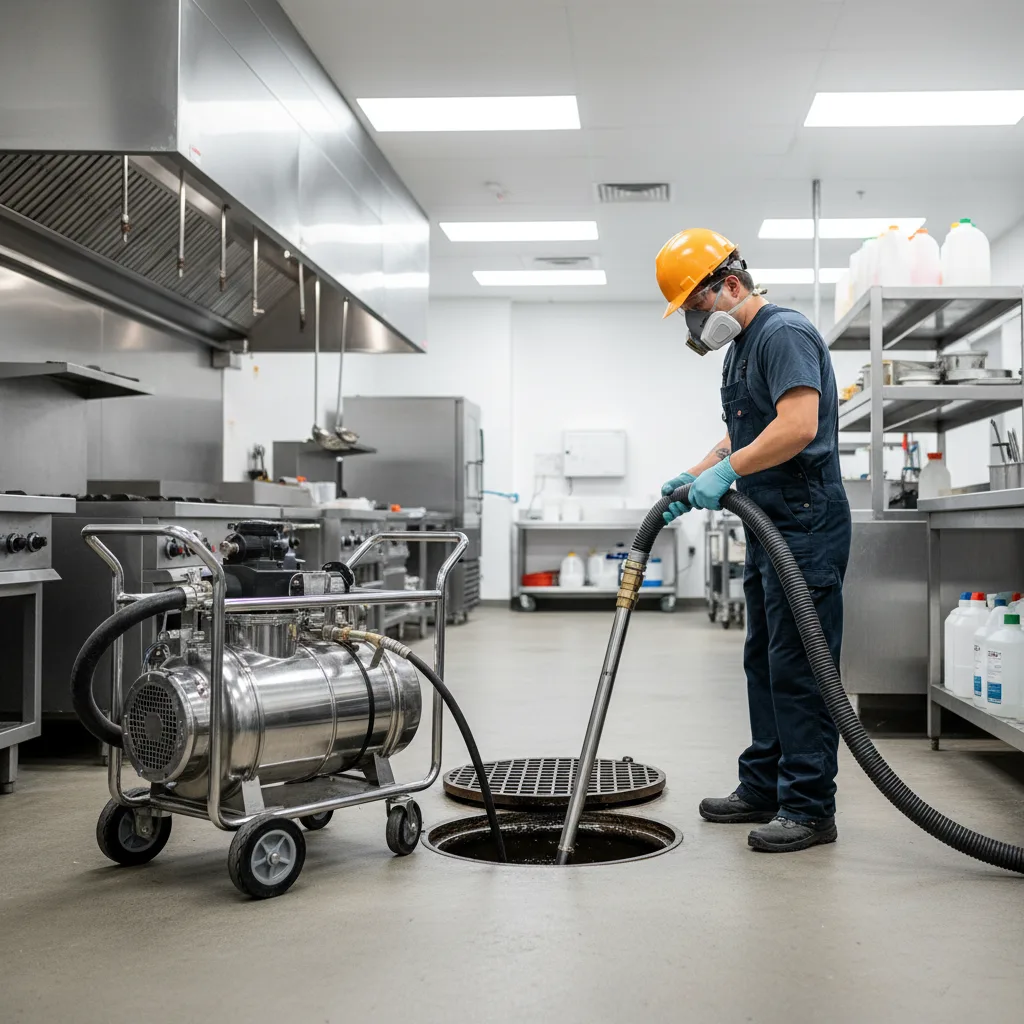

Reviewed August 15, 2026. Providers and local programs do not always use the words pumping, pump-out, and cleaning in the same way. The label on a proposal does not prove which work, records, or disposal arrangements are included.
For a commercial facility, the safest comparison is a written service scope checked against the local wastewater requirement and the installed equipment.
What to confirm before booking service
- Equipment covered: identify the trap, interceptor, or other device included in the proposal.
- Included work: ask what material, accessible areas, inspection observations, cleanup, transport, and documentation are included.
- Excluded work: ask whether drain clearing, repairs, difficult access, emergency work, or additional material will be billed separately.
- Local authorization: confirm with the wastewater authority whether a registered, permitted, or otherwise qualified provider is required.
- Records: ask which service and disposal documents will be supplied and compare them with the local program’s requirements.
- Site controls: confirm which kitchen areas, drains, or work activities must be unavailable during the visit and who will control access.
Read the transcript
Restaurant owner: So… what’s this going to cost?
Narrator: That depends. Here are three things that can change it.
Narrator: One: size. It can change the pumping and disposal work.
Narrator: Two: how full it is, and how long it’s been.
Restaurant owner: …It’s been a while.
Narrator: Hardened grease can take longer to clear.
Narrator: Three: access. How easy it is to reach.
Narrator: Find grease trap services near you on GreaseTrapLocator, and contact them directly.
On screen: Find grease trap services near you. greasetraplocator.com. Free to use.
During the provider’s visit
Arrange a responsible facility contact and a safe method for receiving the service record. Ask the provider how it will access the equipment, control spills, and protect nearby work areas. Do not enter restricted work areas or approach an open interceptor access point.
If an explanation is needed, ask for a safe observation location or a post-service review. Service time varies with equipment, access, accumulated material, provider procedures, and local requirements; duration alone does not establish whether the written scope was completed.
After service
Review the provider’s record against the agreed scope. Note the equipment serviced, date, observations, documents supplied, and any excluded or follow-up work. If damage is reported, obtain a qualified assessment and follow applicable repair and reporting requirements.
Keep the records required by the local wastewater authority. Disposal, transport, manifest, and retention rules differ by jurisdiction. Florida, for example, has a state-specific grease-waste manifest framework, while other programs use different documents and processes.
Cleaning, pumping, and drain work are not interchangeable promises
One provider may use “pumping” for a broad service while another uses it for a narrower scope. A local program may define terms differently again. Drain cleaning also addresses different equipment from interceptor service. Avoid a universal definition: require the proposal to describe the work and confirm that it satisfies the applicable local requirement.
For a shorter comparison checklist, see Grease Trap Pumping vs. Cleaning. To establish when service is required, use the local-first frequency guide.
Safety boundary
Grease-device work may involve heavy covers, falls, biological exposure, and potentially dangerous atmospheres. Service methods depend on the equipment and site. Never enter an interceptor. Use a qualified provider that follows its safety procedures, the equipment documentation, and applicable local requirements.
Frequently asked questions
Is grease trap pumping different from cleaning?
Sometimes, but the terms are not standardized. Ask for a written scope describing what will be removed, cleaned, inspected, transported, and documented.
How long should professional service take?
There is no reliable universal duration. Equipment, access, accumulated material, safety controls, provider procedures, and the agreed scope all affect timing.
Does every service require a licensed hauler and manifest?
Requirements vary. Ask the local wastewater and waste authorities whether a registered, permitted, or otherwise qualified provider is required and which records the facility must retain.
Can drain cleaning replace interceptor service?
Do not assume so. The services address different equipment and scopes. Check the local requirement and obtain a written description of the proposed work.
What should happen if the provider reports damage?
Document the observation, obtain a qualified repair assessment, and ask the local authority whether reporting or approval is required before the equipment returns to normal service.
Official sources
- OSHA: Grease Trap Hazards
- OSHA: Hydrogen Sulfide Overview
- Florida Statutes: Grease Waste Removal and Disposal (Florida only)
- Seattle Utilities: Commercial Kitchen FOG Guidance (Seattle only)

Author: Grease Trap Locator Editorial Team
The Grease Trap Locator editorial team covers FOG compliance, grease trap maintenance, and commercial kitchen regulations across the US and Canada. Our guides are written for restaurant owners, facility managers, and food service operators who need practical, accurate information without the fluff.
Find local contractors who handle cleaning, pumping, and FOG compliance — in your area.