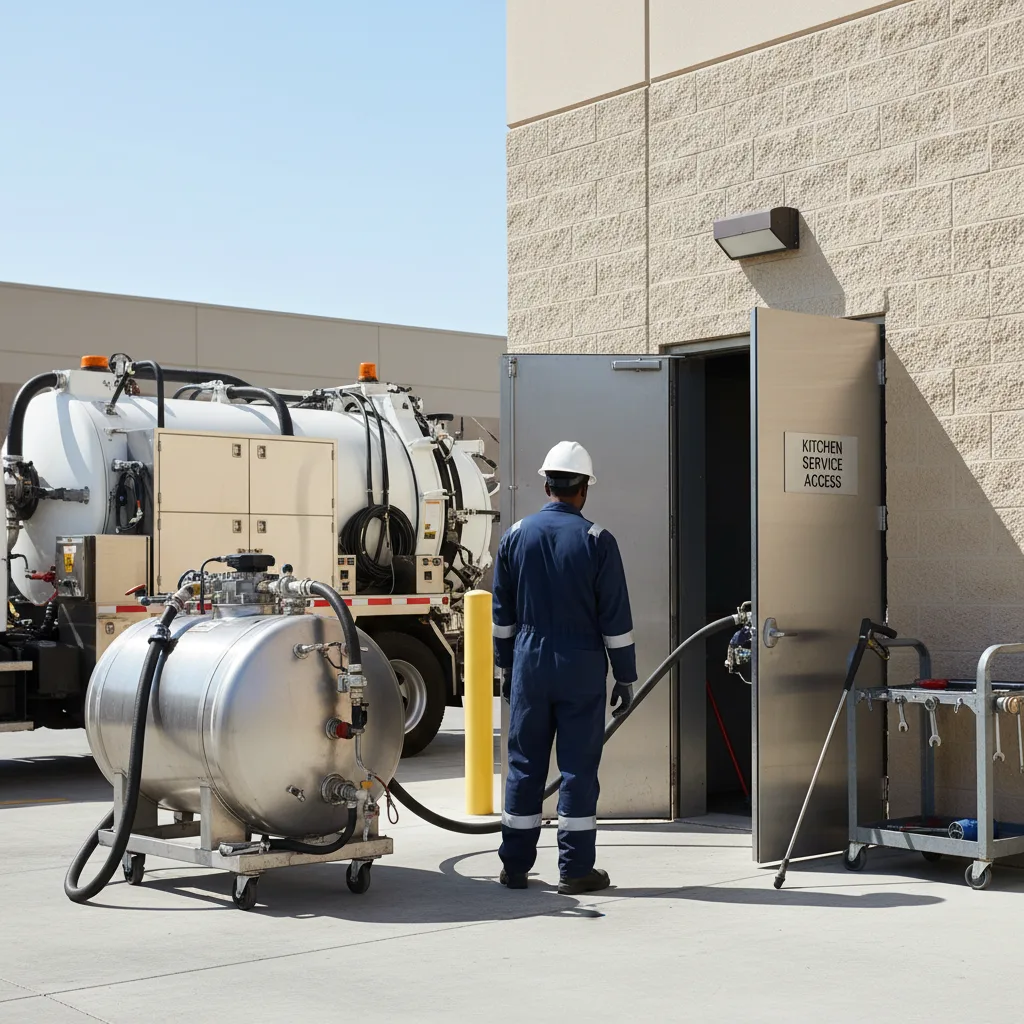
Watts grease interceptors combine steel construction with hydromechanical flow control to capture fats, oils, and grease before they enter municipal sewer lines. Commercial kitchens across North America rely on Watts models ranging from 20 GPM to 100 GPM for code-compliant grease management. This guide covers model selection, sizing calculations, and installation requirements to help you choose the right interceptor for your operation.
What Makes Watts Grease Interceptors Different
Watts grease interceptors use a three-compartment design that slows water flow, allowing grease to separate and rise to the surface while solids settle to the bottom. The middle compartment creates a baffle system that traps floating grease as cleaner water exits through the discharge outlet. Unlike passive grease traps, Watts interceptors include flow control devices that regulate water velocity regardless of incoming pressure.
The interceptor body consists of epoxy-coated steel rated for corrosive wastewater environments. Most models feature welded seams rather than bolted connections, reducing the risk of leaks during thermal expansion. The gasketed covers include vent assemblies that prevent sewer gas accumulation while allowing trapped air to escape during filling cycles.
Match your Watts model to peak dishwasher discharge rates, not average flow. A commercial dishwasher dumps 40–50 gallons in under two minutes, creating surges that exceed the GPM rating if you size based on drain count alone.
Watts manufactures both automatic and semi-automatic models. Automatic interceptors (like the WD-A series) include grease draw-off mechanisms that remove accumulated FOG when the layer reaches a specific thickness. Semi-automatic models require manual skimming but cost 30–40% less upfront. Your choice depends on whether you have staff available for weekly maintenance or prefer longer service intervals.
Watts Model Lineup and Capacity Ratings
The WD series represents Watts' primary commercial interceptor line, with models differentiated by flow rate and grease capacity. The WD-20 handles 20 gallons per minute with 40 pounds of grease storage — sufficient for single-bay operations or small cafes. Mid-range models like the WD-50 process 50 GPM with 100-pound capacity, fitting full-service restaurants with 3–4 prep sinks and a three-compartment warewash setup.
The GI-75-K model serves high-volume kitchens with 75 GPM flow and 150-pound grease capacity. This unit measures approximately 48" × 30" × 48" and requires floor reinforcement in older buildings due to its 800-pound operating weight. Large chains and institutional kitchens often specify the GI-100 for 100 GPM throughput, though this model needs dedicated mechanical space with overhead clearance for pump-out access.
Specialty models include the WD-15-HT high-temperature variant rated for 180°F continuous exposure. Standard Watts interceptors handle 140°F intermittent discharge, but operations with sanitizing rinse cycles or steam kettles need the HT designation to prevent epoxy coating failure. The additional cost runs $200–300 over standard models but eliminates premature replacement due to thermal stress cracking.
Each model includes inlet and outlet connections sized to match typical commercial plumbing — most use 3-inch or 4-inch no-hub fittings. Venting assemblies come standard with all units, though local codes may require additional vent sizing for installations serving more than six fixtures. Check your jurisdiction's plumbing code before finalizing the model, as some municipalities mandate minimum grease capacity regardless of calculated flow requirements.
Sizing Your Watts Grease Interceptor
Accurate sizing starts with fixture unit calculations based on connected drains. Each sink, dishwasher, and floor drain contributes fixture units that convert to GPM using the drainage fixture unit (DFU) table in the International Plumbing Code. A standard three-compartment sink generates 6 DFU, while a commercial dishwasher adds 4–6 DFU depending on machine size. Total your fixture units, then multiply by 7.5 gallons per minute to establish minimum flow capacity.
Grease production determines capacity requirements separate from flow rate. The formula multiplies meals served per hour by 0.25 pounds of grease per meal, adjusted for menu type. A steakhouse produces 40% more grease than a salad bar, requiring capacity adjustments even when fixture counts match. Most health departments require interceptors sized to store one week of grease accumulation between pump-outs, though high-volume operations may need twice-weekly service regardless of capacity.
Undersizing a grease interceptor by even one capacity tier doubles your pumping frequency and often leads to code violations within six months of operation.
Temperature reduction factors into sizing for operations discharging water above 140°F. Hot water holds grease in suspension longer, requiring 25–30% additional retention time for proper separation. If your dishwasher final rinse exceeds 160°F, size up one model tier or install a cooling tank upstream of the interceptor to bring temperatures into the optimal 90–110°F separation range.
Installing an interceptor smaller than code-required capacity can void your operating permit and create liability during grease-related sewer backups. Always have a licensed plumber verify sizing calculations before purchase.
Consider future expansion when sizing your unit. Adding a fryer or expanding dining capacity within three years of installation typically requires interceptor upgrades unless you sized 15–20% above minimum requirements initially. The cost difference between a WD-50 and WD-75 runs $600–900, but upgrading later involves removal, disposal, and reinstallation costs exceeding $3,000 in most markets.
Installation Requirements and Best Practices
Watts interceptors install indoors in areas with ambient temperatures between 40°F and 120°F. Outdoor installations require heated enclosures to prevent grease solidification during cold weather. The interceptor needs level mounting on a reinforced concrete pad capable of supporting 1.5 times the unit's operating weight — critical for models above 50 GPM that exceed 1,000 pounds when full.
Inlet piping must maintain minimum slope of 1/4 inch per foot to prevent grease accumulation in horizontal runs upstream of the interceptor. Avoid 90-degree elbows within six feet of the inlet connection, as turbulence disrupts the laminar flow pattern needed for proper separation. Long-sweep elbows or twin 45-degree fittings preserve flow characteristics while navigating obstacles in tight mechanical spaces.
Venting connects to the building's drain-waste-vent system according to local plumbing code — typically requiring a 2-inch vent pipe extending above the roofline. Some jurisdictions allow air admittance valves on interceptor vents, reducing installation complexity when connecting to the main vent stack proves impractical. Confirm local acceptance before specifying AAVs, as jurisdictions with separate grease ordinances often prohibit them on commercial interceptors.
Install a sample port (test tee) on the discharge line 12–18 inches downstream of the interceptor outlet. Inspectors use this port to verify effluent quality during compliance checks, and its absence can delay permit approval.
Access for pump-out service requires minimum clearances: 36 inches in front of the cover for hose insertion and 24 inches overhead for cover removal. Many installers position interceptors too close to walls or under low ductwork, forcing pump trucks to charge extra for difficult access or requiring partial disassembly during service. Measure your mechanical room dimensions before ordering to ensure adequate service clearance.
Solids interceptors install downstream of the grease interceptor when codes require separate capture of food particles. This two-stage approach prevents solids from accumulating in the grease unit, extending cleaning intervals and improving separation efficiency. The solids interceptor adds $400–800 to installation costs but reduces combined pump-out frequency by 30–40% in operations with heavy food waste discharge.
Maintenance and Service Intervals
Watts interceptors require pump-out when the grease layer reaches 25% of total capacity or when the bottom solids layer exceeds 4 inches — whichever occurs first. Most jurisdictions mandate service logs documenting pump-out dates, volume removed, and service provider information. Failing to maintain these records during health inspections results in reinspection fees and potential operating restrictions.
Weekly visual inspections identify developing issues before they cause backups. Check for grease accumulation around the inlet baffle, water level consistency between compartments, and proper vent function. A foul odor stronger than typical sewer gas indicates anaerobic decomposition from infrequent pumping. Addressing odor complaints requires immediate service rather than waiting for the scheduled pump-out interval.
The flow control device needs annual inspection to verify proper GPM restriction. Scale buildup or debris lodged in the control orifice increases flow velocity, reducing separation time and allowing grease to pass through the interceptor. Most service companies include flow control cleaning during pump-outs, but high-hardness water areas may need quarterly attention to prevent restriction failure.
Enzyme and bacterial additives marketed for grease reduction provide minimal benefit in hydromechanical interceptors. These products work by liquefying grease, which then passes through the interceptor and solidifies downstream in municipal lines — precisely what the interceptor aims to prevent. Many municipalities specifically prohibit additives in jurisdictions with documented FOG-related infrastructure damage. For insights on maintaining commercial grease management systems, visit the GreasetrapLocator blog.
Frequently Asked Questions
How much does a Watts grease interceptor cost installed?
A Watts grease interceptor costs $1,200–$5,000 installed depending on model size and site conditions. The WD-20 runs $1,200–1,800 installed, while the GI-100 costs $4,000–5,000 including labor. Installation complexity adds $300–800 for difficult access locations, floor reinforcement, or extended piping runs. Equipment-only pricing ranges from $800 for the WD-20 to $3,200 for the GI-100.
What size Watts grease interceptor do I need for a restaurant?
Restaurant grease interceptor sizing requires calculating total fixture units from all connected drains, typically ranging from 50 GPM for small cafes to 100 GPM for full-service restaurants. A standard restaurant with three prep sinks, one three-compartment sink, and a commercial dishwasher needs a 50–75 GPM unit. Local codes determine minimum capacity requirements, often mandating 50% more than calculated flow to ensure adequate retention time.
How often does a Watts grease interceptor need pumping?
Watts grease interceptors need pumping every 30–90 days depending on kitchen volume and grease production. High-volume restaurants require service every 4–6 weeks, while small cafes may extend to quarterly intervals. Most jurisdictions require pumping when grease reaches 25% of capacity regardless of time elapsed. Service frequency increases during high-volume seasons or menu changes that add fried items.
Can I install a Watts grease interceptor myself?
Installing a Watts grease interceptor yourself violates most building codes that require licensed plumbers for commercial drainage work. Professional installation ensures code compliance, proper venting, and correct flow control setup. DIY installation voids equipment warranties and creates liability during health inspections. Licensed plumbers also handle permit applications and final inspections required before operation.
What's the difference between Watts automatic and semi-automatic models?
Watts automatic grease interceptors include mechanical grease removal systems that draw off accumulated FOG when layers reach preset thickness, while semi-automatic models require manual skimming during pump-outs. Automatic models cost $500–900 more but extend service intervals by 30–40%. Semi-automatic units need more frequent attention but offer simpler maintenance and lower upfront costs for operations with dedicated maintenance staff.
Find verified grease trap services in your area at GreasetrapLocator.com.
Find verified, local contractors who handle cleaning, pumping, and FOG compliance — in your area.
