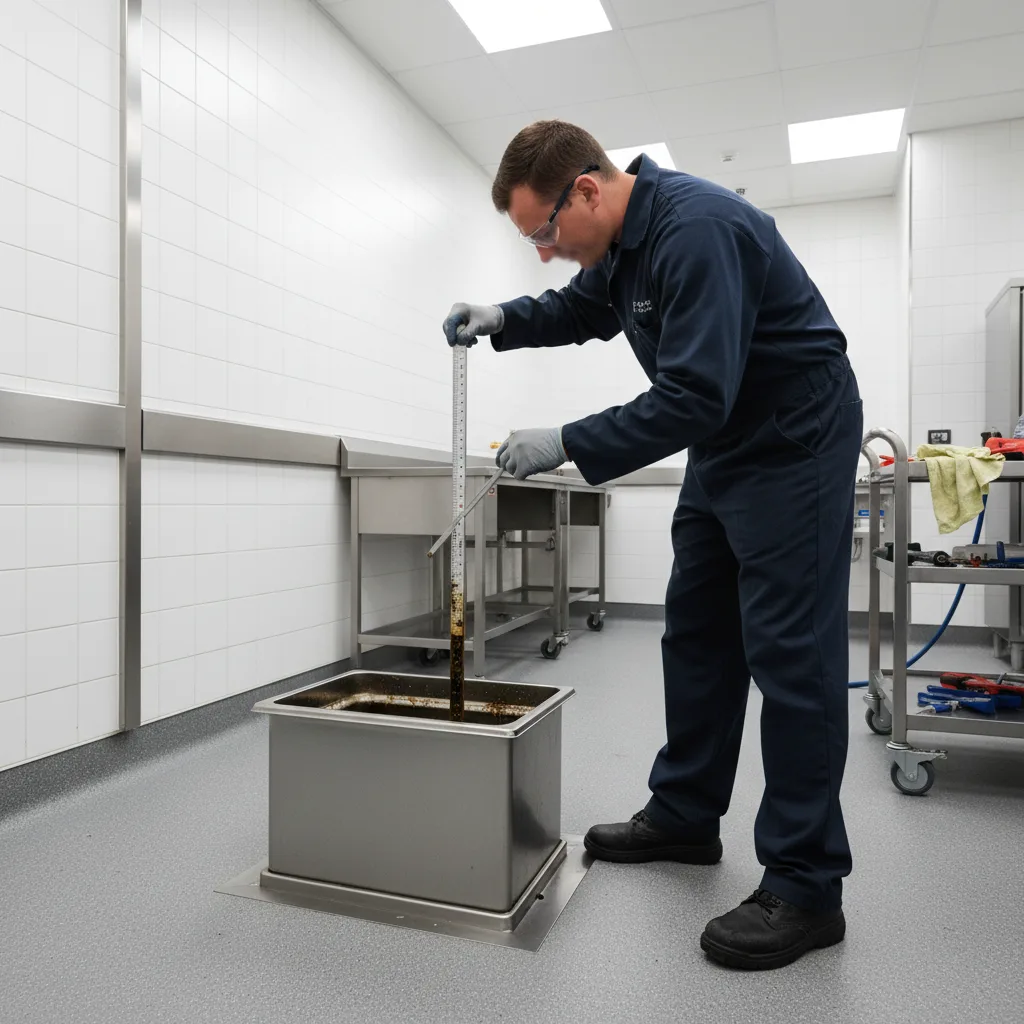

Most commercial kitchen managers know grease traps exist — fewer understand the difference between occasional cleaning and a true best management practice program. Implementing proven grease trap best practices protects your plumbing, keeps you compliant with local ordinances, and prevents the five-figure repair bills that come from neglected FOG management. This guide covers the operational standards that separate compliant kitchens from those living one inspection away from a violation.
Why Best Management Practices Matter More Than Minimum Compliance
Meeting the bare minimum for FOG compliance keeps inspectors at bay temporarily, but best management practices deliver long-term operational and financial benefits. Municipalities set baseline requirements — pump every 90 days, maintain logbooks, prevent discharges — but these standards represent floors, not ceilings.
Restaurants that adopt comprehensive BMPs report 40-60% fewer emergency plumbing calls compared to those practicing reactive maintenance. The distinction lies in systematic prevention rather than crisis response. When your grease trap system operates within best practice parameters, you're not simply avoiding fines — you're extending equipment lifespan, reducing labor costs associated with emergency repairs, and maintaining consistent kitchen operations during peak revenue periods.
The cost differential between minimum compliance and best practices typically runs $200-400 monthly for a mid-sized restaurant. The cost of a single sewer backup with lost operating days? $8,000-15,000 on average. The math favors prevention.
Establishing Your Cleaning Schedule Based on Kitchen Volume
The "pump every 90 days" standard appears in most municipal codes, but optimal cleaning frequency depends on your specific operation. High-volume operations producing significant fats, oils, and grease need more frequent service than low-volume establishments.
Calculate your ideal schedule using the 25% rule: service your trap when it reaches 25% capacity by volume of FOG and solids combined. A 1,000-gallon interceptor reaching 250 gallons of accumulated waste triggers service, regardless of calendar intervals. This capacity-based approach prevents the trap from losing separation efficiency while avoiding unnecessary pump-outs.
Track your FOG accumulation rate for the first six months of operation. Measure capacity levels at 30, 60, and 90 days to establish your kitchen's baseline accumulation pattern. This data allows you to set a proactive schedule rather than reacting to overflows.
Kitchen variables that accelerate accumulation include fryer counts, daily meal volumes, menu composition, and employee FOG disposal habits. A breakfast-focused diner generates different waste profiles than a high-volume sports bar with multiple fryers running continuous shifts. Document your patterns and adjust accordingly.
Daily and Weekly Operational Protocols
Best management practices extend far beyond scheduled pump-outs. Daily protocols prevent FOG from entering your system in problematic volumes, while weekly checks catch developing issues before they escalate.
Daily protocols should include dry scraping all cookware before washing, using sink strainers in all prep and dish stations, and disposing of fryer oil through proper rendering collection rather than drain disposal. These practices reduce FOG loading by 30-50% compared to kitchens where staff rinse everything directly into sinks. Train every employee on these procedures during onboarding and reinforce them in regular staff meetings.
Weekly protocols center on inspection and documentation. Check trap access covers for damage or improper sealing, inspect inlet and outlet flow for restrictions, verify that kitchen floor drains flow freely, and examine the trap's interior condition if you have a small under-sink unit. Document findings in your maintenance logbook — inspectors review these records, and consistent documentation demonstrates operational diligence.
The difference between a $400 pump-out and a $12,000 emergency excavation is usually six weeks of ignored warning signs.
Employee Training and Kitchen Culture
Your grease trap system only performs as well as your least-trained employee. Every person who handles food, cleans equipment, or operates dishwashing stations directly impacts FOG management effectiveness. Comprehensive training programs address both the "what" and the "why" of proper procedures.
Cover these elements in initial training: how FOG damages plumbing systems, what happens when grease traps fail, proper food waste disposal methods, correct use of sink strainers and scrapers, and the consequences of non-compliance for the business. When employees understand that improper disposal creates the plumbing emergencies that close kitchens during dinner rushes, compliance improves dramatically.
Never allow employees to use chemical drain cleaners or "grease-eating" enzymes without explicit approval from your trap service provider and local jurisdiction. Many municipalities prohibit these products because they liquefy grease temporarily, allowing it to pass through traps and solidify in municipal lines.
Reinforce training quarterly with brief refreshers. Post visual reminders near all sinks showing proper scraping and disposal procedures. Consider assigning a "FOG champion" among kitchen staff who takes ownership of compliance culture and reports concerns to management.
Documentation and Record-Keeping Requirements
Comprehensive records serve two purposes: they prove compliance during inspections and provide operational data for optimizing your maintenance program. Most jurisdictions require manifests from each pump-out showing date, volume removed, service provider, and disposal location. Best practices go further.
Maintain a master logbook that includes service dates and volumes, weekly inspection notes, employee training dates and attendees, any FOG-related plumbing issues or repairs, and correspondence with service providers or inspectors. Digital systems work well for multi-location operators, but simple paper logs suffice for single locations.
Retain all records for at least three years — many jurisdictions specify this minimum, and longer retention helps establish patterns if disputes arise. These records become valuable if you sell the business or need to demonstrate due diligence in any legal proceedings related to sewer discharges.
Choosing and Working with Service Providers
Your hauling contractor relationship significantly impacts BMP effectiveness. Select providers based on more than price alone — consider response time for emergencies, reporting quality, regulatory knowledge, and willingness to educate your staff.
Quality providers deliver detailed service reports after each pump-out, noting capacity levels, trap condition, potential problems, and recommendations for adjustments to service frequency. They should proactively alert you when accumulation rates change or when trap components show wear. Request references from similar operations and verify proper licensing, insurance, and waste disposal permits.
Establish a standing monthly or quarterly appointment rather than calling for service reactively. Regular schedules ensure consistency, often secure better pricing, and prevent the trap from reaching critical capacity during busy periods when service availability tightens.
Review service provider performance annually. Are they arriving on schedule? Do reports provide useful operational data? Have they helped you avoid problems? If your current provider treats pump-outs as transactional commodity service rather than partnership in compliance, consider alternatives.
Frequently Asked Questions
How often should commercial kitchens pump their grease traps?
Service frequency depends on trap size and kitchen volume, but most operations need service every 30-90 days. Follow the 25% rule: pump when FOG and solids reach 25% of total trap capacity. High-volume kitchens with significant frying operations typically need monthly service, while lower-volume establishments may extend to quarterly. Never exceed 90 days regardless of accumulation, as this risks solidification and compliance violations.
What's the difference between cleaning and pumping a grease trap?
Pumping removes liquid FOG and wastewater from the trap, while complete cleaning includes pumping plus physical scraping of walls and baffles, removal of solidified grease deposits, and flushing of inlet/outlet lines. Best practices require full cleaning, not just pumping — many jurisdictions now specify this in regulations. Pumping alone leaves residual grease that reduces separation efficiency and accelerates the next service cycle.
Can we clean our own grease trap to save money?
Small under-sink traps (under 50 gallons) can be self-cleaned if local codes allow, but most jurisdictions require licensed haulers for larger interceptors. Self-cleaning requires proper FOG disposal — you cannot discharge removed grease into toilets or drains. Even when legal, self-cleaning eliminates the professional documentation that proves compliance during inspections. Most operations find that licensed service costs less than the labor and disposal challenges of DIY approaches.
What happens if we don't follow grease trap best practices?
Consequences range from fines and permit suspensions to complete operational shutdowns. Neglected traps cause sewer backups that close kitchens for days, damage municipal infrastructure resulting in cost-recovery demands from utilities, and create environmental violations with penalties reaching tens of thousands of dollars. Beyond regulatory risks, poor maintenance leads to premature equipment failure, pest problems, and odor complaints that damage reputation.
How do we know if our current maintenance schedule is adequate?
Monitor your trap capacity at each service — if you're consistently reaching 40-50% capacity or higher between pump-outs, increase frequency. Warning signs include slow drainage, gurgling sounds, odors between services, or grease backing up into sinks. Your service provider should measure and report capacity levels; if they don't, request this data or find a provider who includes it. Optimal programs maintain traps between 15-25% capacity at service time.
Implementing comprehensive grease trap best practices requires initial investment in training, systems, and partnerships — but the operational stability and cost avoidance they deliver make them essential for any serious commercial kitchen operation. Find verified grease trap services in your area to establish the professional partnerships that support long-term compliance and performance.

Author: Grease Trap Locator Editorial Team
The Grease Trap Locator editorial team covers FOG compliance, grease trap maintenance, and commercial kitchen regulations across the US and Canada. Our guides are written for restaurant owners, facility managers, and food service operators who need practical, accurate information without the fluff.
Find verified, local contractors who handle cleaning, pumping, and FOG compliance — in your area.