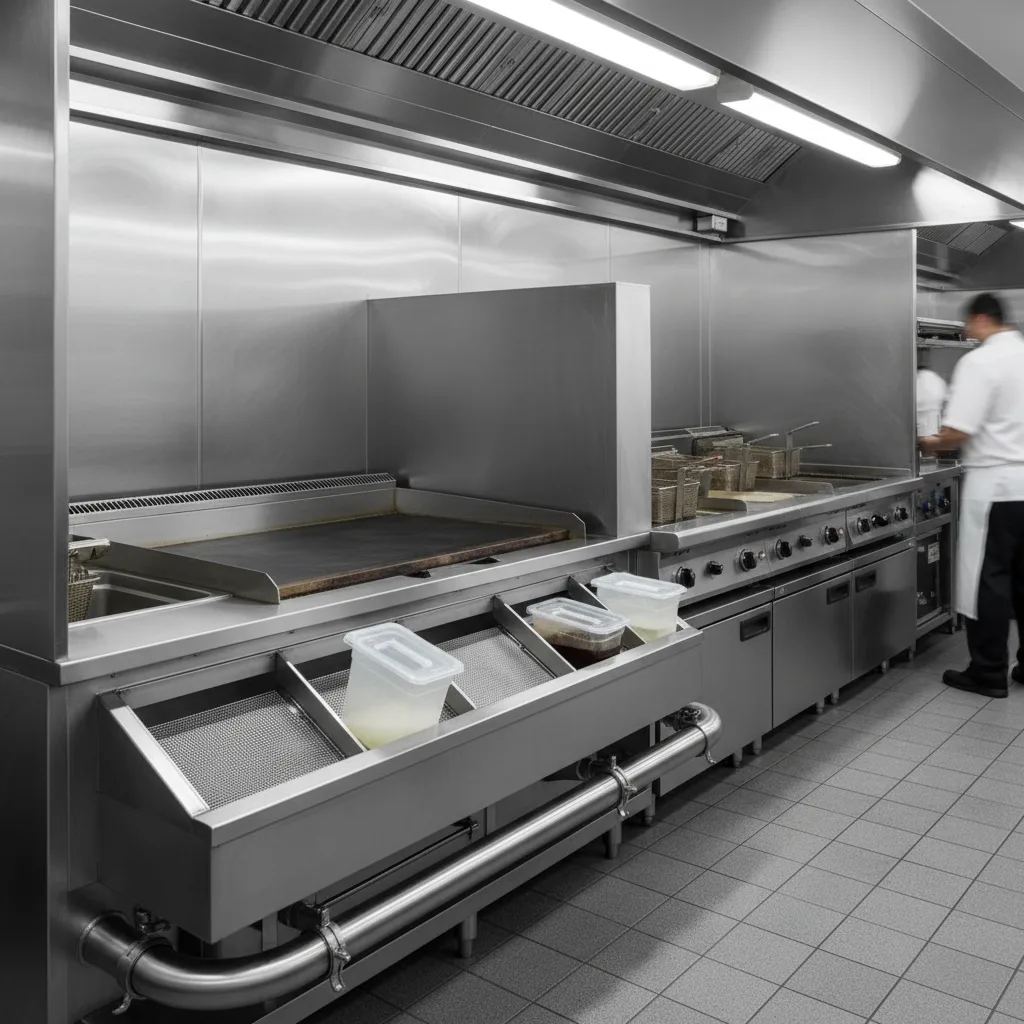
A clogged grease trap doesn't just slow down your kitchen — it shuts it down. When wastewater backs up into your three-compartment sink or dishwasher during a Friday night rush, you're facing lost revenue, health code violations, and potential closure. This guide breaks down why grease traps clog, what you can do immediately, and when emergency service is your only option.
Why Grease Traps Clog: The Three Primary Causes
Grease trap clogs don't happen overnight. They're the result of accumulated mistakes, deferred maintenance, or system design failures. Understanding the root cause helps you prevent the next backup.
The most common culprit is exceeding your trap's capacity. A 50-pound trap serving a high-volume kitchen designed for a 25-pound system will fail — repeatedly. Fats, oils, and grease (FOG) accumulate faster than the trap can separate them, creating a solid mass that blocks wastewater flow. If you're pumping your trap every two weeks and still experiencing backups, your system is undersized.
Solid food waste accelerates clogging exponentially. Grease traps separate FOG from water; they're not designed to catch rice, vegetable scraps, or coffee grounds. When solids mix with cooling grease, they form a concrete-like sludge in your trap's baffles and outlet pipe. This is why pre-scraping plates and using properly sized screen baskets matters more than most operators realize.
Install food strainers on all prep sinks and require staff to scrape plates into trash receptacles before washing. This single habit can extend the time between pump-outs by 30–40%.
Chemical drain cleaners create the third major failure point. Pouring caustic chemicals down drains to "dissolve" grease doesn't eliminate FOG — it liquefies it temporarily, pushing the problem downstream where it re-solidifies in your main sewer line or municipal system. These chemicals also damage trap baffles and gaskets, creating structural failures that require complete trap replacement.
Immediate Signs Your Grease Trap Is Clogged
Early detection is the difference between a $200 pump-out and a $5,000 emergency remediation. Watch for these warning signals during daily operations.
Slow drainage is the first indicator. When your three-compartment sink takes more than 30 seconds to drain after pulling the plug, FOG buildup has restricted flow through your trap. If you notice employees leaving sinks partially full because "it drains eventually," you're already past the preventive maintenance window.
Foul odors intensify as organic matter decomposes inside a full trap. That sour, rancid smell isn't just unpleasant — it indicates anaerobic bacterial growth in stagnant wastewater. Health inspectors recognize this odor instantly, and it's often grounds for immediate violation citations. As detailed in our comprehensive grease trap emergency guide, odors that persist after regular cleaning suggest structural trap damage or inadequate venting.
Complete backups represent total system failure. When wastewater rises in floor drains, overflows from sink basins, or — worst case — floods your kitchen floor, your trap is 100% clogged. At this stage, you cannot operate legally, and attempting to continue service risks cross-contamination between sewage and food preparation areas.
Quick Fixes That Actually Work (And Which Don't)
When you discover a clog during service hours, you need triage solutions that buy time until professional service arrives. Not every quick fix is safe or effective.
Hot water flushing provides temporary relief for minor restrictions. Run the hottest water available through your system for 3–5 minutes to liquefy surface-level grease, but understand this only delays the inevitable. The grease will re-solidify within hours as water temperature drops. This technique works for slow draining situations but does nothing for solid blockages.
Manual scooping of accessible grease from your trap's top layer can restore partial function in passive traps with removable lids. Wearing proper PPE — chemical-resistant gloves, eye protection, and apron — carefully remove the floating FOG cap using a bucket or grease scoop. Dispose of this waste in a sealed container; never pour it down any drain or into trash compactors.
Never use drain snakes, augers, or plungers on grease trap systems. These tools can puncture baffles, dislodge outlet pipes, or push blockages into your main sewer line where extraction costs increase tenfold.
Enzyme-based additives marketed as "grease digesters" provide minimal benefit in emergency situations. While biological treatments can reduce FOG accumulation over weeks of consistent use, they cannot clear existing clogs. Save these products for ongoing maintenance programs, not crisis response.
If you can't restore drainage within 30 minutes using hot water and manual removal, stop attempting fixes. Continued operation with a clogged trap violates health codes in all 50 states and creates liability exposure if contamination occurs.
When Emergency Service Becomes Non-Negotiable
Certain situations require immediate professional intervention. Attempting DIY solutions in these scenarios causes more damage and increases remediation costs.
Complete sewage backups into your kitchen space demand emergency pump-out within two hours. Beyond the obvious health hazards, standing sewage can seep into floor grout, wall cavities, and equipment bases, creating long-term contamination issues that require specialized remediation. Most commercial grease trap service providers offer 24/7 emergency response for exactly these situations.
Foul odors accompanied by gurgling sounds from multiple drains indicate a main line blockage beyond your trap. This suggests FOG has solidified in your building's sewer lateral or — worse — in the municipal line. Your service provider will need camera inspection equipment to locate the blockage and hydro-jetting tools to clear it.
Grease overflowing from your trap's access lid signals catastrophic failure. The trap is full beyond capacity, and internal baffles may be damaged or displaced. This requires complete pump-out, internal inspection, and potential baffle repair or replacement. Operating with this condition risks sewage contamination of your food preparation areas.
Repeated clogs after recent pump-outs point to undersized equipment or structural damage. If you're experiencing backups every 7–10 days despite regular service, your trap cannot handle your kitchen's FOG load. Emergency service providers can conduct flow analysis and recommend system upgrades that solve the problem permanently rather than treating symptoms monthly.
Prevention Protocols That Actually Prevent
The most effective emergency response is preventing emergencies. Implementing these protocols reduces clog incidents by 80% or more according to commercial kitchen operators.
Scheduled pump-outs based on actual fill rates — not arbitrary timelines — keep traps operating within design parameters. Most jurisdictions require pump-out when grease and solids occupy 25% of total trap volume. High-volume operations may hit this threshold weekly; lower-volume kitchens might run monthly. Your service provider can measure fill rates during each visit and adjust schedules accordingly.
Staff training on FOG management makes every employee a prevention partner. Simple protocols — scraping plates thoroughly, never pouring fryer oil down drains, using cold water for initial rinses — dramatically reduce the FOG entering your trap. Laminated procedure cards posted at each sink station ensure consistency across all shifts.
Conduct monthly visual trap inspections during slow periods. Check inlet and outlet flow, measure grease cap thickness, and verify baffle integrity. Document findings to identify trends before they become emergencies.
Proper fryer oil disposal eliminates the largest single FOG source in most commercial kitchens. Used cooking oil should go into dedicated collection containers — never down drains, even "just a little bit." Many rendering companies provide free oil pickup services that turn waste into revenue.
Frequently Asked Questions
How do I know if my grease trap is clogged or if I have a different plumbing issue?
A clogged grease trap affects only FOG-connected fixtures like sinks, dishwashers, and floor drains in the kitchen area. If toilets and hand sinks in restrooms also drain slowly, you likely have a main line blockage beyond the trap. Additionally, grease trap clogs produce distinctive rancid odors, while other plumbing issues typically don't smell or produce sewage odors.
Can I operate my restaurant with a clogged grease trap if I'm careful?
No — operating with a clogged grease trap violates health codes universally and creates immediate closure risk. Beyond regulatory issues, continued operation can cause sewage backups into food preparation areas, cross-contamination of equipment, and permanent damage to your plumbing system that multiplies repair costs. Most insurance policies exclude damage from deferred maintenance, leaving you fully liable.
How much does emergency grease trap service cost compared to regular maintenance?
Emergency service typically costs 150–300% more than scheduled maintenance due to after-hours labor rates, expedited response requirements, and additional cleanup needed after backups. A routine pump-out might run $200–400, while emergency response for a backup situation can exceed $1,000 before addressing any secondary damage to flooring, equipment, or sewer lines.
What's the fastest way to get emergency grease trap service?
Call your regular service provider first — they have your system specifications on file and can respond faster than unfamiliar contractors. If they can't provide immediate service, search for providers offering 24/7 emergency response in your area. Have your trap size, location, and specific symptoms ready when you call to expedite dispatch.
How can I tell if my grease trap is undersized and causing repeated clogs?
Traps requiring pump-out more frequently than every 30 days despite proper maintenance are likely undersized for your operation. Other indicators include grease cap thickness exceeding 4 inches within two weeks of pump-out, persistent slow drainage even after service, and visible grease in outlet pipes. A qualified service technician can calculate proper trap sizing based on your kitchen's fixture units and meal volume.
A clogged grease trap is never just an inconvenience — it's a business threat that demands immediate, appropriate response. Whether you need routine maintenance to prevent problems or emergency service to resolve an active crisis, working with qualified professionals protects your operation, your customers, and your investment. Find verified grease trap services in your area at GreaseTrapLocator.com.
Find verified, local contractors who handle cleaning, pumping, and FOG compliance — in your area.
