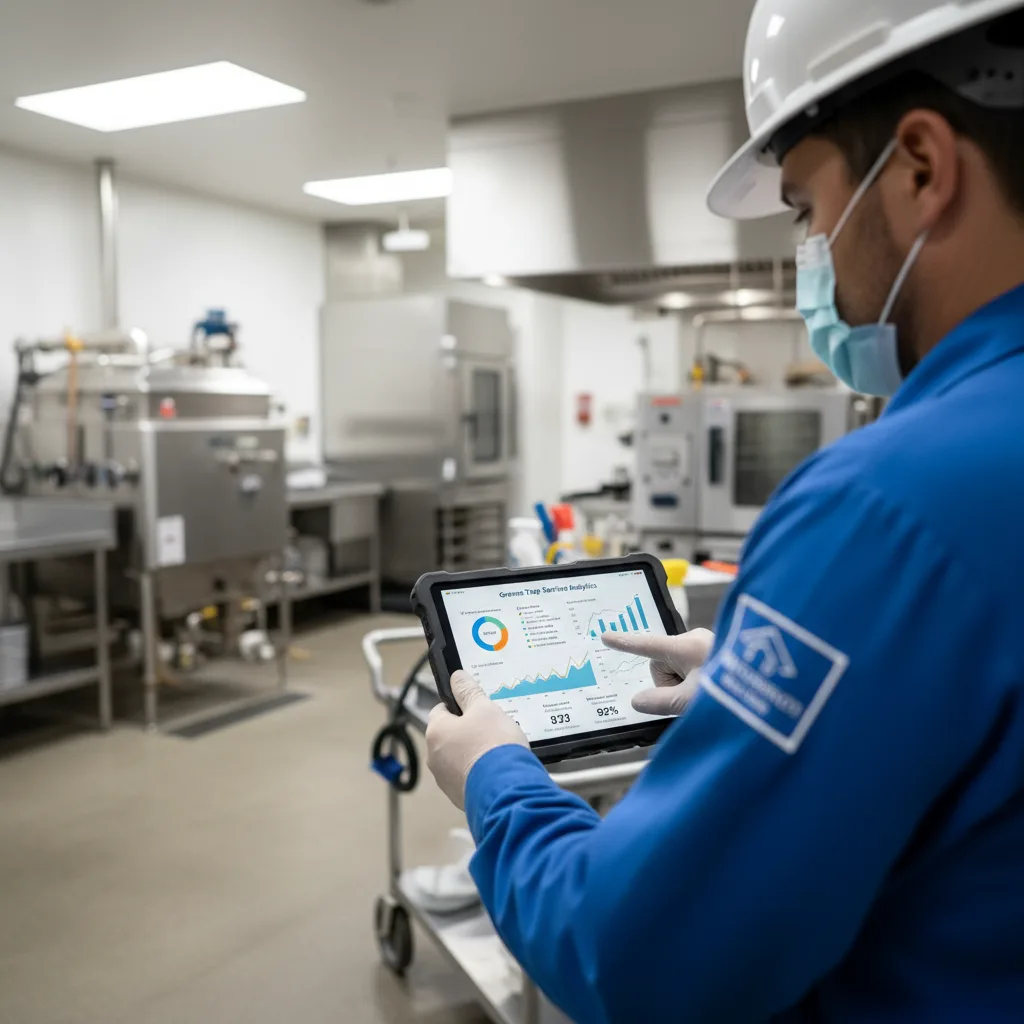

Bakeries, coffee shops, and similar low-FOG (fats, oils, and grease) food service operations often assume they're exempt from grease trap requirements — but most aren't. While you may not deep-fry donuts or grill burgers, butter-based pastries, cream fillings, and even espresso machine backwash can generate enough FOG to trigger local plumbing codes. This article clarifies exactly when bakeries need grease traps, what regulations apply, and how to right-size your system without overbuilding.
Why Bakeries Are Subject to Grease Trap Regulations
Municipal and provincial codes don't exempt food service establishments based on menu type — they regulate based on wastewater discharge. The Ontario Building Code (Section 7.4.4.3) mandates grease interceptors for any fixture discharging sewage containing fats, oils, or grease in areas where food is cooked, processed, or prepared. That includes bakeries. Even small amounts of butter, shortening, or frosting washed down prep sinks accumulate in sewer lines, causing blockages and municipal infrastructure damage.
Metro Vancouver's bylaw explicitly applies to operations that "prepare, package, serve, sell or otherwise handle food in a way that results in discharge of fats, oils and grease." A bakery washing mixing bowls coated with buttercream or rinsing sheet pans with residual dough fats meets this definition. The determining factor isn't volume — it's presence. If your operation discharges any FOG into the drainage system, you're likely required to install a grease trap regardless of your perception of "low-FOG" output.
Assuming your bakery is exempt without consulting local bylaws risks enforcement action. Many jurisdictions conduct audits of food service permits and cross-reference them with grease trap installation records.
How Low-FOG Kitchens Differ From High-Volume Operations
Bakeries and coffee shops generate FOG differently than restaurants. High-volume commercial kitchens discharge liquid fats from fryers, griddles, and char-broilers. Low-FOG operations produce solid or semi-solid fats — butter scraped from mixing equipment, cream cheese residue, or coconut oil that solidifies at room temperature. These materials still require interception, but the sizing calculations and maintenance frequency differ significantly.
A standard restaurant grease trap might require weekly pumping. A bakery producing 50 dozen croissants daily might need quarterly service. The key difference lies in accumulation rate. Because bakery FOG often enters the trap in smaller quantities mixed with flour slurry and sugar wash water, it takes longer to fill the trap's capacity. However, this same characteristic creates a different challenge — flour and dough particles can combine with fats to form dense, cement-like masses that are harder to remove during pumping.
Bakery grease traps fail differently than restaurant traps. Instead of overflowing with liquid grease, they become clogged with hardened fat-flour composites that block baffles and inlet pipes.
Mandatory Requirements Under Current Building Codes
Provincial building codes provide the baseline, but municipalities often layer additional requirements. In Ontario, any commercial cooking equipment must discharge through a grease interceptor unless specifically exempted. NFPA 96 standards govern ventilation for commercial cooking operations, and local health departments enforce these alongside plumbing codes. Your bakery's grease trap requirements depend on three factors: fixture count, fixture unit loading, and local authority interpretation.
Most jurisdictions require traps on any fixture receiving FOG-contaminated wastewater — prep sinks, three-compartment sinks, floor drains in baking areas, and dishwashers. Some explicitly require traps even for espresso machine drain lines, since milk fats and cleaning solutions carry enough lipid content to warrant interception. The complete grease trap compliance process involves plan review, installation inspection, and ongoing maintenance documentation.
Submit your plumbing plans early in the permit process. Many bakery owners discover grease trap requirements only after construction begins, leading to costly retrofits and project delays.
Code compliance also extends beyond installation. Most bylaws mandate regular pumping, record-keeping, and manifests documenting proper FOG disposal. In Metro Vancouver, establishments must maintain cleaning logs and make them available for municipal inspection. Failure to provide documentation can result in fines ranging from $500 to $10,000, even if your trap is functioning properly.
Right-Sizing Grease Traps for Bakery Operations
Oversizing wastes money on unnecessary equipment and increased pumping costs. Undersizing triggers permit violations and emergency service calls. Bakery grease trap sizing typically uses the fixture unit method, calculating total drainage load from all FOG-generating fixtures. A small bakery with one prep sink and a three-compartment warewash sink might need only a 20-pound capacity trap. A production bakery with multiple mixing stations, floor drains, and a commercial dishwasher could require 50 to 100 pounds of capacity.
The calculation starts with drainage fixture units (DFUs). Each connected fixture has an assigned DFU value based on flow rate. Your plumbing inspector or engineer sums these values, then applies the grease trap sizing formula mandated by local code. Many jurisdictions reference the Plumbing and Drainage Institute's standard, which recommends 2 pounds of grease storage capacity per gallon-per-minute flow rate, with adjustments for meal period duration and FOG content.
For operations using primarily solid fats (butter, shortening), consider a trap with larger solids capacity. Standard grease traps allocate 1/3 of internal volume to settled solids and 2/3 to FOG storage. Bakery-specific installations may benefit from 50/50 allocation, since flour slurry and dough particles contribute as much volume as grease itself. Discuss this with your equipment supplier — some manufacturers offer bakery-specific configurations without custom fabrication costs.
Alternative Compliance Options and Exemptions
Some jurisdictions allow automatic grease removal devices (AGRDs) or biological grease remediation systems as alternatives to passive hydromechanical traps. These systems actively heat, skim, or digest FOG, potentially reducing footprint and maintenance frequency. However, approval varies widely. Ontario's building code permits AGRDs only if they meet CSA B481.1 certification, and many municipalities prohibit them entirely due to concerns about effectiveness.
Genuine exemptions are rare but possible. If your bakery produces only dry goods with zero fat content, discharges no wastewater from food prep areas, and can document this through your recipes and processes, you may qualify for an exemption letter from your local authority. Coffee roasters with no food prep beyond brewing sometimes receive exemptions. Bagel shops using boiling-only preparation (no frying, no cream cheese prep) occasionally do as well. In practice, fewer than 5% of bakeries meet exemption criteria.
Request an exemption determination in writing before completing your buildout. Verbal assurances from inspectors aren't enforceable, and successor inspectors may interpret codes differently.
Some bakeries install traps voluntarily even when exempted. A $2,500 trap installation prevents $15,000 in emergency drain cleaning and potential lawsuit liability if your discharge causes a municipal sewer backup. Insurance companies increasingly require proof of grease trap installation for food service liability coverage — another reason to install even if technically exempt.
Maintenance Considerations for Low-FOG Operations
Bakery grease traps accumulate slower but require specialized service. Standard restaurant trap pumping removes liquid grease; bakery traps often need manual scraping to remove hardened fat-flour deposits. Not all grease trap service companies handle this effectively. When vetting pumpers, ask specifically about their experience with bakery operations and whether they remove solidified material or only liquid FOG.
Pumping frequency depends on trap size and production volume. A general guideline: service when the trap reaches 25% capacity. For bakeries, this might mean quarterly or even semi-annual pumping. However, inspect monthly regardless of pumping schedule. Flour buildup can block baffles between scheduled services, causing sudden backups. Many bakery operators train staff to check the trap's inlet and outlet pipes monthly using a flashlight and long-handled mirror.
Enzyme additives and bacterial products marketed for grease trap maintenance offer mixed results in bakery applications. They effectively digest liquid fats but struggle with solid butter and shortening. More problematically, they can liquefy fats just enough to pass through the trap without full breakdown, transferring the problem downstream. Most jurisdictions permit biological additives but prohibit using them to extend pumping intervals beyond code-mandated frequencies.
Frequently Asked Questions
Do coffee shops with pastries need grease traps?
Yes, in most jurisdictions. If you reheat pastries, prepare cream-based drinks, or wash dishes contaminated with butter or frosting, you're discharging FOG. Even espresso machine drain lines can require interception in strict jurisdictions. The determining factor is whether your operation involves food preparation or handling that generates fat discharge — not whether you're primarily a café versus a bakery.
Can I use a smaller trap if I only bake on weekends?
No. Grease trap sizing is based on peak flow capacity of connected fixtures, not operating schedule. If your prep sink can discharge 10 gallons per minute, the trap must handle that flow rate regardless of whether you use it two days or seven days per week. However, reduced operating hours do allow longer intervals between pumping — you might need semi-annual service instead of quarterly.
What happens if I'm cited for operating without a required trap?
Enforcement typically follows a progressive sequence: warning notice, compliance order with installation deadline (usually 30-90 days), fines for continued non-compliance ($500-$10,000 per violation in most jurisdictions), and potential operational shutdown for severe cases. Additionally, if your discharge causes a municipal sewer backup, you're liable for cleanup costs and potential third-party damage claims. Insurance rarely covers violations of known code requirements.
Are there grease trap alternatives specifically for bakeries?
Automatic grease removal devices (AGRDs) are the primary alternative, but approval varies by jurisdiction. Some municipalities allow them for low-FOG operations; others require traditional hydromechanical traps regardless of FOG volume. Biological treatment systems exist but face similar approval challenges. The most reliable path is installing a properly sized conventional trap — technology that's universally code-compliant and supported by all service providers.
How much does grease trap installation cost for a small bakery?
A 20-30 pound capacity trap suitable for a small bakery typically costs $1,200-$2,500 for the unit itself, plus $1,500-$4,000 for professional installation including plumbing modifications. Indoor installations cost more than outdoor due to space constraints and floor cutting requirements. Budget an additional $200-$400 per pumping service, with frequency ranging from quarterly to semi-annually depending on production volume. Total first-year cost including installation and two services: $3,500-$7,500.
Navigating bakery grease trap requirements doesn't have to derail your opening timeline or budget. Working with experienced professionals who understand low-FOG operations ensures you install the right equipment, maintain compliance, and avoid costly retrofits. Find verified grease trap services in your area at https://www.greasetraplocator.com — connect with local providers who specialize in bakery installations and maintenance.

Author: Grease Trap Locator Editorial Team
The Grease Trap Locator editorial team covers FOG compliance, grease trap maintenance, and commercial kitchen regulations across the US and Canada. Our guides are written for restaurant owners, facility managers, and food service operators who need practical, accurate information without the fluff.
Find verified, local contractors who handle cleaning, pumping, and FOG compliance — in your area.