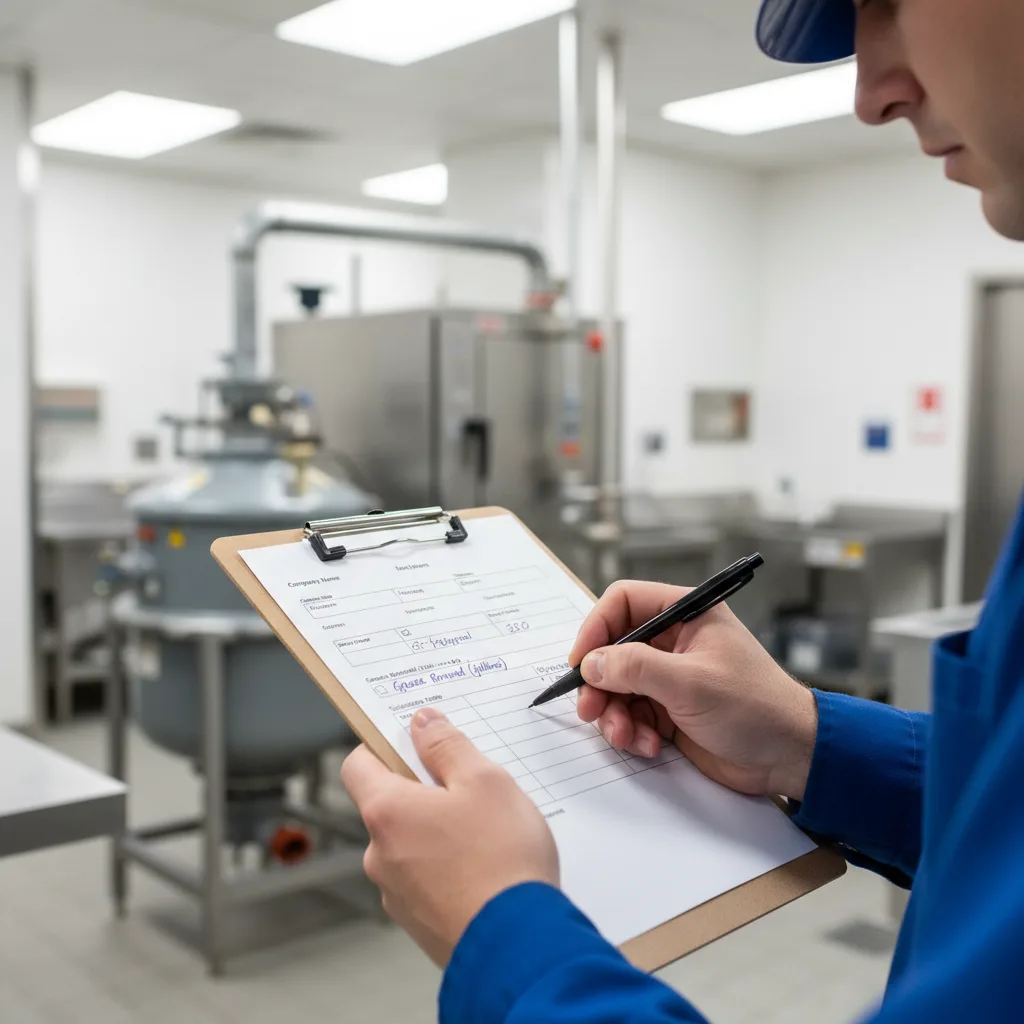
When a grease trap backs up during Saturday dinner rush, your response time determines whether you lose a few hundred dollars or shut down for the weekend. A properly stocked emergency kit transforms these critical moments from disasters into manageable interruptions. This guide details exactly what equipment, contacts, and procedures every restaurant manager needs to handle grease trap emergencies before they escalate into health code violations or facility damage.
Essential Physical Equipment for Your Emergency Kit
Your grease trap emergency kit should occupy a dedicated, clearly labeled container stored in an accessible location known to all management staff. The foundation starts with personal protective equipment — heavy-duty nitrile gloves rated for chemical and grease resistance, splash-resistant safety goggles, rubber aprons, and non-slip rubber boots. Grease trap emergencies involve exposure to bacteria-laden wastewater, making proper PPE non-negotiable for staff safety and OSHA compliance.
Include industrial-strength absorbent materials: at least two boxes of oil-dry granules, a case of absorbent pads rated for FOG (fats, oils, and grease), and a roll of caution tape. When overflow occurs, containing the spread prevents slip hazards and limits contamination of food prep areas. Add a heavy-duty wet/dry vacuum with at least 6-gallon capacity — standard household shop vacs lack the power and filtration for grease-laden water.
Store your emergency kit within 50 feet of your grease trap location. In basement installations, keep a secondary kit on the kitchen level to avoid delays during active emergencies.
Your toolkit must include basic plumbing implements: a heavy-duty plunger designed for commercial drains, a 25-foot drain snake or auger, adjustable wrenches in 10-inch and 14-inch sizes, and a bucket rated for at least 5 gallons. Many minor blockages resolve with immediate mechanical intervention, buying you time before professional services arrive. Add a high-powered flashlight — many grease traps occupy poorly lit spaces where visibility determines diagnosis speed.
Chemical solutions require careful selection. Keep enzymatic drain maintainer specifically formulated for grease traps — never use caustic drain cleaners that damage trap components and violate most municipal codes. A pH testing kit helps assess whether backup involves just FOG or sewage contamination requiring different handling protocols. Include contractor-grade garbage bags rated for wet waste and a dedicated mop and bucket system used exclusively for grease trap incidents.
Critical Contact Information and Documentation
Your emergency kit must include laminated contact cards — paper deteriorates in humid environments near grease traps. List your primary grease trap service provider with after-hours emergency number, backup service provider, plumbing contractor specializing in commercial kitchens, and your local health department's emergency reporting line. When dealing with a grease trap overflow, having these numbers immediately accessible prevents the frantic searching that extends downtime.
Include copies of your grease trap's specification sheet detailing capacity, model number, installation date, and maintenance history. This technical information allows emergency responders to arrive with appropriate equipment and replacement parts. Add your facility's plumbing diagram showing trap location, clean-out access points, and main drain lines — information that proves invaluable when contractors unfamiliar with your layout respond to emergencies.
Maintain current copies of your municipal FOG ordinances and discharge permits. During emergencies, you may need to verify compliance requirements or reporting thresholds quickly. Documentation should include your insurance policy information with environmental liability coverage details and your designated emergency coordinator's contact information for after-hours incidents when general managers aren't on-site.
Add a simple incident report template to your kit. Immediate documentation of what happened, when, contributing factors, and response actions protects you during health inspections and potential liability claims. This template should prompt for photos, witness statements, and timeline details that become difficult to reconstruct days later.
Emergency Response Protocols and Quick Reference Guides
Your emergency kit gains real value through clear, step-by-step response protocols that any manager can execute under stress. Create a laminated flowchart starting with "Is there visible overflow?" and branching through assessment, containment, notification, and resolution steps. This decision tree prevents the common mistake of calling expensive emergency services for issues that simple procedures resolve.
The first protocol addresses immediate containment: stopping water flow to affected fixtures, deploying absorbent materials around overflow areas, and establishing a safety perimeter. This procedure should specify exactly which valves to close and include photos or diagrams for staff unfamiliar with your plumbing infrastructure. A comprehensive grease trap emergency guide becomes your training foundation for new management staff.
The difference between a manageable incident and a reportable violation often comes down to response time in the first fifteen minutes — having protocols eliminates decision paralysis when seconds count.
Include a troubleshooting checklist that guides managers through common scenarios: slow drainage, bad odors, visible grease in sink lines, or complete backup. Each scenario needs specific diagnostic steps and corresponding actions. For example, slow drainage might only require checking the flow control device, while complete backup demands immediate service calls and potentially diverting operations to unaffected stations.
Never allow kitchen staff to continue discharging wastewater into sinks connected to a failing grease trap. This accelerates the problem exponentially and can trigger FOG discharge violations carrying fines from $1,000 to $25,000 depending on jurisdiction.
Your protocols must specify reporting requirements. Most jurisdictions mandate notification when grease trap failures result in sanitary sewer overflows or environmental discharges. Include threshold volumes, reporting timeframes (often within 2-24 hours), and required documentation. Failure to report properly compounds the original violation significantly.
Preventive Maintenance Tools and Monitoring Equipment
Beyond crisis response, your emergency kit should include tools that prevent emergencies entirely. A grease trap dipstick or measuring rod marked at 25% capacity intervals allows quick assessments during routine checks. Most codes require pumping when grease and solids occupy 25% of total volume — waiting until you notice problems means you've already exceeded legal thresholds.
Add a digital thermometer for measuring water temperature at dishwashing stations. Water below 110°F fails to keep grease in suspension, increasing trap deposition rates. A simple temperature check during opening procedures identifies developing problems before they cascade. Include a small notebook for logging these measurements — pattern recognition across weeks often reveals the early warning signs your grease trap maintenance schedule should address proactively.
Consider including a basic water quality testing kit that detects pH levels and FOG concentration. These measurements help you optimize cleaning chemical usage and identify when biological treatments are working effectively versus when mechanical issues require different interventions. Many managers rely solely on visual inspection, missing chemical indicators that predict failures days before physical symptoms appear.
Stock replacement parts for components prone to failure: gaskets for access covers, flow restrictor screens if your model uses them, and spare sampling port caps. A $12 gasket kept in your emergency kit prevents the all-too-common scenario of opening a trap for inspection only to discover the seal has degraded, creating new problems while investigating old ones.
Financial and Administrative Emergency Resources
Your emergency kit needs financial tools for rapid decision-making under pressure. Include a pre-approved emergency services agreement with spending authority limits clearly defined. When a grease trap fails at 8 PM on Friday, managers need to know whether they can authorize a $1,500 emergency pump-out or must wait for ownership approval while the problem worsens.
Maintain a petty cash allocation or purchasing card specifically designated for emergency grease trap supplies. Running to a 24-hour hardware store for additional absorbent materials shouldn't require navigating approval chains. Document this fund clearly: $200-500 provides adequate coverage for immediate material needs without creating accounting complications.
Add vendor agreements that specify emergency response timeframes and pricing structures. Standard service rates often double or triple for after-hours calls — knowing these costs beforehand prevents invoice shock and helps you make informed decisions about whether situations truly qualify as emergencies or can wait until regular business hours.
Training Materials and Emergency Drill Records
The most comprehensive emergency kit fails without trained staff. Include quick-reference training guides with photos showing proper PPE use, containment techniques, and equipment operation. These visual aids accommodate the reality that emergencies don't wait for convenient moments — new managers or cross-trained staff may handle incidents without extensive grease trap experience.
Maintain records of emergency response drills conducted quarterly. These exercises identify gaps in your kit, outdated contact information, and staff knowledge deficiencies before real emergencies expose them. Document drill dates, participants, scenarios tested, and improvements needed. This record demonstrates due diligence to insurance carriers and regulators while actually improving your operational readiness.
Create a post-incident review template prompting analysis of what worked, what didn't, and what kit components or protocols need updating. Every emergency provides learning opportunities — capturing these insights systematically prevents repeating mistakes and continuously refines your preparedness.
Frequently Asked Questions
How often should I inspect and update my grease trap emergency kit?
Conduct monthly inspections to verify all components are present, PPE hasn't deteriorated, and contact information remains current. Perform complete kit audits quarterly, replacing expired materials and updating protocols based on any incidents since the last review. Service provider contact changes and municipal regulation updates happen frequently enough that quarterly verification prevents discovering outdated information during actual emergencies.
What's the minimum investment for a functional grease trap emergency kit?
A basic but effective kit costs $300-500 including quality PPE, absorbent materials, basic tools, and proper storage containers. This investment typically pays for itself by preventing a single emergency service call or health code violation. Advanced kits with monitoring equipment and extensive spare parts range $800-1,200, appropriate for larger facilities or locations with chronic grease trap challenges.
Should every location in a multi-unit operation maintain separate emergency kits?
Yes, each physical location requires its own complete emergency kit tailored to that facility's specific grease trap configuration and local jurisdiction requirements. Sharing kits between locations introduces dangerous delays during emergencies and creates gaps when simultaneous incidents occur. However, centralized procurement and standardized kit templates create efficiencies while maintaining location-specific readiness.
Can I substitute household products for commercial-grade emergency kit components?
Never substitute PPE or chemical products — household gloves fail under commercial grease trap conditions, and household drain cleaners violate most municipal codes while damaging trap components. Absorbent materials and basic tools may use quality household equivalents initially, but commercial-grade products provide superior performance under the extreme conditions grease trap emergencies create. The cost difference rarely justifies the performance compromise.
What documentation should I keep proving emergency preparedness to health inspectors?
Maintain monthly kit inspection logs, quarterly emergency drill records, current service provider agreements showing emergency response capabilities, and incident reports from any past grease trap issues demonstrating proper protocol execution. Photographic documentation of your complete, properly stocked emergency kit provides immediate visual proof during inspections. Many jurisdictions now require documented emergency response plans as part of FOG permit applications, making this record-keeping legally necessary beyond operational benefits.
Emergency preparedness separates restaurants that weather grease trap incidents with minimal disruption from those that face extended closures, regulatory violations, and reputation damage. Your emergency kit represents insurance against the inevitable challenges every commercial kitchen eventually faces. By investing in proper equipment, documentation, and training now, you transform potential disasters into manageable operational hiccups that your team handles with confidence and competence. Find verified grease trap services in your area at https://www.greasetraplocator.com and establish the emergency service relationships your preparedness plan requires.
Find verified, local contractors who handle cleaning, pumping, and FOG compliance — in your area.
