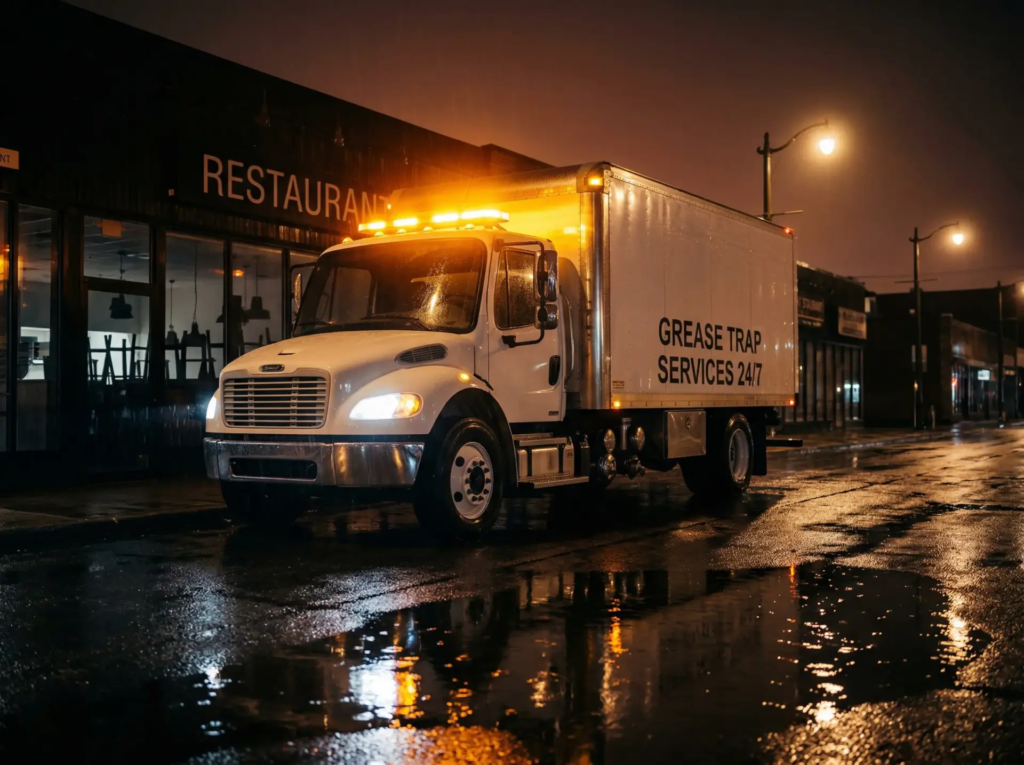
A grease trap emergency doesn't announce itself in advance. Sewage backing up through floor drains, greasy water pooling under sinks, a sudden sulfur smell strong enough to stop service — these are the failure modes of a neglected or overwhelmed interceptor. When they happen, the next 30 minutes matter more than anything else you'll do that day.
This guide covers how to respond to an active grease trap emergency, what not to do that would make the situation worse, the compliance exposure that follows a trap failure, why failures happen, and how to build a response plan so your staff knows what to do before it happens. For ongoing prevention, see the grease trap maintenance guide.
Recognize the Situation: Warning Signs vs. Active Emergency
Not every grease trap problem is a full emergency. Knowing the difference determines the right response.

A grease trap overflow is a health code violation the moment it reaches a drain, floor, or public area. Do not attempt to clean it yourself — call a licensed operator immediately and document everything for your records.
Warning Signs (Act Within Hours)
- Sinks or floor drains draining significantly slower than normal
- Intermittent foul odors from drains — especially sulfurous smell — during or after service
- Visible greasy film or residue backing up into sink basins but no standing water
- Trap lid displaced or visibly pressurized
These indicate an interceptor approaching capacity or a partial blockage. They warrant same-day or next-day service but may not require immediate kitchen shutdown. For a full breakdown of fill indicators, see signs your grease trap is full.
Active Emergency (Stop Service Now)
- Sewage or greasy wastewater actively backing up through floor drains
- Standing water in kitchen that won't drain
- Overflow from the trap itself — visible discharge around the trap location
- Sewage smell inside the kitchen severe enough to affect customers or cause staff concern
An active backup means the system has failed. Kitchen operations cannot continue while wastewater is backing up — operating in this condition creates health code violations and potential sewer discharge violations separate from your routine FOG compliance status.
Immediate Response: What to Do in the First 30 Minutes
1. Stop Water Use to Affected Fixtures
As soon as the backup is identified, shut off water to the sinks, dishwashers, and floor drains connected to the affected line. Continuing to push water into a backed-up system adds volume to an already overwhelmed situation. If the shutdown disrupts service operations, that's the right call — the alternative is more sewage on the kitchen floor.

2. Isolate the Area
Block off the affected area. Sewage backups create slip hazards and sanitation concerns. Kitchen staff should not be working in standing contaminated water. If the backup is contained to a single sink area, you may be able to continue partial operations; if floor drains are backing up, the kitchen floor is compromised.
3. Call a Licensed Emergency Service
Contact a licensed grease trap service contractor immediately. Most established FOG contractors offer emergency service — typically with response times of one to two hours for genuine emergencies. Have the name and contact number of your service contractor posted in the kitchen; this is not the time to be searching for a provider.
Confirm when you call that you need emergency service, describe the situation accurately (backup, overflow, or both), and confirm they can respond same-day. If your usual contractor isn't available, contact a licensed alternative — do not attempt to clear the backup yourself with chemicals or by hosing it down.
4. Document the Situation
Take photos and brief written notes before cleanup begins. Document: the location and extent of the backup, any visible damage, the time of discovery, and what preceded it (recent high-volume service, unusual kitchen activity, deferred maintenance). This documentation matters for insurance purposes, for your compliance response if a violation is issued, and for understanding root cause after the fact.
5. Notify Your Manager and Compliance Contact
If you have a corporate or multi-unit structure, notify your facilities manager or compliance team. If you receive a health department visit while the situation is active, having documentation that you've already contacted a service provider demonstrates responsible response. Inspectors generally view active emergency remediation more favorably than operators who appear unaware of the problem.
What NOT to Do During a Grease Trap Backup
Do Not Hose Waste Into Storm Drains
Grease-laden wastewater discharged to storm drains is an environmental violation. It's tempting to clear the immediate problem quickly, but discharging to storm drains creates a separate and serious legal exposure — one that can involve state or federal environmental agencies, not just your local wastewater authority.
Do Not Use Chemical Drain Cleaners
Chemical drain openers will not solve a grease trap emergency. They may temporarily mask symptoms or create a dangerous chemical reaction with the organic waste in the line. The problem requires mechanical extraction — a vacuum truck and licensed technician, not a bottle of caustic drain cleaner.
Do Not Continue Operating on Backed-Up Drains
Operating a commercial kitchen with active sewage backup is a health code violation. If your floor drains are not accepting wastewater and you continue dishwashing or food preparation, you're creating a condition that a health inspector can and will use to justify closure. Close the affected area, minimize water use, and wait for professional service.
Do Not Assume It's Just a Drain Clog
A backed-up sink that's actually grease trap overflow will not be fixed by a plunger or basic drain snake. Treating a trap emergency as a routine drain issue delays professional response and allows the situation to worsen.
After Emergency Service: Documenting and Following Up
After the licensed contractor has completed emergency service:
- Obtain a signed service manifest documenting the pump-out, volumes removed, and disposal details — this is your compliance documentation for the incident
- Request a written assessment of what caused the failure if the contractor can identify it
- Inspect the trap and drain lines for damage before resuming full operations
- Document the entire incident in your maintenance log: date, situation discovered, contractor contacted, service completed, cost
If the wastewater authority issues a notice of violation related to the incident, respond in writing within the required timeframe, provide your service documentation, and take the corrective action steps they specify. Having thorough documentation of your emergency response — that you identified the problem promptly, contacted a licensed contractor, and properly documented service — is your best position in a compliance proceeding.
Compliance Exposure After a Trap Failure
A grease trap backup that results in FOG entering the municipal sewer system can trigger enforcement from your local wastewater authority. Potential consequences include:
- Notice of violation with required corrective action
- Administrative fine
- Required inspection of your entire FOG compliance program — records, permits, service history
- If the discharge caused documented damage to sewer infrastructure, potential cost recovery for remediation
The severity of response depends on the municipality, your history, and whether you responded appropriately and promptly. Operators with a history of regular professional service who experience an isolated emergency are generally treated differently than operators with no service records and a pattern of deferred maintenance. This is why consistent documentation matters even when nothing goes wrong. For the full compliance picture, see the FOG compliance guide.
Why Grease Traps Fail: Common Root Causes
Most grease trap emergencies are predictable. The most common root causes:
Deferred Maintenance
The single most common cause. The trap exceeded 25% capacity, continued to fill, and eventually failed. Regular service on a schedule calibrated to the kitchen's FOG output prevents this entirely.
Sudden Volume Increase
A trap sized and scheduled for a restaurant doing 200 covers per day will fill faster during a catering event, special event, or holiday rush. Operations that periodically run significantly above normal volume should account for this in their maintenance schedule.
Staff Disposal Errors
Used fryer oil poured down the drain, food solids pushed through the garbage disposal, hot water used for grease cleanup — all of these increase FOG and solid load on the trap and can push an already-full unit over the edge faster than expected.
Mechanical Failure
Damaged or deteriorated baffles allow grease to short-circuit the separation process. A cracked inlet pipe can allow solids to bypass the trap entirely. These mechanical failures require professional inspection and repair, not just pumping.
Blockage in the Lateral
Sometimes the trap itself is adequately maintained but a grease buildup in the sewer lateral downstream causes a backup. Hydrojetting of the lateral is the appropriate remedy in this case — pump-out of the trap alone won't resolve it.
Building a Response Plan Before You Need It
The operators who handle grease trap emergencies well are the ones who thought through the response before it happened. A basic written response plan for your kitchen should include:
- Name and 24/7 emergency contact number for your licensed grease trap contractor
- A backup contractor contact in case the primary isn't available
- Clear procedure for which staff member is responsible for calling the contractor and notifying management
- Location of the shut-off valves for water supply to the affected fixtures
- Location of the trap access lids
- Where your service records and current permit are filed
Post the contractor contact information in the kitchen — not just in the office. The person who discovers a Saturday night backup is not going to be searching through a filing cabinet for a phone number.
For help finding licensed emergency FOG contractors in your market, search the Grease Trap Locator directory. In high-activity markets like texas/dallas/">Dallas, TX, multiple licensed contractors offer 24/7 emergency response. Identifying your provider before you need them is the right approach. For guidance on vetting service contractors, see how to choose a grease trap company.
Frequently Asked Questions
What do I do if my grease trap is overflowing?
Stop water use to affected fixtures immediately. Isolate the area and do not operate the kitchen if floor drains are backing up. Call a licensed grease trap service contractor for emergency service — average emergency response time is one to two hours. Do not hose waste into storm drains or use chemical drain cleaners. Document the situation with photos and notes before cleanup begins.
How much does emergency grease trap service cost?
Emergency service typically carries a premium of 50% to 100% above standard scheduled service rates. For a small indoor interceptor, this might mean $250 to $500 for an emergency call versus $150 to $200 for scheduled service. For larger outdoor interceptors, emergency rates scale accordingly. This cost disparity is one of the strongest financial arguments for preventive maintenance.
Can I get fined if my grease trap overflows?
Yes. A grease trap overflow that results in FOG discharge to the municipal sewer system can trigger a notice of violation and fine from your local wastewater authority. The severity depends on the extent of discharge, your compliance history, and how you responded. Operators who demonstrate prompt remediation and have documented service histories typically face less severe enforcement than those with no maintenance records.
How long does emergency grease trap service take?
Response time for genuine emergencies is typically one to two hours from your call, depending on the contractor's current workload and your location. Service time on-site ranges from under an hour for small under-sink traps to two to four hours for large outdoor interceptors. Factor in the time from discovery to call and call to arrival when assessing whether you can hold partial operations.
Will a grease trap backup shut down my restaurant?
It depends on the extent of the backup and the response. If sewage is actively backing up through floor drains, continuing operations creates health code violations and you should halt food service in the affected area. If the backup is contained to a single sink and you can isolate it, limited continued operations may be possible while awaiting service. When in doubt, err on the side of caution — the cost of a voluntary partial shutdown is lower than the cost of a health department-ordered closure.
Find verified grease trap contractors in your area — Search the Grease Trap Locator directory
Find verified, local contractors who handle cleaning, pumping, and FOG compliance — in your area.
