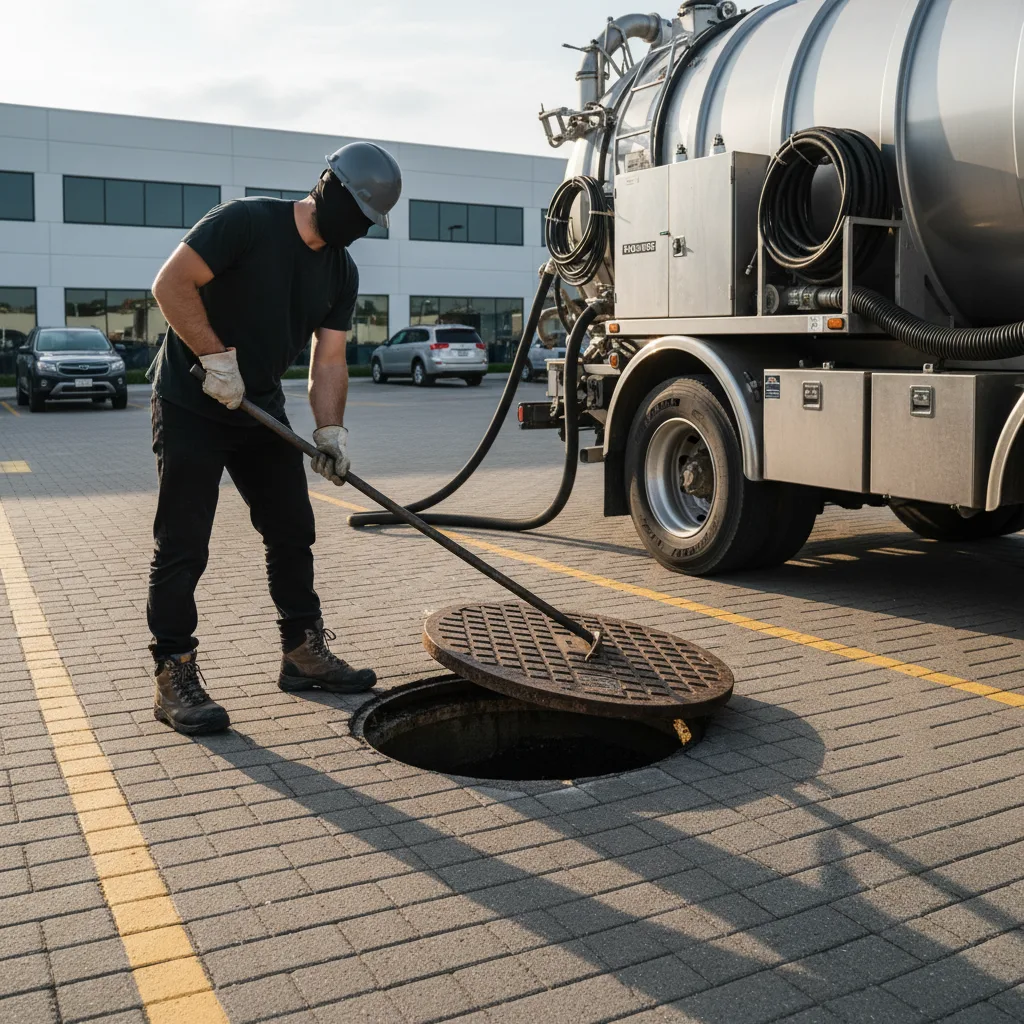

A grease-waste manifest is a chain-of-custody record used by some jurisdictions to document removal and delivery of grease waste. The required form, signatures, recipients, deadlines, and retention period depend on the applicable program.
What a grease trap manifest records
A manifest commonly identifies the food-service business or other waste originator, the hauler or self-cleaner, the service date, the equipment or waste, the amount removed, and the receiving or disposal facility. A local form may require signatures, ticket numbers, condition notes, dates, or copies for government recipients.
A service invoice is not automatically the same thing as a legally required manifest. Ask the serving authority which document it accepts and what must be completed after disposal.
Florida's current statewide example
Florida DEP's grease-waste program says a Service Manifest is completed each time grease waste is collected. The current state form records hauler, originator, trap, volume, disposal-facility, receipt or ticket, date, and signature details. The form says the hauler must provide the originator and the relevant county and municipality a completed copy within 30 days after disposal, and that the originator and hauler retain a signed completed copy onsite for one year.
Those are Florida requirements. They should not be copied into a guide for another state or province without checking that location's law and utility program.
Other named examples
- Austin, Texas: Austin Water says the liquid-waste hauler provides a manifest after each pump-out and the facility keeps manifests onsite for three years.
- Miami-Dade County: DERM materials use maintenance and electronic-reporting records for covered facilities and include requirements tied to permitted haulers. Check the current facility permit and DERM instructions.
Manifest review checklist
- Facility name and exact service address are correct.
- Device type, identifier, and service date match the work performed.
- Measured or reported quantity and condition fields are complete where required.
- Hauler, driver, vehicle, permit, or licence details are present when the form requires them.
- The receiving facility and receipt or ticket information are completed after delivery when required.
- Required signatures and dates are present.
- The facility received the final completed copy—not only a pickup receipt—if the program requires later disposal confirmation.
- The record is stored for the local retention period and can be found during an inspection.
If a manifest is missing or incomplete
- Contact the service provider promptly and request the completed record.
- Preserve related invoices, emails, photographs, work orders, and disposal tickets.
- Check the permit or official program instructions for correction or reporting steps.
- Ask the serving authority what it expects if the provider cannot supply the required document.
Do not assume that a missing form automatically proves service did not occur, or that an invoice automatically satisfies the applicable manifest rule. The authority administering the requirement decides what is acceptable.
Frequently asked questions
Does every grease trap cleaning require a manifest?
No nationwide rule was found. A manifest may be required by a state, province, city, county, utility, permit, or waste program. Check the rules for the service address.
How long should a manifest be kept?
Use the applicable retention rule. Florida's current form says one year for the originator and hauler; Austin currently says three years onsite. These examples are not universal defaults.
Who signs the manifest?
Follow the required form. Florida's form includes roles for the hauler, originator when service occurs during operating hours, and disposal-facility operator. Another program may use different roles.
Can records be electronic?
Some programs allow or require electronic records, while others specify onsite availability or a particular system. Confirm the format and access rules with the authority.
General information only: This guide does not determine whether a manifest is legally required for a particular facility or service.
Official sources
- Florida DEP — Grease Waste program
- Florida DEP — Grease Waste Service Manifest
- Austin Water — Grease Trap Maintenance
- Miami-Dade County — Grease Trap Maintenance Log
- Miami-Dade County — FSE Electronic Reporting Guide
Fact-checked August 12, 2026. Government guidance and local rules can change; recheck the authority serving the facility before relying on any requirement.

Author: Grease Trap Locator Editorial Team
The Grease Trap Locator editorial team covers FOG compliance, grease trap maintenance, and commercial kitchen regulations across the US and Canada. Our guides are written for restaurant owners, facility managers, and food service operators who need practical, accurate information without the fluff.
Find local contractors who handle cleaning, pumping, and FOG compliance — in your area.