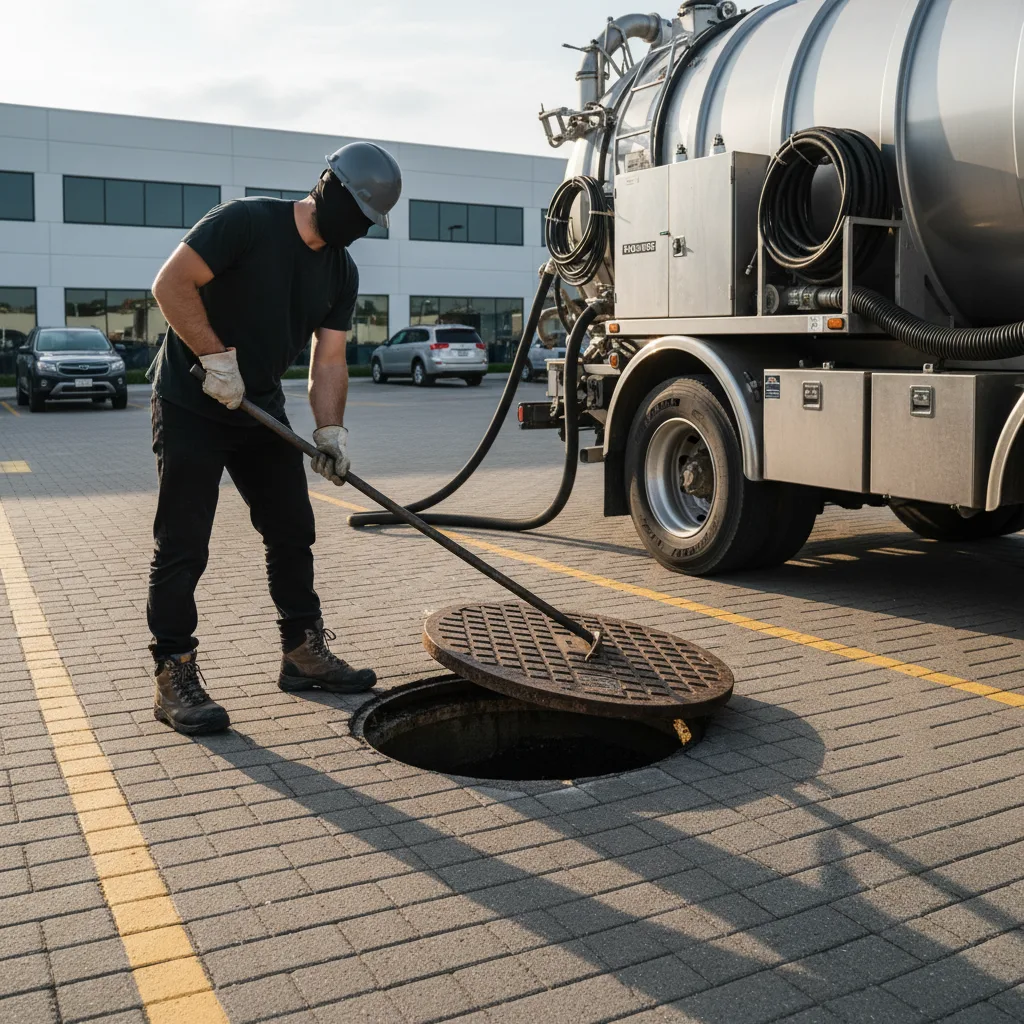
Grease trap pumping removes accumulated fats, oils, and grease (FOG) from your interceptor using vacuum equipment, while cleaning includes pumping plus scrubbing walls, baffles, and inlet/outlet pipes. Most restaurants need both services on a regular schedule — pumping alone leaves residue that reduces trap efficiency and creates compliance problems. Here's exactly what each service includes and how to determine what your kitchen requires.
What Grease Trap Pumping Actually Removes
Grease trap pumping is the process of using vacuum trucks to extract the three layers inside your interceptor: the top grease layer, middle wastewater layer, and bottom solids layer. Professional pumping services insert a vacuum hose through the access point and systematically remove contents until the trap is empty. The waste goes into a holding tank on the service vehicle and gets transported to an approved disposal facility.
Standard pumping removes approximately 90–95% of trap contents but doesn't address the residue coating interior surfaces. That remaining film harbors bacteria, creates odors, and reduces the trap's ability to separate FOG from wastewater. When you understand what happens during professional grease trap cleaning, you'll see why pumping alone isn't sufficient for long-term trap performance.
The frequency of pumping depends on trap size, kitchen volume, and local regulations. A 1,000-gallon trap in a high-volume restaurant typically needs pumping every 30–45 days. Smaller 50-gallon units under three-compartment sinks may require weekly service. Your municipality sets minimum pumping frequencies, but operational needs often demand more frequent service.
Why Cleaning Goes Beyond Basic Pumping
Professional grease trap cleaning includes pumping plus physical scrubbing of all interior surfaces. Technicians use scrapers and brushes to remove hardened grease from walls, baffles, and the bottom of the tank. They flush inlet and outlet pipes to clear FOG deposits that restrict flow. The process also includes inspecting gaskets, baffles, and the trap structure for damage or wear.
Cleaning addresses the biological component that pumping misses. Grease residue becomes a breeding ground for anaerobic bacteria that produce hydrogen sulfide — the source of sewage odors that can permeate your kitchen and dining areas. These bacteria also accelerate pipe corrosion and create the sticky biofilm that causes drain backups between service visits.
Schedule a full cleaning service every third or fourth pumping cycle. For example, if you pump monthly, have a thorough cleaning performed quarterly. This rhythm keeps residue from building up while managing service costs effectively.
The cleaning process takes 30–60 minutes longer than basic pumping and typically costs $100–$200 more per service. That premium pays for itself by extending the time between emergency calls and reducing the risk of municipal violations. Our grease trap cleaning cost guide breaks down regional pricing differences and factors that affect service rates.
How to Determine Which Service Your Trap Needs
Pumping suffices when your trap is relatively new, service intervals are tight, and you're not experiencing odor or drainage issues. If you're pumping every 2–3 weeks and the trap was cleaned within the past 90 days, basic pumping maintains compliance and performance.
You need full cleaning service when you notice any of these indicators: persistent odor even after recent pumping, slow drainage in kitchen sinks despite pump-out service, visible grease buildup on trap walls during inspection, or if it's been more than 90 days since your last cleaning. Health inspectors often flag traps that show heavy residue buildup, even if pumping records are current.
Pumping keeps your trap legal; cleaning keeps it functional. Most compliance failures happen not from missed pumping schedules but from accumulated residue that reduces trap capacity.
Indoor traps in tight mechanical spaces need cleaning more frequently than outdoor in-ground interceptors. The confined environment amplifies odor problems and makes residue buildup more problematic. Conversely, large outdoor interceptors may perform adequately with quarterly cleaning if pumping happens monthly.
Never extend service intervals beyond manufacturer recommendations or local code requirements to save money. The cost of one sewer backup or municipal fine exceeds a year of proper maintenance. Most jurisdictions require pumping when the trap reaches 25% capacity — not when it's completely full.
What Professional Service Should Include
Legitimate grease trap pumping includes complete vacuum extraction of all three layers, measurement of waste removed, and a service ticket documenting date, volume, and trap condition. The technician should check access covers for proper sealing and note any structural concerns. Waste must go to a licensed facility — ask for disposal documentation if your municipality requires it for compliance records.
Full cleaning service adds interior scrubbing with appropriate tools, high-pressure water flushing of inlet/outlet pipes, inspection of baffles and flow restrictor devices, and gasket condition assessment. Technicians should test the trap after cleaning to verify proper flow and separation. Any damage or worn components should be documented with repair recommendations.
Quality service providers also offer guidance based on trap condition. If they're removing minimal FOG but finding heavy solids accumulation, your kitchen practices may need adjustment. If grease is overwhelming the trap's capacity between service visits, you might need more frequent pumping or installation of additional FOG reduction equipment. The detailed grease trap maintenance guide covers these operational factors that affect service frequency.
Keep a maintenance log that tracks pumping volume at each service. Increasing waste volume between identical service intervals signals that FOG generation is rising — possibly from menu changes, increased business, or degraded kitchen practices. This data helps you adjust service frequency before problems develop.
Budgeting for Both Services
Basic grease trap pumping costs $150–$400 for small under-sink units and $300–$800 for large in-ground interceptors, depending on capacity and access difficulty. Full cleaning adds $100–$250 to these base rates. Emergency service outside regular schedules typically carries a 50–100% premium.
Most restaurants spend $2,400–$6,000 annually on grease trap service when combining regular pumping and quarterly cleaning. High-volume kitchens with multiple fryers or those in strict regulatory environments may spend $8,000–$12,000 yearly. These costs are simply part of operating a commercial kitchen — not maintaining traps properly costs far more through fines, emergency plumbing calls, and potential closure orders.
Contract service agreements usually offer 10–20% savings compared to per-visit pricing while guaranteeing service priority. Many providers include trap inspections and minor repairs in annual contracts, catching small problems before they become expensive emergencies. Contracts also simplify compliance documentation by providing regular service records automatically.
Frequently Asked Questions
How often should a grease trap be pumped versus fully cleaned?
Most commercial kitchens need pumping every 30–90 days depending on trap size and kitchen volume, with full cleaning performed every third or fourth pumping cycle. High-volume operations may require more frequent service, while low-volume establishments might extend intervals within regulatory limits. Your local code sets minimum frequencies that override these general guidelines.
Can I just pump my grease trap and skip professional cleaning?
Pumping-only service works short-term but residue accumulation eventually reduces trap efficiency and creates odor problems. Most operations need full cleaning at least quarterly to maintain proper function. Skipping cleaning saves money initially but leads to more frequent pumping needs and higher long-term costs as trap capacity diminishes.
What happens if I only clean without pumping between services?
You cannot effectively clean a trap full of FOG and wastewater — pumping must happen first to access interior surfaces. Cleaning without pumping is not a recognized service option. All professional cleaning services begin with complete pump-out before scrubbing and inspection work begins.
How do I know if my service provider is actually cleaning or just pumping?
Cleaning takes significantly longer than pumping alone — expect 60–90 minutes versus 20–30 minutes for pump-only service. You should see technicians using brushes and scrapers, not just vacuum hoses. Request before-and-after photos or ask to inspect the trap after service to verify thorough cleaning occurred.
Does cleaning eliminate the need for pumping as frequently?
Proper cleaning maintains trap efficiency but doesn't reduce FOG generation from your kitchen operations. Pumping frequency depends on how quickly your trap fills, which relates to cooking volume and practices rather than cleaning quality. However, well-maintained traps often perform better at design capacity, potentially extending intervals slightly within regulatory limits.
Find verified grease trap services in your area at https://www.greasetraplocator.com.
Find verified, local contractors who handle cleaning, pumping, and FOG compliance — in your area.
