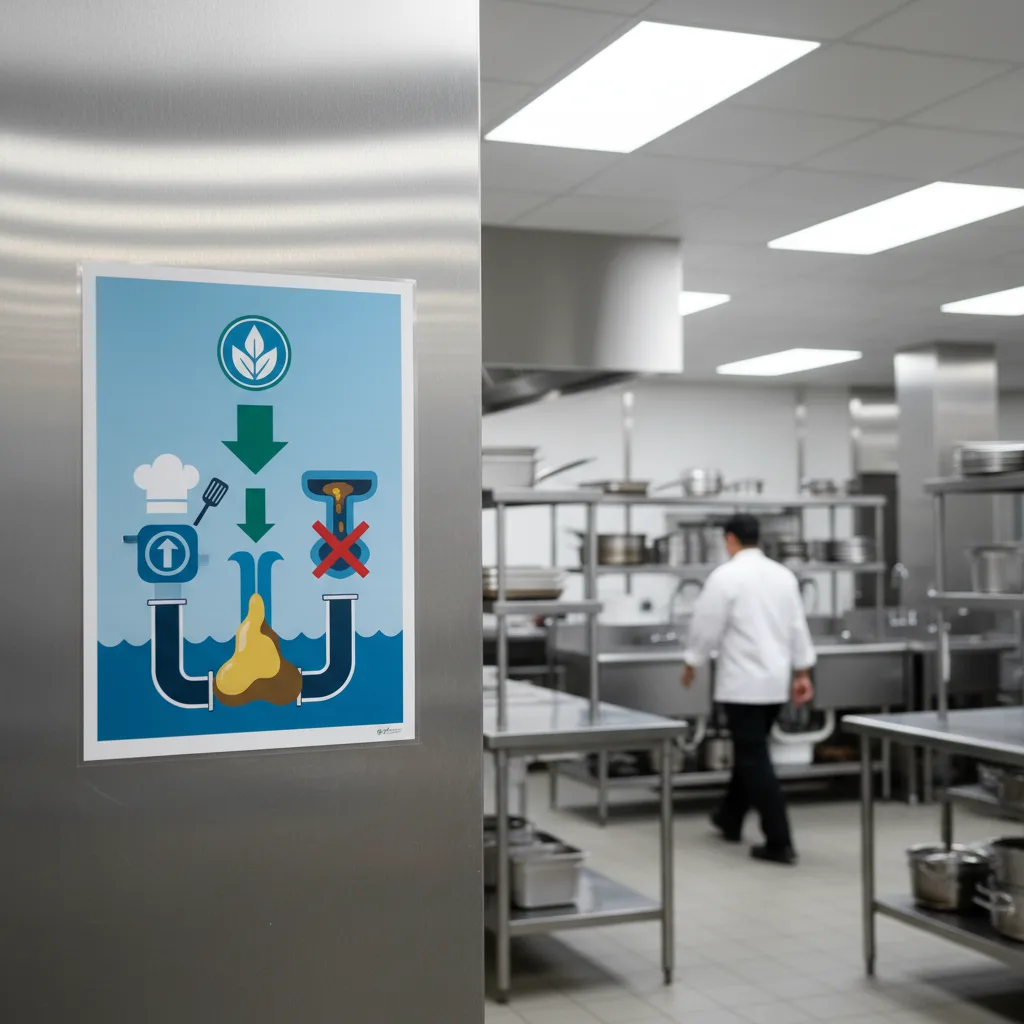
Municipal FOG (Fats, Oils, and Grease) programs have become the backbone of wastewater infrastructure protection across North America, transforming how cities enforce grease compliance in commercial kitchens. These regulatory frameworks combine inspection protocols, permit requirements, and enforcement mechanisms to prevent costly sewer system failures caused by grease accumulation. Understanding how your local municipal FOG program operates isn't just about avoiding fines — it's about protecting your business from operational disruptions and maintaining your legal right to discharge wastewater.
What Is a Municipal FOG Program?
A municipal FOG program is a comprehensive regulatory system established by cities, counties, or wastewater treatment districts to control the discharge of fats, oils, and grease from food service establishments into the public sewer system. These programs operate under authority granted by the EPA's Clean Water Act and state-level environmental regulations, giving municipalities the power to inspect facilities, issue permits, mandate grease interceptor installation, and levy penalties for non-compliance.
Most FOG programs share common structural elements: a sewer use ordinance that establishes legal requirements, a permit or registration system for commercial kitchens, regular inspection schedules, mandatory maintenance documentation, and graduated enforcement procedures. The specific requirements vary significantly between jurisdictions — what's acceptable in one city may trigger violations in another — making it essential to understand your local program's particular standards.
The driving force behind municipal FOG programs is financial and environmental necessity. Grease-related sewer blockages cost cities millions in emergency repairs, environmental cleanup, and regulatory penalties. By shifting compliance responsibility to food service establishments, municipalities reduce infrastructure maintenance costs while protecting receiving waters from untreated sewage releases that occur during overflow events.
Core Components of FOG Program Enforcement
Municipal enforcement begins with facility classification and permitting. Most programs categorize food service establishments based on operation type, cooking volume, and discharge risk. High-risk facilities — typically full-service restaurants with extensive frying operations — face more stringent requirements than low-risk establishments like coffee shops or bakeries with minimal grease generation.
The permit process establishes your facility's baseline compliance obligations. This typically includes submitting plumbing plans for review, installing appropriately sized grease interceptors or traps, implementing best management practices, maintaining service and inspection logs, and allowing municipal access for compliance inspections. Some jurisdictions charge annual permit fees ranging from $100 to $500, which fund program administration and inspection staff salaries.
The most effective FOG programs combine education with enforcement, helping operators understand why compliance matters before resorting to punitive measures.
Inspection protocols form the enforcement backbone. Municipal inspectors conduct scheduled and complaint-driven facility visits, examining grease interceptor condition, maintenance records, kitchen practices, and discharge quality. During inspections, they document interceptor capacity, accumulated grease levels, structural integrity, and proper installation. They also review manifests from licensed haulers to verify regular pumping schedules and compliant disposal practices.
Maintain a dedicated FOG compliance binder at your facility containing all permits, service records, inspector visit logs, employee training documentation, and hauler manifests. This immediately demonstrates good-faith compliance efforts during inspections.
Documentation requirements create an auditable compliance trail. Establishments must retain pumping and cleaning records for periods ranging from three to seven years depending on jurisdiction. These records must include service dates, waste volumes removed, disposal facility information, and the licensed hauler's certification. Digital record-keeping systems have become increasingly popular, allowing real-time submission to municipal databases that trigger alerts when service intervals exceed permitted timeframes.
Violation Types and Progressive Enforcement
Municipal FOG programs typically employ graduated enforcement that escalates based on violation severity and repeat offenses. First-tier violations generally involve documentation deficiencies — missing service records, expired permits, or late reporting — and result in warning notices with correction deadlines typically ranging from 14 to 30 days.
Second-tier violations include operational deficiencies such as inadequate interceptor sizing, improper maintenance intervals, or BMPs failures like pouring grease down drains or using prohibited chemical additives. These trigger formal compliance orders requiring corrective action plans, increased inspection frequency, and administrative fines. Understanding the financial consequences of FOG violations helps operators prioritize prevention over remediation.
Third-tier violations represent serious non-compliance: operating without required permits, refusing inspector access, causing documented sewer blockages, or repeat offenses after compliance orders. Enforcement actions at this level include substantial daily fines, permit suspension or revocation, mandatory facility upgrades, and potential criminal charges in cases involving environmental damage or false documentation.
Some municipalities can halt your water and sewer service for persistent FOG violations, effectively forcing business closure until compliance is achieved. This drastic measure is reserved for facilities that ignore multiple enforcement actions.
Cross-referencing between health departments, business licensing offices, and wastewater authorities means FOG violations can trigger consequences beyond the program itself. Health department permit renewals may be denied, business licenses suspended, or certificate of occupancy transfers blocked until compliance is restored.
Best Management Practices Requirements
Beyond interceptor installation and maintenance, municipal FOG programs mandate operational best management practices that prevent grease from entering the drainage system in the first place. These BMPs represent the first line of defense against FOG accumulation and are increasingly emphasized in modern program structures.
Standard BMPs include dry wiping cookware and utensils before washing, using sink strainers to catch food solids, proper disposal of fryer oil through licensed recyclers, employee training on FOG prevention, and posted signage reminding staff of proper procedures. Some jurisdictions require documented employee training programs with signed acknowledgment forms kept in compliance files.
Prohibited practices typically include using hot water or detergents to flush grease down drains, disposing of food waste through floor drains or sinks, using chemical emulsifiers or enzymes that claim to eliminate grease (these products only relocate the problem downstream), and connecting dishwashers or food waste disposers directly to grease interceptors. Many operators don't realize that these seemingly convenient shortcuts can trigger immediate violations, as they fundamentally undermine interceptor effectiveness and often align with federal EPA FOG regulations as well.
How to Navigate Your Local FOG Program
Successful navigation of municipal FOG requirements starts with proactive engagement rather than reactive compliance. Contact your local wastewater department or environmental services division to obtain specific program requirements, permit applications, approved hauler lists, and BMP guidelines. Many municipalities offer free site assessments to help new establishments understand their obligations before operations begin.
Establish relationships with compliant service providers early. Work with licensed grease trap haulers who understand local requirements and provide documentation in the required format. Many progressive haulers offer automated reminder services and submit maintenance records directly to municipal databases on your behalf, reducing administrative burden and ensuring timely service.
Schedule grease trap service based on the 25% rule — pump when accumulated FOG and solids reach 25% of total interceptor capacity. This industry standard is codified in most municipal programs and prevents the performance failures that trigger violations.
Budget adequately for compliance costs. Beyond service fees, factor in permit renewals, potential equipment upgrades, employee training programs, and contingency funds for unexpected repairs. Facilities that treat FOG compliance as a fixed operational expense rather than an optional cost consistently maintain better regulatory standing and avoid the substantially higher costs associated with violation remediation.
Frequently Asked Questions
How often will my facility be inspected under a municipal FOG program?
Inspection frequency varies by jurisdiction and facility risk classification. High-risk establishments typically face annual or semi-annual scheduled inspections, while lower-risk facilities may be inspected every 2-3 years. However, complaint-driven inspections can occur at any time, and facilities with violation histories often move to quarterly inspection schedules until compliance improves. Some municipalities have adopted technology-enabled monitoring that reduces physical inspection frequency for facilities with consistent compliance records.
Can I choose my own grease trap service provider?
Most municipal FOG programs require you to use licensed or certified haulers who meet specific qualifications, but you typically have choice among approved providers. Some jurisdictions maintain preferred vendor lists, while others simply require haulers to hold proper permits and disposal facility contracts. Verify that any hauler you select is properly licensed in your jurisdiction and provides documentation in the format your municipality requires — using an unlicensed hauler can trigger violations even if service was performed properly.
What happens if I can't afford the grease interceptor my city requires?
Financial hardship doesn't exempt facilities from FOG requirements, but some municipalities offer compliance assistance programs including low-interest loans, extended compliance timelines with interim measures, or grant programs for small businesses. Contact your wastewater authority to discuss options before ignoring requirements. Operating without required equipment will eventually result in fines that far exceed installation costs, plus potential permit suspension that forces business closure.
Do food trucks and mobile vendors fall under FOG programs?
This depends on local ordinances and where wastewater is discharged. Mobile vendors that discharge to public sewer systems — whether at commissary kitchens, event venues, or dump stations — are increasingly subject to FOG requirements. Some cities require mobile food establishments to use commissaries with adequate grease interception or install portable grease recovery devices. Check with both your business licensing authority and wastewater department, as requirements for mobile operations are evolving rapidly.
Can previous property owners' FOG violations affect my new restaurant?
FOG compliance obligations and violations typically follow the property or permit rather than individual operators. When acquiring an existing food service location, conduct FOG due diligence by requesting compliance history, inspection reports, and outstanding violation notices from the municipality. Unresolved violations may need correction before permit transfer, and inadequate grease interception systems become your responsibility upon occupancy. Factor remediation costs into acquisition negotiations and budget accordingly.
Municipal FOG programs represent a permanent fixture in the commercial food service regulatory landscape, with enforcement intensity increasing as cities face aging infrastructure and tightening environmental standards. Operators who embrace compliance as integral to responsible business operations avoid the disruptions, expenses, and reputational damage that accompany violations. Find verified grease trap services in your area to establish the service relationships that keep your operation compliant and your municipal FOG program requirements satisfied.
Find verified, local contractors who handle cleaning, pumping, and FOG compliance — in your area.
