Above Ground vs. Underground Grease Trap: Which Type Is Right for You?

10 May 2026 7 min read No comments Grease Trap Basics
Featured image


Choosing between an above ground grease trap and an underground model depends on your kitchen's plumbing layout, available space, and maintenance priorities. Above ground grease traps install under sinks or near fixtures, offering easy access for cleaning and lower upfront costs, while underground interceptors handle higher volumes and preserve kitchen floor space at the expense of more complex maintenance. This guide breaks down the functional differences, cost implications, and installation requirements to help you select the system that fits your operation.

What Is an Above Ground Grease Trap?

An above ground grease trap is a compact FOG (fats, oils, and grease) separation device installed inside your kitchen, typically under a three-compartment sink or adjacent to dish stations. These units range from 10 to 100 gallons in capacity and use a simple baffle system to slow wastewater flow, allowing grease to float to the surface while solids settle to the bottom. Treated water exits through an outlet pipe to the main drain line.

Most above ground models feature stainless steel or heavy-duty plastic construction designed for daily exposure to hot water and detergents. The trap sits on the floor or mounts beneath fixtures, making internal components accessible without excavation equipment. You'll find these systems in smaller restaurants, cafes, food trucks, and any commercial kitchen where space permits an indoor installation.

Best Practice
Match your grease trap capacity to your kitchen's fixture unit count and health department requirements — undersizing leads to frequent overflows and compliance violations, while oversizing wastes money on unnecessary pumping costs.

The primary advantage of above ground installation is maintenance visibility. Kitchen staff can monitor grease accumulation levels through inspection ports, and technicians complete pump-outs in 30–45 minutes without disrupting service. This accessibility translates to consistent performance when paired with regular cleaning schedules.

How Underground Grease Interceptors Work

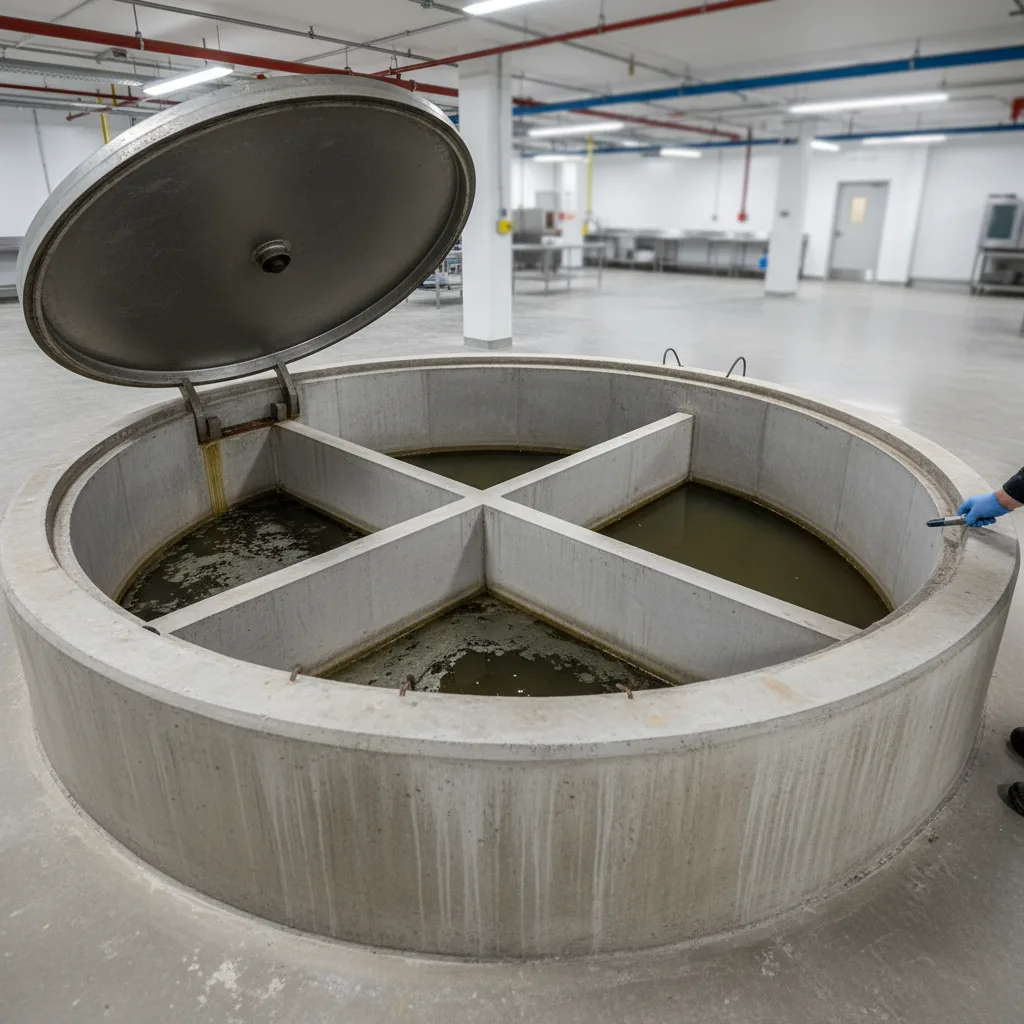
Underground grease interceptors install outside your building in excavated vaults, typically between your kitchen drain lines and the municipal sewer connection. These large-capacity systems — ranging from 500 to 2,000+ gallons — serve high-volume operations like full-service restaurants, hospitals, and institutional kitchens. The interceptor uses gravity separation over an extended retention time, allowing grease to rise and accumulate in a separate chamber while clarified water continues to the sewer.

Installation requires significant excavation, concrete vault construction, and integration with your existing plumbing infrastructure. The interceptor connects to all FOG-producing fixtures through a network of drain lines that converge at the inlet pipe. A properly sized underground system can handle the combined discharge from multiple prep sinks, dishwashers, floor drains, and cooking equipment simultaneously.

Underground interceptors remove 90–95% of FOG from wastewater when properly sized and maintained, compared to 75–85% efficiency for most above ground units under real-world conditions.

Access to underground units requires lifting heavy manhole covers and lowering vacuum hoses into the vault. Pumping typically takes 60–90 minutes and generates odors that require scheduling during off-hours. However, the larger capacity means less frequent service — many operations pump quarterly rather than weekly or biweekly.

Comparing Installation Requirements and Costs

Above ground grease trap installation is straightforward for licensed plumbers familiar with commercial kitchen work. The process involves cutting into existing drain lines, positioning the trap to maintain proper slope, and securing inlet/outlet connections. Most installations complete in 4–8 hours with minimal floor cutting. Total costs — including equipment, labor, and minor plumbing modifications — typically range from $1,200 to $4,500 for units sized appropriately for small to mid-size kitchens.

Underground interceptor installation is a multi-day construction project. Excavation crews dig a vault sized to your interceptor's footprint (often 6–10 feet deep), pour concrete walls and floors, install the interceptor tank, connect piping, backfill the site, and restore surface paving or landscaping. Coordination with civil engineers and obtaining excavation permits adds timeline complexity. Total project costs commonly fall between $8,000 and $25,000 depending on soil conditions, depth requirements, and local labor rates.

3–5 weeks
Average installation timeline for underground grease interceptors from permit to final inspection

Building codes dictate minimum sizing based on your kitchen's fixture unit discharge rate. Many jurisdictions require underground interceptors for restaurants exceeding specific seating capacities or daily meal counts, regardless of operator preference. Verify local requirements with your health department before committing to either system — retrofitting from above ground to underground after opening is exponentially more expensive than installing correctly from the start.

Maintenance Frequency and Access Considerations

Above ground grease traps require weekly to monthly pumping depending on capacity and kitchen volume. A 50-pound trap in a busy sandwich shop might need service every 7–10 days, while a 100-pound unit in a lower-volume café stretches to 3–4 weeks. Technicians wheel pumping equipment directly to the trap, remove the cover, and extract accumulated grease through vacuum hoses. The entire process happens in your kitchen, which means scheduling during slow periods to minimize disruption.

You'll need to budget approximately $150–$350 per pump-out for above ground service, with annual costs ranging from $2,400 to $7,200 for weekly service schedules. These figures assume standard pumping only — emergency cleanouts after backups cost significantly more and often include diagnosis fees. Explore more about maintenance practices in our grease trap service resources.

Important
Skipping scheduled cleanings causes grease to harden in drain lines, creating blockages that trigger sewage backups into your kitchen — violations that immediately shut down operations and generate five-figure emergency repair bills.

Underground interceptors typically operate on quarterly or semi-annual pumping schedules due to their larger holding capacity. Service requires a vacuum truck positioned near the manhole access point, which works well for exterior installations with alley or parking lot access. Per-service costs run $300–$800 depending on interceptor size and accumulated grease volume, translating to annual maintenance budgets of $1,200–$3,200 for quarterly service.

The trade-off is accessibility versus frequency. Above ground systems demand more frequent attention but integrate into routine kitchen operations. Underground units require less frequent service but involve heavier equipment, strict scheduling around truck access, and potential odor management during pumping.

Which Configuration Fits Your Operation?

Above ground grease traps make sense for operations with limited outdoor space, lower daily discharge volumes, and preference for in-house maintenance monitoring. Food trucks, small cafes, bakeries with minimal frying, and tenant spaces in multi-story buildings often default to above ground installations due to structural constraints. The ability to visually inspect grease levels and quickly respond to accumulation prevents the "out of sight, out of mind" neglect that causes compliance issues.

Choose above ground when your kitchen produces fewer than 300 meals daily, operates with limited fryer use, and has accessible floor space near major FOG-producing fixtures. These systems also suit temporary or seasonal operations where permanent underground infrastructure isn't justified by operating duration.

Underground grease interceptors suit high-volume restaurants, hotels, casinos, institutional kitchens, and any operation where local codes mandate exterior installation. The larger capacity handles peak discharge periods without overflow risk — critical for kitchens running multiple fryers, combi ovens, and high-temperature dishwashers simultaneously. Removing the trap from your kitchen floor also frees valuable square footage for equipment or storage.

Opt for underground installation when you're designing new construction with known outdoor access, operating a full-service restaurant with 150+ seats, or facing municipal requirements for minimum interceptor sizes exceeding practical above ground dimensions. The higher upfront cost amortizes over years of less frequent maintenance and superior FOG capture efficiency.

Frequently Asked Questions

Can I install an above ground grease trap myself?

No — commercial grease trap installation requires a licensed plumber in all jurisdictions to ensure proper venting, slope, and code compliance. DIY installations void equipment warranties, fail health inspections, and create liability if improper connections cause backups into municipal sewer lines. Professional installation typically adds $400–$1,200 to equipment costs but guarantees permit approval and operational reliability.

How do I know if my grease trap is full?

Your grease trap needs pumping when accumulated FOG reaches 25% of total liquid depth — the "quarter rule" enforced by most health departments. Check levels by opening the inspection port and inserting a measuring stick to the bottom, then noting where grease coating begins. Slow drainage, persistent odors, and visible grease in the outlet chamber also signal overdue maintenance requiring immediate service.

Do underground grease interceptors smell?

Properly maintained underground interceptors produce minimal odor between pump-outs because they're sealed and vented through your building's plumbing stack. Noticeable smells indicate either overdue cleaning, damaged seals allowing sewer gas escape, or insufficient venting in the drainage system. Scheduling pumping during early morning hours before business opens prevents customer exposure to temporary odors during service.

What happens if I choose the wrong size grease trap?

Undersized grease traps overflow into drain lines, causing backups that shut down kitchen operations until emergency pumping and line jetting restore flow. You'll face health code violations, potential fines, and costs exceeding $2,000 for emergency service calls. Oversized units waste money on pumping excess water during service visits and may not maintain sufficient flow velocity for proper grease separation.

Can I convert from above ground to underground later?

Yes, but conversion requires full underground interceptor installation plus abandoning or removing the existing above ground unit — essentially paying for two complete systems. Costs typically exceed $15,000 due to excavation, new piping, and kitchen downtime during connection work. Size your system correctly during initial installation or new construction to avoid expensive retrofits as your operation grows.

Find verified grease trap services in your area at https://www.greasetraplocator.com.

Grease Trap Locator Editorial Team
Author: Grease Trap Locator Editorial Team

The Grease Trap Locator editorial team covers FOG compliance, grease trap maintenance, and commercial kitchen regulations across the US and Canada. Our guides are written for restaurant owners, facility managers, and food service operators who need practical, accurate information without the fluff.

Need a Licensed Grease Trap Service?

Find verified, local contractors who handle cleaning, pumping, and FOG compliance — in your area.

Find a Verified Contractor
In This Article
Find a Grease Trap Contractor

Search our directory of verified licensed FOG contractors serving your area.