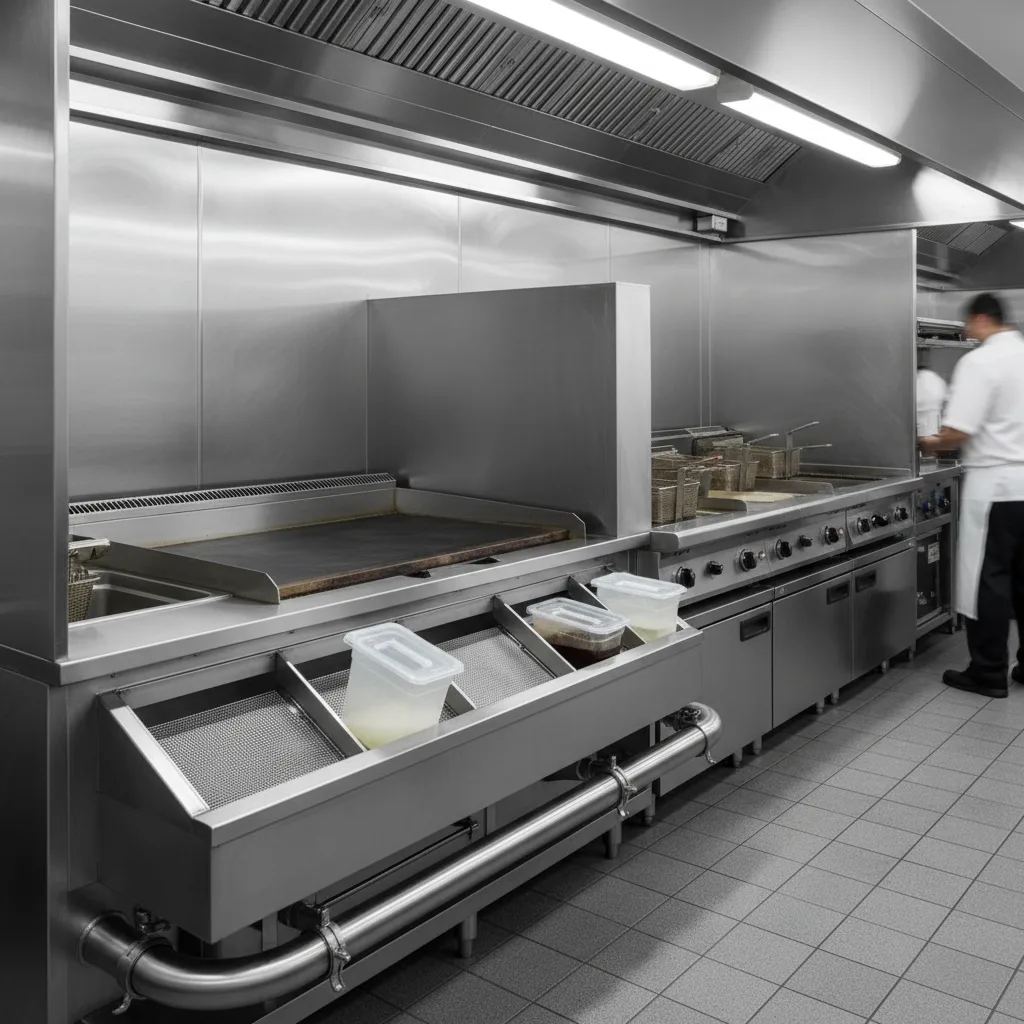

Smart restaurant operators know that grease trap maintenance doesn't have to drain your budget. While cleaning costs can run anywhere from $150 to $1,000 per service depending on trap size and frequency, implementing the right strategies can cut those expenses by 30-50% annually without compromising compliance or kitchen safety.
1. Optimize Your Service Frequency Based on Actual Need
Most facilities overpay for grease trap cleaning because they follow arbitrary schedules rather than monitoring actual accumulation rates. Municipal codes typically require service when your trap reaches 25% capacity, but many businesses schedule monthly pumping regardless of whether their trap needs it.
Conduct a simple capacity test by measuring grease depth at weekly intervals for three months. Record the measurements and calculate your actual accumulation rate. A trap that reaches 25% capacity in six weeks doesn't need monthly service — you're literally paying to pump clean water. Conversely, a trap filling in three weeks needs more frequent attention before overflow violations occur.
Use the quarter rule: insert a pole to the bottom of your trap, pull it out, and measure the grease layer. If it's more than one-quarter of the total depth, schedule service within 48 hours.
Understanding the true cost breakdown of professional cleaning services helps you negotiate better rates when you can demonstrate consistent, predictable service needs rather than emergency callouts.
2. Implement Daily Kitchen Practices That Reduce FOG Buildup
The most effective way to save money grease trap cleaning costs is reducing how much grease enters your trap in the first place. Staff training delivers immediate ROI — restaurants that implement comprehensive FOG management protocols reduce their cleaning frequency by 35-40% on average.
Train kitchen staff to scrape all plates, pots, and pans into trash receptacles before washing. This single practice can reduce grease loading by up to 50%. Install simple mesh screens over sink drains to catch food particles and solidified fats before they enter your drainage system. These screens cost $15-30 but can extend service intervals by weeks.
Establish a rendering program for used cooking oil. Never pour oil down drains — even small amounts accumulate rapidly. Many rendering services actually pay for used cooking oil, turning a disposal cost into a revenue stream while simultaneously reducing trap contamination.
Adopting comprehensive grease trap best management practices creates a culture of prevention that compounds savings over time while reducing emergency service calls and compliance violations.
3. Choose the Right Service Contract Structure
Service contracts vary dramatically in cost structure, and choosing the wrong one can inflate expenses by 20-40% annually. The three primary contract types — per-service, monthly flat rate, and quarterly prepaid — each offer advantages depending on your operation.
Per-service billing works best for facilities with unpredictable volumes or seasonal operations. You pay only when service occurs, but individual service calls typically cost 15-25% more than contracted rates. Monthly flat-rate contracts guarantee predictable expenses and usually include emergency callouts, making them ideal for high-volume kitchens requiring frequent service.
Quarterly prepaid contracts often deliver the lowest per-service cost — sometimes 30% below on-demand rates — because they guarantee the provider consistent business. However, you're locked in regardless of actual need. Review your historical service records before committing to understand which structure aligns with your usage patterns.
Negotiate bundled services during contract discussions. Many providers offer reduced rates when you combine grease trap pumping with drain cleaning, hood filter exchange, or pressure washing services scheduled simultaneously.
Understanding how service contract pricing structures work empowers you to negotiate better terms and avoid paying for services you don't need while ensuring critical maintenance never gets deferred.
4. Maintain Your Trap Between Professional Services
Regular interim maintenance extends service intervals without compromising performance or compliance. While only licensed professionals can legally pump and dispose of grease trap waste in most jurisdictions, facility staff can perform simple maintenance tasks that reduce accumulation rates.
Install and maintain a grease trap lid that seals properly but remains accessible for inspection. Damaged or corroded lids allow rainwater infiltration that increases pumping volume and costs. Replace deteriorated gaskets annually — a $20 part that prevents hundreds in unnecessary pumping charges.
Check and clean inlet and outlet baffles monthly. These components prevent grease from flowing directly through your trap, but they become fouled with debris over time. Most can be accessed without special tools and cleaned in 15 minutes, yet this simple task can extend service intervals by 10-15%.
Monitor water temperature entering your trap. Excessively hot water keeps fats liquified, allowing them to pass through your trap into municipal lines where they solidify and cause blockages. Install low-flow pre-rinse spray valves that reduce both water temperature and volume entering your system.
Never use chemical drain cleaners, enzymes, or emulsifiers in your grease trap. These products don't eliminate grease — they simply move it downstream where it causes expensive blockages in municipal systems and can result in significant fines.
5. Right-Size Your Trap for Your Operation
Operating with an undersized grease trap guarantees excessive cleaning costs because you're fighting basic physics. A trap that's too small for your kitchen's FOG output will require service every 2-3 weeks instead of monthly or quarterly intervals, multiplying your annual costs by 300-400%.
Grease traps are sized based on fixture unit capacity and flow rates, not square footage or number of seats. A 1,000-pound trap might serve adequately for a cafe doing breakfast and lunch, but that same trap will overflow weekly in a high-volume steakhouse. Calculate your actual needs based on meal count, menu composition, and dishwashing frequency.
If you're consistently requiring service more than twice monthly, your trap is likely undersized. Installing a properly sized unit requires upfront investment — typically $2,000-$8,000 depending on capacity and installation complexity — but the ROI usually occurs within 18-24 months through reduced service frequency. A larger trap also provides buffer capacity during peak periods, reducing emergency callout risks.
Conversely, massively oversized traps waste money too. While they require less frequent pumping, the larger volume means higher disposal costs per service, and the extended retention time can create odor problems as waste becomes anaerobic.
6. Bundle Services and Negotiate Multi-Location Discounts
Service providers operate on route efficiency — their profitability depends on minimizing drive time between stops. Leverage this by bundling multiple services during single visits and negotiating volume discounts if you operate multiple locations.
Request simultaneous scheduling for grease trap pumping, drain line jetting, and kitchen exhaust cleaning. Providers typically offer 15-30% discounts when they can complete multiple services in one trip rather than making separate visits. The labor and equipment are already on-site; marginal service costs drop significantly.
Multi-location operators should consolidate all facilities with a single provider and negotiate enterprise pricing. A restaurant group with five locations might save 25-35% compared to individual location contracts because the provider can optimize routing and guarantee substantial monthly revenue. Request dedicated service days when their truck is already in your area servicing other accounts.
Ask providers for off-peak pricing. Services scheduled during their slower periods (typically mid-week mornings) often cost 10-20% less than premium Friday afternoon or weekend slots.
7. Document Everything for Compliance and Negotiation Power
Detailed service records provide leverage for cost reduction in multiple ways. First, they demonstrate compliance to inspectors, reducing fine risks that dwarf cleaning costs. Second, they create data for optimizing service intervals. Third, they provide negotiating power when comparing providers or renegotiating contracts.
Maintain a log showing service dates, volume pumped, condition notes, and costs for every cleaning. After 12 months, analyze the pattern. If you're consistently pumping at 15-20% capacity, you're overpaying for unnecessary services. Present this data to your provider and adjust frequency accordingly.
Use records to compare provider pricing objectively. When soliciting quotes, provide historical data showing typical pump volumes, access conditions, and service frequency. This eliminates low-ball quotes that providers later inflate with "unexpected condition" surcharges and ensures accurate, comparable pricing.
Documentation also protects against compliance violations. Inspectors expect to see manifests, pumping certificates, and disposal receipts. Missing records during inspection can result in fines of $500-$5,000 — more than a year's worth of cleaning services for many facilities.
8. Evaluate DIY Maintenance Equipment for Large Facilities
High-volume facilities with large traps (1,500+ pounds) might achieve significant savings by investing in basic pumping equipment for interim maintenance between professional services. This strategy doesn't replace licensed service — disposal still requires proper permitting and waste hauling — but can reduce frequency substantially.
A basic pump, hose system, and storage container costs $3,000-$8,000 depending on capacity. If your facility currently requires weekly professional service at $400 per visit, reducing to biweekly professional cleaning while performing interim pumping yourself creates payback in 4-5 months. You'll still need professional service for complete cleanout and inspection, but half as often.
This approach requires proper training, appropriate storage for collected waste, and strict adherence to disposal regulations. Many municipalities prohibit DIY pumping entirely, while others allow it with proper permits. Verify local regulations before investing in equipment — illegal disposal carries penalties far exceeding any potential savings.
DIY maintenance works only for facilities with staff trained in proper procedures and safe waste handling. Improper pumping can damage baffles, create worker safety hazards, or result in illegal discharge violations carrying five-figure fines.
Frequently Asked Questions
How much can I realistically save on grease trap cleaning costs?
Most facilities can reduce annual grease trap expenses by 25-40% through optimized service scheduling, staff training, and preventive maintenance. A restaurant currently spending $4,800 annually on monthly cleaning might reduce costs to $3,000-$3,600 by extending intervals to six weeks based on actual accumulation rates and implementing proper kitchen practices. Larger operations with multiple locations often achieve 40-50% savings through volume contracts and bundled services.
Is it legal to clean my own grease trap to save money?
Regulations vary significantly by jurisdiction. Most municipalities require licensed waste haulers to pump and dispose of grease trap contents due to environmental protection laws governing FOG disposal. However, some areas permit facility maintenance of smaller under-sink traps while requiring professional service for in-ground interceptors. You can legally perform interim tasks like cleaning baffles and removing accessible surface grease in most areas, but pumping and disposal typically require permits. Contact your local wastewater authority to verify specific requirements before attempting DIY service.
Will using bacteria or enzyme treatments reduce my cleaning costs?
Despite aggressive marketing, bacterial and enzyme additives don't reduce grease trap cleaning costs and may actually increase expenses. These products don't eliminate grease — they liquefy it, allowing FOG to pass through your trap into municipal sewer lines where it solidifies and causes blockages. Many jurisdictions explicitly prohibit these additives, and their use can void warranties or result in fines if downstream blockages are traced to your facility. The only proven method to reduce costs is source reduction through proper kitchen practices and optimized service scheduling based on actual trap capacity.
How often should I get quotes from different grease trap service companies?
Request competitive quotes annually, even if satisfied with your current provider. The grease trap service market is competitive, and pricing can shift significantly year to year based on disposal costs, fuel prices, and provider capacity. Existing providers often match competitive quotes to retain business, potentially saving 10-20% without switching companies. When soliciting quotes, provide detailed information about trap size, typical pump volumes, access conditions, and current service frequency to ensure accurate, comparable pricing rather than low-ball estimates that increase after the first service.
What's included in a standard grease trap cleaning service?
Standard service includes pumping all contents from the trap, cleaning inlet and outlet baffles, removing sediment and hardened grease, basic inspection of trap condition, and proper disposal of waste at licensed facilities. Most providers include documentation showing disposal compliance and volume removed. Additional services like high-pressure jetting of connecting lines, baffle replacement, gasket installation, or detailed structural inspections typically cost extra. Clarify exactly what's included in quoted prices and request itemized pricing for additional services to avoid surprise charges and accurately compare providers.
Implementing even three or four of these strategies can dramatically reduce your annual grease trap maintenance expenses while improving compliance and reducing emergency service risks. The key is treating grease trap management as a controllable operating expense rather than an unavoidable cost — facilities that actively manage their FOG reduction and service optimization consistently outperform those taking a passive approach. Find verified grease trap services in your area at https://www.greasetraplocator.com.

Author: Grease Trap Locator Editorial Team
The Grease Trap Locator editorial team covers FOG compliance, grease trap maintenance, and commercial kitchen regulations across the US and Canada. Our guides are written for restaurant owners, facility managers, and food service operators who need practical, accurate information without the fluff.
Find verified, local contractors who handle cleaning, pumping, and FOG compliance — in your area.