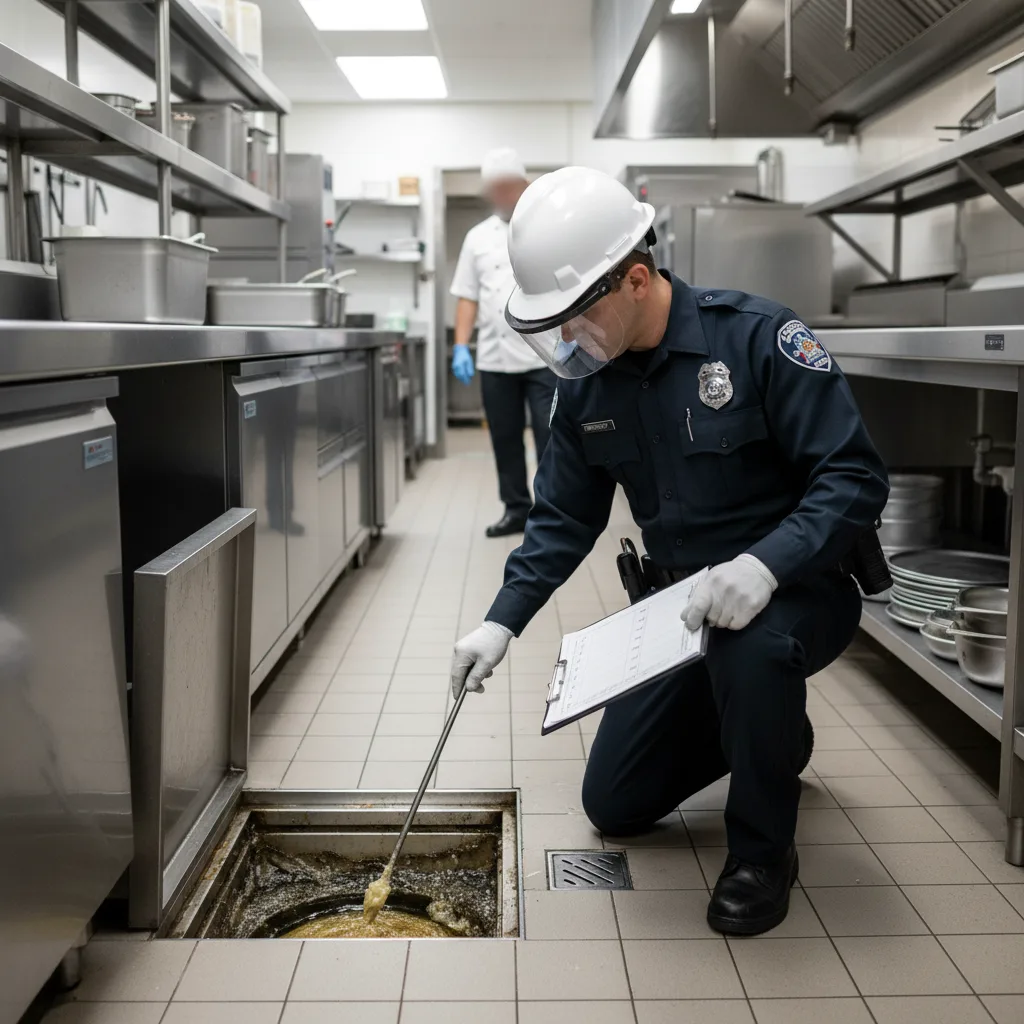

FOG violations don't just risk regulatory headaches — they can carry financial penalties. Fines vary widely by city and by the type of violation. This guide explains how penalty structures usually work, gives checked examples from several North American cities, and covers the other costs a violation can bring.
How FOG Violation Penalties Are Structured
Many municipalities use a tiered penalty system that escalates with repeat offenses. First violations often result in warning notices paired with compliance deadlines, while repeat infractions can lead to monetary fines. The exact steps are set by your local ordinance, so check it.
Penalty frameworks often consider violation severity, with operational infractions (like missed cleaning schedules) treated differently from discharges that cause sewer blockages or backups. A restaurant failing a routine grease trap inspection can face different consequences than one caught dumping fryer oil into floor drains.
Some jurisdictions can impose a separate penalty for each violation found during a single inspection. A facility with an undersized trap, improper installation, and no maintenance records could face more than one penalty.
Enforcement authority varies by region. Some cities handle FOG compliance through water departments, while others assign responsibility to environmental agencies or health departments. This jurisdictional split affects both penalty amounts and appeal processes — understanding your local enforcement structure is critical when navigating FOG compliance requirements.
City-by-City Fine Breakdowns
Penalty amounts vary considerably by location. In Los Angeles County, grease rules come from the county's Public Works industrial waste program, the LA County Sanitation Districts and individual cities, each with its own ordinance. Consult the sewer use ordinance that applies to your address for current rates.
New York City enforces grease-interceptor rules through NYC DEP under 15 RCNY §19-11, with a maximum penalty of $10,000 per day, per violation. DEP grease enforcement is separate from the NYC Department of Health letter-grade restaurant inspection program, which covers food safety.
In Chicago, fines for sewer-use violations are set in the Municipal Code; check the current code for amounts.
In San Francisco, the SFPUC FOG Control Ordinance requires food service establishments to have grease capturing equipment and to maintain it. Specific fine amounts vary — consult your local sewer use ordinance for current rates.
In Canada, grease rules are usually set in municipal or regional bylaws. Toronto Municipal Code Chapter 681 (Sewers) requires food-related grease interceptors and sets maximum fines of up to CAD $50,000 for a person's first offence and up to CAD $100,000 for a corporation, with higher maximums for a person's later offences and for continuing offences (§ 681-14.1). In the Vancouver area, Metro Vancouver's Food Sector Grease Interceptor Bylaw No. 365 requires commercial and institutional kitchens to install and maintain a grease interceptor; violations can bring re-inspection fees or a fine.
Hidden Costs Beyond Direct Fines
Fines are not the only cost. A compliance failure can also mean an emergency pump-out, and some municipalities can bill violators for cleanup when a blockage affects public sewers. These charges come on top of any fine.
Business interruption can cost more than the fine itself. If wastewater backs up into food, prep or customer areas, those operations generally must stop until the problem is fixed (see grease trap violations), and lost trading days can't be recaptured.
A violation can also bring follow-up costs, such as more frequent inspections for facilities with a violation history. Check your local program's rules.
Document all maintenance activities with dated service reports and photos. This record helps show good-faith effort if a violation occurs or you appeal.
Insurance is another consideration. Some commercial general liability policies exclude coverage for fines and penalties. If a grease blockage damages a neighbor's property, ask your insurer how your policy handles it.
Escalation Timelines and Repeat Offender Status
Many municipalities set higher penalties for repeat offenders. Whether an earlier violation affects a later penalty depends on the applicable ordinance, so review your local sewer use ordinance before assuming an older infraction no longer counts.
In serious cases, some state and local laws allow criminal charges. Check your local ordinance and state law.
Cost Comparison: Compliance vs. Violation
Routine grease trap service costs vary with trap size, pumping frequency and location; see the grease trap cleaning cost guide for price ranges. Regular service lowers violation risk and helps prevent emergency service calls.
A single violation can combine several costs: the fine itself, an emergency pump-out, work to bring the system into compliance, and lost revenue if you must stop operating. Regular maintenance helps you avoid all of them.
Frequently Asked Questions
Can FOG violation fines be negotiated or reduced?
It depends on your local rules. Many programs let you respond to or appeal a violation notice by a deadline stated on the notice, and showing prompt corrective action and good maintenance records can help. Check the deadline on your notice.
Do FOG violations appear on public health inspection reports?
It depends. In many cities grease rules are enforced by the sewer utility rather than the health department, so violations may not appear on restaurant inspection reports.
Do past FOG violations count against you later?
It depends on the applicable ordinance. Repeat violations can bring higher penalties, but whether an older violation still counts is set locally. Check your local sewer use ordinance.
Are property owners liable for tenant FOG violations?
Liability varies by lease structure and local ordinance. Some local rules can hold property owners responsible as well as tenants. Landlords leasing to restaurants often add lease clauses requiring proof of regular maintenance. Check your local ordinance and get legal advice on your lease.
Can repeated FOG violations trigger business license revocation?
Some municipalities can suspend or revoke permits for repeated or serious violations. Check your local code.
The financial case for FOG compliance is strong: regular maintenance usually costs less than a violation plus the emergency service, downtime and follow-up it can bring. Find grease trap services in your area at https://www.greasetraplocator.com and protect your operation from preventable violation costs.

Author: Grease Trap Locator Editorial Team
The Grease Trap Locator editorial team covers FOG compliance, grease trap maintenance, and commercial kitchen regulations across the US and Canada. Our guides are written for restaurant owners, facility managers, and food service operators who need practical, accurate information without the fluff.
Find local contractors who handle cleaning, pumping, and FOG compliance — in your area.