Grease Interceptors: Complete Guide for Commercial Kitchens

30 Mar 2026 16 min read No comments Uncategorized


Grease Interceptors: The Complete Guide for Commercial Kitchens

If you're running a commercial kitchen, managing a restaurant, or overseeing a facility with food prep operations, you'll deal with a grease interceptor at some point. It's one of those pieces of infrastructure that nobody thinks about until something goes wrong — and when it goes wrong, it goes very wrong. We're talking sewage backups, health department shutdowns, and five-figure repair bills.

This guide covers everything you need to know about grease interceptors: how they work, how to size them, what they cost, and how to stay on the right side of your local FOG (fats, oils, and grease) regulations. Whether you're opening a new restaurant or inheriting a building with aging plumbing, this is the resource you'll want bookmarked.

What Is a Grease Interceptor?

A grease interceptor is a plumbing device — typically installed underground, outside a building — that captures fats, oils, and grease (FOG) before they enter the municipal sewer system. They're designed for high-volume commercial kitchens and range from 750 to 2,000+ gallons in capacity.

Grease interceptors work on a simple principle: FOG floats on water. When wastewater from your kitchen enters the interceptor, it slows down, cools off, and separates. Grease rises to the top. Solids sink to the bottom. Relatively clean water flows out to the sewer from the middle.

Grease Interceptor vs. Grease Trap: What's the Difference?

People use these terms interchangeably, but they're actually different devices. Here's the quick version:

Feature Grease Trap (Hydromechanical GRD) Grease Interceptor (Gravity GRD)
Typical Size 8–100 GPM (under 200 gallons) 750–2,000+ gallons
Location Indoor, under or near sinks Outdoor, buried underground
Cleaning Frequency Weekly to monthly (staff can handle it) Every 1–3 months (requires pump truck)
Best For Small cafes, bars, delis Full-service restaurants, hotels, hospitals
Cost Range $200–$3,000 (equipment) $4,000–$15,000+ (equipment + install)
Rated By GPM (flow rate) Gallons (retention capacity)

Most jurisdictions require a grease interceptor for any commercial kitchen producing a significant volume of FOG. Small operations might get away with an under-sink grease trap, but if you're doing serious cooking — frying, grilling, sauteing at volume — you'll almost certainly need an interceptor.

For a deeper comparison, including when each type makes sense, check out our grease trap vs. grease interceptor breakdown.

How Does a Grease Interceptor Work?

The engineering behind a grease interceptor isn't complicated, but it's effective. Here's what happens inside:

  1. Wastewater enters the first compartment. Hot kitchen wastewater flows in through the inlet pipe. Baffles slow the flow and prevent turbulence that would keep grease mixed with water.
  2. Separation begins. As the wastewater cools and slows down, three layers form. FOG (which is lighter than water at roughly 0.9 g/cm³) rises to the surface. Food particles and heavy solids sink to the bottom as sludge. Relatively clear water occupies the middle zone.
  3. Water moves through baffles. Most interceptors have two or three compartments separated by internal baffles or walls. Water is drawn from the middle — below the floating grease layer and above the settled solids — into the next compartment for further separation.
  4. Effluent exits. The treated water, now with substantially less FOG, exits through the outlet pipe to the sanitary sewer. A well-maintained grease interceptor typically removes 85–95% of FOG from the waste stream.

The key factor is retention time — how long the wastewater stays inside the interceptor. Longer retention means better separation. That's why sizing matters so much: an undersized interceptor doesn't give wastewater enough time to separate, and grease passes straight through to the sewer.

Grease Interceptor Sizing: Getting It Right

Sizing a grease interceptor incorrectly is one of the most common — and most expensive — mistakes facility managers make. Go too small and you'll fail inspections, face fines, and need more frequent (costly) pump-outs. Go too large and you're paying for capacity you don't need, plus higher installation costs for excavation and concrete work.

There are three primary methods used across North America to determine grease interceptor size:

1. UPC Method (Uniform Plumbing Code)

Used primarily in western U.S. states and Canadian provinces. The UPC method calculates size based on the number and type of fixtures connected to the interceptor. Each fixture (3-compartment sink, pre-rinse spray, floor drain, dishwasher) has an assigned Drainage Fixture Unit (DFU) value. Total DFUs determine the minimum interceptor size.

Quick reference: A typical full-service restaurant kitchen with a 3-compartment sink, pre-rinse, floor drains, and a dishwasher often falls in the 1,000–1,500 gallon range under UPC calculations.

2. IPC Method (International Plumbing Code)

Common in eastern and midwestern states. The IPC approach uses a formula based on:

  • Number of meals served per peak hour
  • Waste flow rate (gallons per meal, typically 5–8 gallons)
  • Retention time (usually 2.5 hours for grease interceptors)
  • Storage factor (accounts for grease accumulation between cleanings)

The IPC formula: Interceptor Size = Meals × Waste Flow Rate × Retention Time × Storage Factor

For a restaurant serving 200 meals at peak hour: 200 × 6 gal × 2.5 hr × 1 = 3,000 gallons. In practice, local authorities may adjust these numbers based on your specific menu and operations.

3. PDI Method (Plumbing & Drainage Institute)

The PDI-G101 standard rates interceptors by flow rate (GPM) rather than static capacity. This method is typically applied to smaller hydromechanical grease traps (PDI-G101 rated units from 10–100 GPM), but some jurisdictions reference PDI standards for larger interceptors as well.

Which Method Applies to You?

Your local plumbing authority has the final say. Some municipalities use a modified version of one code, or they've developed their own local FOG ordinance that overrides the base code. Always check with your local sewer authority before purchasing.

Don't want to do the math by hand? Our grease trap sizing calculator walks you through it step by step based on your specific kitchen setup.

Grease Interceptor Installation: What to Expect

Installing a grease interceptor is a significant construction project. This isn't a weekend DIY job — it involves excavation, plumbing connections, potentially electrical work (for alarms or monitoring systems), and municipal inspections.

Indoor vs. Outdoor Installation

Outdoor (most common): The interceptor is buried in the ground outside the building, typically in a parking lot, loading area, or side yard. This is the standard approach for most new construction and is what most codes expect.

Indoor (less common): Sometimes necessary in dense urban environments where there's no outdoor space. Indoor interceptors are installed below-grade in the building's slab — essentially a vault cut into the floor. They're harder to service, more disruptive during pump-outs, and can create odor issues. Most facility managers avoid indoor installation if there's any alternative.

Interceptor Material Types

Material Pros Cons Typical Lifespan
Precast Concrete Durable, heavy (resists floating in high water table), widely available, easy for inspectors to evaluate Heavy (requires crane for install), can crack over time, susceptible to hydrogen sulfide corrosion 20–40 years
Steel Strong, good for high-traffic areas (vehicle loads) Corrodes over time (especially in acidic kitchen waste), shorter lifespan, harder to find in some regions 15–25 years
Fiberglass / Polyethylene Lightweight (easier install, lower crane costs), corrosion-resistant, smooth interior reduces buildup Can float if groundwater is high (needs ballasting or anchoring), may not be accepted by all jurisdictions 25–50+ years

Concrete dominates the market in most regions, but fiberglass and poly interceptors are gaining ground — particularly in areas with high water tables where their lighter weight can be offset by proper anchoring. Your plumber and local code will largely dictate the choice.

Installation Checklist

  • Confirm sizing with your local sewer authority before ordering
  • Obtain necessary permits (plumbing, excavation, possibly traffic control)
  • Locate underground utilities (call 811 or your local equivalent)
  • Plan pump truck access — the truck needs to reach the manhole covers within about 150 feet of hose run
  • Install sample ports if your municipality requires effluent testing
  • Consider adding a grease alarm/level sensor for proactive maintenance
  • Schedule the required inspections (pre-backfill and final)

Use our FOG compliance checklist to make sure nothing falls through the cracks during installation and initial setup.

Grease Interceptor Cleaning and Maintenance

A grease interceptor that isn't maintained is worse than no interceptor at all. FOG accumulates continuously, and once the grease and solids layers consume too much of the interceptor's volume, it stops separating effectively. You're essentially pushing raw grease into the sewer.

The 25% Rule

This is the industry standard that most municipalities have adopted: a grease interceptor must be pumped when the combined depth of the floating grease layer and settled solids layer reaches 25% of the total liquid depth.

Why 25%? Because at that point, the remaining water column doesn't have enough retention time for effective separation. Studies by the EPA and various water utilities have consistently shown that FOG pass-through increases dramatically once the combined waste layer exceeds one quarter of the interceptor's capacity.

For a 1,000-gallon interceptor, that means roughly 250 gallons of combined grease and solids triggers a mandatory pump-out. Depending on your kitchen's volume and menu, that might happen every 30 days or every 90 days.

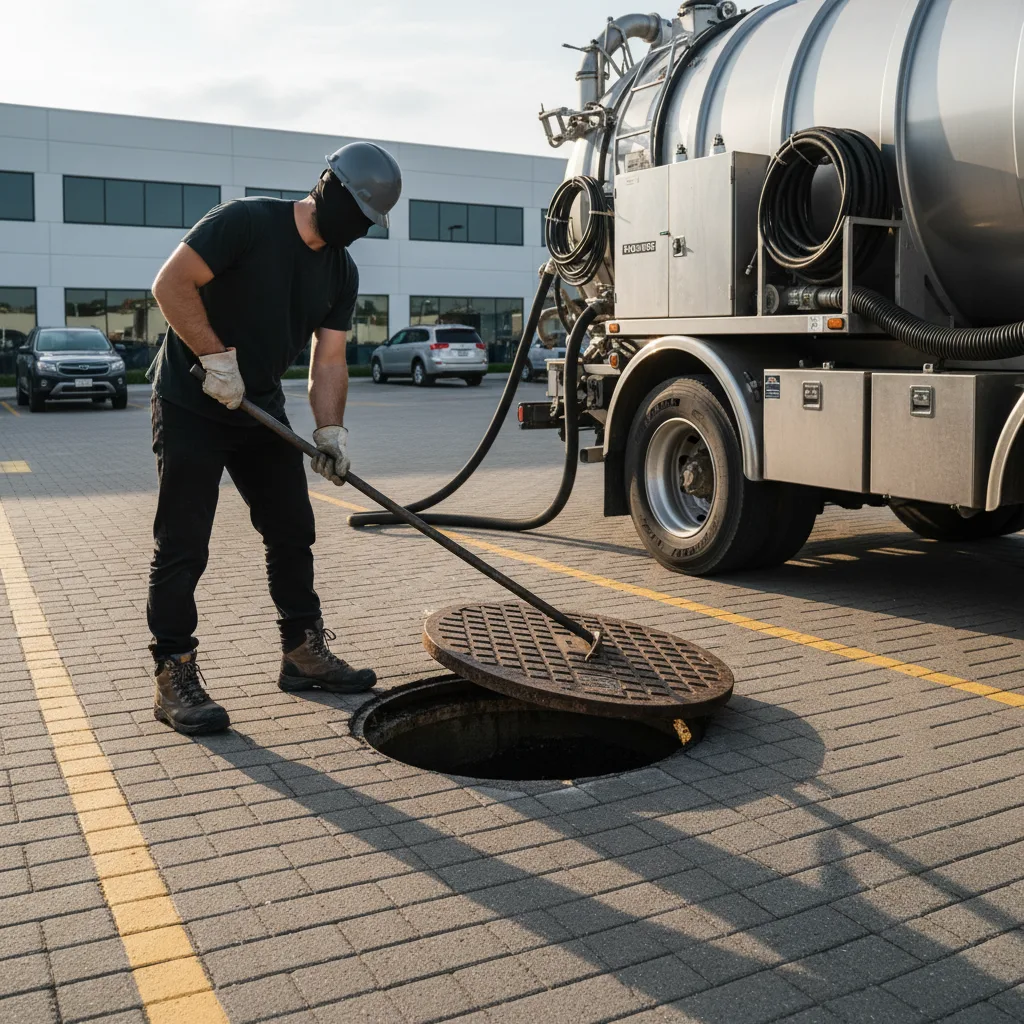
What Happens During a Pump-Out

  1. A licensed hauler arrives with a vacuum truck
  2. They open the manhole covers and measure the grease and solids layers (this measurement should be recorded)
  3. The entire contents — grease, water, and solids — are vacuumed out
  4. The interior walls and baffles are scraped and rinsed
  5. The hauler issues a waste manifest documenting the volume removed and the disposal destination
  6. The interceptor refills with water and returns to service

Keep your manifests. Most municipalities require you to maintain pump-out records for 3–5 years. During an inspection or a FOG compliance audit, these manifests are the first thing an inspector asks for. No manifests? That's an automatic violation in most jurisdictions.

Maintenance Best Practices

  • Establish a regular pump schedule. Don't wait until you hit 25% — set a recurring schedule based on your kitchen's typical accumulation rate. Every 30, 60, or 90 days depending on volume.
  • Dry-wipe pots and pans before washing. Scraping plates and wiping cookware with paper towels before they hit the sink dramatically reduces FOG entering the interceptor. Some operators report extending pump intervals by 30–50% with aggressive dry-wiping programs.
  • Never use emulsifiers or enzymes without checking your local code. Additives that break up grease might make your interceptor look cleaner, but they often just pass the problem downstream. Many municipalities have banned chemical additives outright because they defeat the purpose of the interceptor.
  • Inspect baffles and T-pipes during pump-outs. A cracked baffle or a missing T-pipe fitting can turn your interceptor into a pass-through. Ask your hauler to visually inspect the internals during each service.
  • Monitor for odors. A properly maintained interceptor shouldn't smell terrible. Strong hydrogen sulfide odors (rotten eggs) can indicate the interceptor is overdue for service, has a ventilation problem, or is corroding internally.

Grease Interceptor Cost: A Full Breakdown

Cost is usually the first question facility managers ask — and the answer depends on several variables. Here's a realistic breakdown based on current market rates across North America.

Equipment Costs

Interceptor Size Concrete Fiberglass/Poly
750 gallons $1,500–$3,000 $2,500–$4,500
1,000 gallons $2,000–$4,000 $3,500–$6,000
1,500 gallons $3,000–$5,500 $5,000–$8,000
2,000 gallons $4,000–$7,000 $6,500–$10,000

Installation Costs

This is where the real money goes. Installation typically runs $5,000–$15,000+ depending on:

  • Excavation depth and soil conditions. Rocky soil or high water tables add significant cost.
  • Distance from the building. Longer pipe runs mean more trenching.
  • Existing infrastructure. Retrofitting an older building costs more than new construction.
  • Permits and inspections. Budget $500–$2,000 for permitting, depending on your municipality.
  • Traffic control. If the interceptor goes under a parking lot, you may need flaggers, barricades, and repaving.
  • Crane rental. Concrete interceptors require a crane for placement — typically $500–$1,500 for a half-day rental.

Total installed cost for a typical 1,000-gallon concrete interceptor: $8,000–$18,000.

Ongoing Maintenance Costs

Regular pump-outs are the primary ongoing expense:

  • Standard pump-out: $300–$700 per service (varies widely by region and interceptor size)
  • Annual cost (quarterly service): $1,200–$2,800/year
  • Annual cost (monthly service): $3,600–$8,400/year
  • Emergency pump-out (overflow/backup): $800–$2,000+ (after-hours premium)

Factor in incidental costs too: baffle replacement ($200–$500), manhole cover replacement ($150–$400), and annual inspections if required by your municipality ($100–$300).

For a more detailed pricing analysis specific to your situation, see our grease interceptor cost guide and grease trap cleaning cost breakdown.

Regulations and FOG Compliance

FOG regulations exist because grease is the single largest cause of sanitary sewer overflows (SSOs) in the United States. The EPA has estimated that FOG-related blockages cause up to 47% of all SSOs nationally. These overflows dump raw sewage into streets, waterways, and — in worst cases — back into buildings.

That's why municipalities take FOG compliance seriously, and why the consequences for violations keep getting steeper.

What Most FOG Ordinances Require

While specific rules vary by jurisdiction, most FOG programs include these common elements:

  • Mandatory grease interceptor for food service establishments above a certain size or production threshold
  • Minimum interceptor sizing based on one of the methods described above (UPC, IPC, or local formula)
  • Regular maintenance on a schedule defined by the municipality (often the 25% rule, sometimes a fixed calendar schedule like every 90 days)
  • Manifest retention — keeping pump-out records on-site for 3–5 years
  • Inspections — either self-reported or conducted by municipal FOG inspectors
  • Best Management Practices (BMPs) — employee training, dry-wiping protocols, used cooking oil recycling, no-dumping policies
  • Annual permit or registration with the local wastewater authority

Consequences of Non-Compliance

The penalties vary, but they're universally expensive:

  • First violation: Warning letter or notice of violation (some jurisdictions skip this and go straight to fines)
  • Fines: $100–$1,000+ per day of violation, depending on jurisdiction. Cities like Los Angeles, New York, and Houston have imposed fines exceeding $10,000 for repeat offenders.
  • Forced installation: If you don't have a required interceptor, the city can order one installed — at your expense — within 30–90 days.
  • Permit revocation: Some municipalities can revoke your wastewater discharge permit, effectively shutting down your kitchen.
  • Liability for sewer damage: If your FOG causes a sewer blockage or overflow, you can be held liable for cleanup and repair costs. Sewer line repairs can run $10,000–$50,000+.

Our FOG compliance checklist can help you verify that your operation is meeting the most common requirements.

How to Choose the Right Grease Interceptor

With all the variables in play — size, material, location, local codes — choosing the right grease interceptor comes down to working through a systematic decision process.

Step 1: Determine Your Requirements

Contact your local sewer authority or wastewater utility. Ask specifically:

  • What sizing method do they use?
  • What minimum size is required for your type of operation?
  • Are there material restrictions (some ban certain types)?
  • What maintenance schedule do they mandate?
  • Do they require specific monitoring or alarm equipment?

Step 2: Assess Your Site

Work with a licensed plumber or engineer to evaluate:

  • Available space for the interceptor and required setbacks from the building, property lines, and other utilities
  • Soil conditions and water table depth (this affects material choice and installation cost)
  • Pump truck access — the service truck needs to reach every manhole cover
  • Pipe routing from the kitchen to the interceptor location, including grade (slope) requirements

Step 3: Get Multiple Quotes

Don't accept the first quote. Get at least three bids from licensed plumbing contractors who specialize in commercial grease interceptor installation. Make sure each quote includes:

  • Interceptor equipment and delivery
  • Excavation and backfill
  • All plumbing connections
  • Concrete pad or traffic-rated covers if needed
  • Permits and inspection fees
  • Site restoration (repaving, landscaping)

Need help finding qualified contractors in your area? Search our directory to connect with FOG service providers who handle installation, maintenance, and emergency pump-outs. You can also learn more about how our directory works to find the right fit for your project.

Step 4: Plan for Maintenance from Day One

Before the interceptor is even installed, line up a hauling company for regular pump-outs. Establish a service agreement with a fixed schedule. Waiting until you need an emergency pump-out means paying premium rates and potentially failing an inspection in the meantime.

Frequently Asked Questions About Grease Interceptors

How often does a grease interceptor need to be cleaned?

Most grease interceptors need pumping every 1–3 months, but the actual frequency depends on your kitchen's FOG output. The universal standard is the 25% rule: pump when grease and solids fill 25% of the interceptor's liquid depth. A high-volume fry-heavy kitchen might need monthly service, while a cafeteria doing mostly baked and steamed dishes might stretch to quarterly. Your municipality may also set a maximum interval regardless of accumulation — 90 days is common.

What size grease interceptor do I need for my restaurant?

Sizing depends on your local plumbing code (UPC, IPC, or local ordinance), the number and type of plumbing fixtures in your kitchen, and your peak meal volume. A typical sit-down restaurant with 100–200 seats usually requires a 1,000–1,500 gallon interceptor, but this varies significantly by jurisdiction. Use our sizing calculator to get a ballpark estimate, then confirm with your local sewer authority before purchasing.

Can I install a grease interceptor myself?

No. Grease interceptor installation requires licensed plumbing contractors, municipal permits, and code inspections. The work involves excavation (often with heavy equipment), connections to the sanitary sewer, and compliance with specific installation standards. Attempting a DIY installation would violate plumbing codes in virtually every jurisdiction and could result in fines, required removal, and liability if something goes wrong.

Do grease interceptors smell bad?

A properly maintained grease interceptor shouldn't produce noticeable odors at ground level. If you're smelling hydrogen sulfide (rotten eggs) or sour grease near the interceptor, that's a sign it needs service, has a ventilation issue, or the lid seals need replacement. Regular pump-outs on schedule are the best defense against odor complaints. If odors persist after a fresh pump-out, have a plumber check the vent piping and the condition of the gaskets on the manhole covers.

What's the difference between a grease interceptor and a grease recovery device (GRD)?

A grease recovery device (GRD), sometimes called an automatic grease removal device, is a mechanized unit that continuously skims grease from the water surface using timers, heaters, and skimming wheels. GRDs are typically smaller (installed indoors, under sinks or on the wall), remove collected grease into a separate container for recycling, and can reduce the load on a downstream grease interceptor. Some jurisdictions allow a GRD as a supplement or even a replacement for a traditional interceptor in certain applications, but this varies widely. Check your local FOG ordinance before assuming a GRD alone will satisfy your requirements.

The Bottom Line

A grease interceptor is a significant investment — typically $8,000–$18,000 installed, plus $1,200–$8,400 annually in maintenance. But the alternative is far more expensive. A single FOG-related sewer backup can cost $10,000+ in cleanup and repairs, not counting lost revenue during a shutdown, health department fines, and the reputational damage that comes with raw sewage in your parking lot.

The operators who handle this well treat their grease interceptor like any other critical kitchen system. They size it correctly from the start, maintain it on a disciplined schedule, keep their manifests organized, and build a relationship with a reliable hauler. It's not glamorous work, but it's the kind of operational discipline that separates businesses that thrive from businesses that get buried in avoidable problems.

Ready to find a qualified FOG service provider in your area? Search our contractor directory to connect with licensed haulers, plumbers, and interceptor installers near you.

Grease Trap Locator Editorial Team
Author: Grease Trap Locator Editorial Team

The Grease Trap Locator editorial team covers FOG compliance, grease trap maintenance, and commercial kitchen regulations across the US and Canada. Our guides are written for restaurant owners, facility managers, and food service operators who need practical, accurate information without the fluff.

Need a Licensed Grease Trap Service?

Find verified, local contractors who handle cleaning, pumping, and FOG compliance — in your area.

Find a Verified Contractor
In This Article
Find a Grease Trap Contractor

Search our directory of verified licensed FOG contractors serving your area.