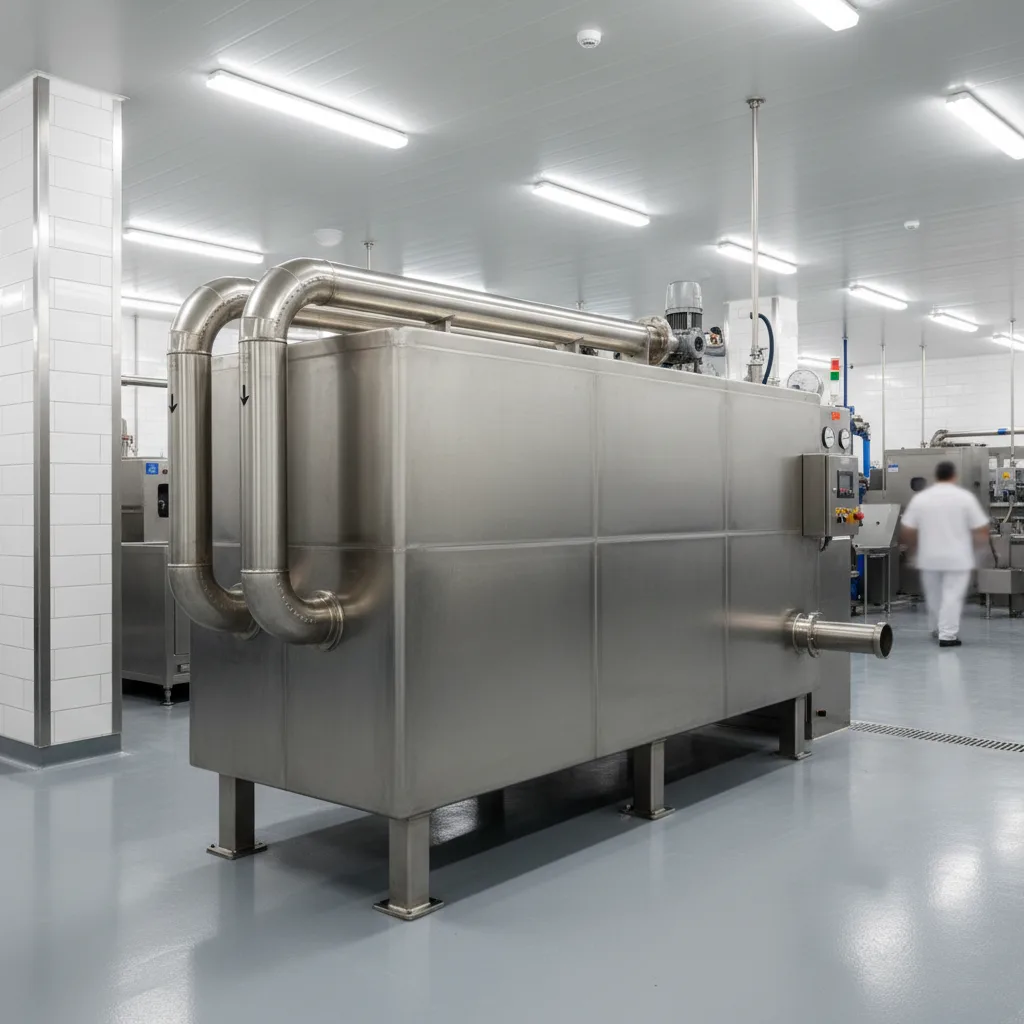
If you manage a commercial kitchen, you've likely heard inspectors or service technicians reference the "25% rule" — but what does it actually mean, and why does it matter for your operation? The grease trap 25% rule is a simple compliance standard that prevents clogs, backups, and costly violations. In this guide, you'll learn exactly when to clean your trap, how to measure capacity, and what happens if you ignore this critical threshold.
What Is the Grease Trap 25% Rule?
The 25% rule states that a grease trap or grease interceptor must be pumped and cleaned when fats, oils, grease (FOG), and solids accumulate to 25% of the trap's total liquid depth. This isn't a suggestion — it's a compliance standard enforced by municipal sewer authorities and public health departments across North America.
Here's how it works: as wastewater flows through your grease trap, fats and oils rise to the surface while heavier solids settle to the bottom. The middle layer — relatively clean water — flows out to the sewer. When the combined thickness of the top grease layer and bottom solids reaches one-quarter of the trap's internal depth, it's time for service.
Measure from the water's surface to the bottom of the trap, then divide by four. When the grease layer and sludge layer together equal that measurement, schedule service immediately.
Most jurisdictions consider the 25% threshold a maximum — not a target. Waiting until your trap reaches this level increases the risk of overflow, odor complaints, and drain line blockages. Many experienced operators schedule service before hitting 25% to maintain a buffer zone.
Why the 25% Rule Exists: Protecting Sewer Infrastructure
Municipal wastewater systems aren't designed to handle large volumes of grease. When FOG enters sewer lines, it cools, solidifies, and adheres to pipe walls — eventually forming blockages that can cause sewage backups into streets, homes, and businesses. These sanitary sewer overflows (SSOs) create public health hazards and cost municipalities millions in cleanup and repairs.
The 25% rule provides a measurable standard that keeps FOG out of the public sewer system. By requiring cleaning at this threshold, regulators ensure grease traps maintain enough capacity to separate fats and oils effectively. Once a trap exceeds 25%, separation efficiency drops dramatically — grease begins flowing through the outlet and into the sewer.
Understanding these requirements is essential for maintaining comprehensive FOG compliance in your facility. Non-compliance doesn't just risk fines — it can result in permit revocation and forced closure until corrections are made.
How to Measure Your Grease Trap's Capacity
Proper measurement requires accessing the trap and taking readings with a calibrated measuring stick or pole. Here's the standard method health inspectors and service technicians use:
First, locate the trap's inlet and outlet openings. Remove the cover carefully — grease traps contain hazardous gases and require proper ventilation before entry. Insert your measuring device straight down through the grease layer until it reaches the bottom. Mark the total depth measurement.
Next, measure the thickness of the floating grease layer at the surface. Then measure the settled solids layer at the bottom. Add these two measurements together. If the combined total equals or exceeds 25% of the total liquid depth, the trap requires immediate service.
Most violations we document happen because operators measure only the grease layer and ignore the solids buildup at the bottom. You must measure both to stay compliant.
Many modern facilities install monitoring systems that track accumulation automatically and send alerts when service is needed. These systems remove guesswork and provide documentation for regulatory inspections, which becomes critical during grease trap inspections.
Never enter a grease trap without proper confined space training and safety equipment. Hydrogen sulfide and methane gases can cause unconsciousness or death within seconds. Always hire licensed professionals for measurement and cleaning.
Cleaning Frequency: Beyond the 25% Threshold
The 25% rule sets the compliance maximum, but your actual grease trap cleaning frequency depends on several operational factors. High-volume kitchens that serve fried foods may reach 25% capacity in two weeks, while lower-volume operations might maintain compliance for 90 days or longer.
Kitchen type significantly impacts accumulation rates. Quick-service restaurants with heavy fryer use generate substantially more FOG than cafeterias serving primarily grilled items. A pizza restaurant might need monthly service, while a coffee shop with minimal cooking could stretch to quarterly cleanings.
Trap size matters, too. Undersized grease traps reach the 25% threshold faster, requiring more frequent service. If you're scheduling cleanings more than once monthly, your trap may be too small for your actual wastewater flow and grease load. Facilities planning menu changes or volume increases should evaluate whether their current trap capacity remains adequate.
Most jurisdictions require minimum service frequencies regardless of accumulation rates. Even if your trap hasn't reached 25%, local ordinances may mandate quarterly or monthly cleaning. Check your operating permit for specific requirements — compliance means meeting both the 25% rule and any time-based minimums your municipality enforces.
Keep a service logbook documenting every cleaning with date, measurements taken, volume pumped, and technician signature. Most jurisdictions require three years of records and will request them during permit renewals or violation investigations.
Compliance Consequences: What Happens When You Ignore the 25% Rule
Exceeding the 25% threshold isn't just a technical violation — it triggers a cascade of problems that affect your operation, your budget, and potentially your business license.
First-time violations typically result in written warnings and mandatory corrective action within 30 days. Repeat violations escalate quickly: fines ranging from $500 to $5,000 per occurrence are common, and some jurisdictions impose daily penalties until compliance is restored. Severe or repeated violations can trigger permit suspension, forcing temporary closure until the trap is cleaned and reinspected.
Beyond regulatory penalties, operational consequences include increased drain line blockages, sewage backups into your kitchen, persistent odor complaints from customers and neighbors, and significantly higher emergency service costs compared to scheduled maintenance. Insurance claims related to grease trap negligence may be denied, leaving you liable for property damage and cleanup costs.
If your overflow causes a municipal sewer backup, you may face liability for the city's remediation costs — expenses that can reach tens of thousands of dollars. Some jurisdictions also publish violation records publicly, creating reputation damage that's difficult to overcome.
Frequently Asked Questions
How do I know if my grease trap has reached 25% capacity?
Measure the total liquid depth inside your trap, then measure the combined thickness of the floating grease layer and settled solids at the bottom. If these two layers together equal 25% or more of the total depth, your trap requires immediate cleaning. Professional service technicians can perform this measurement during routine inspections if you're unsure how to do it safely.
Does the 25% rule apply to both grease traps and grease interceptors?
Yes, the 25% rule applies to all grease removal devices, including passive grease traps (typically under 100 gallons) and larger in-ground grease interceptors (1,000+ gallons). The measurement principle remains the same regardless of device size — when FOG and solids reach one-quarter of the liquid capacity, service is required.
Can I clean my own grease trap to stay under 25%, or must I hire a service?
Small under-sink grease traps (typically 20 gallons or less) can often be cleaned in-house by trained staff following manufacturer guidelines. However, larger traps and all in-ground interceptors require licensed waste haulers with proper disposal permits. Most jurisdictions require manifests proving proper disposal — something only licensed haulers can provide. Additionally, confined space hazards make DIY cleaning of large traps extremely dangerous.
What if my trap reaches 25% faster than my scheduled service interval?
Your trap is either undersized for your operation or your best management practices need improvement. Contact your service provider immediately for an emergency pump-out, then evaluate whether you need more frequent scheduled service or a larger trap. Implementing better FOG handling practices — like scraping plates thoroughly before washing and using sink strainers — can slow accumulation rates.
Do I need to measure my trap myself, or will my service company do it?
Reputable service companies measure and document FOG levels during every cleaning visit. However, as the permit holder, you're ultimately responsible for compliance. Many operators perform visual checks monthly between service visits to catch problems early. If you're approaching 25% before your next scheduled service, call for an additional pump-out rather than risk a violation.
Maintain Compliance with Professional Grease Trap Service
The 25% rule provides a clear, enforceable standard that protects sewer infrastructure and keeps your kitchen in compliance. By understanding how to measure your trap's capacity, scheduling service before reaching the threshold, and maintaining thorough documentation, you'll avoid violations and the costly consequences that follow.
Need reliable grease trap service that understands local compliance requirements? Find verified grease trap services in your area at GreasetrapLocator.com — connecting commercial kitchens with licensed professionals who keep your operation running smoothly and code-compliant.
Find verified, local contractors who handle cleaning, pumping, and FOG compliance — in your area.
