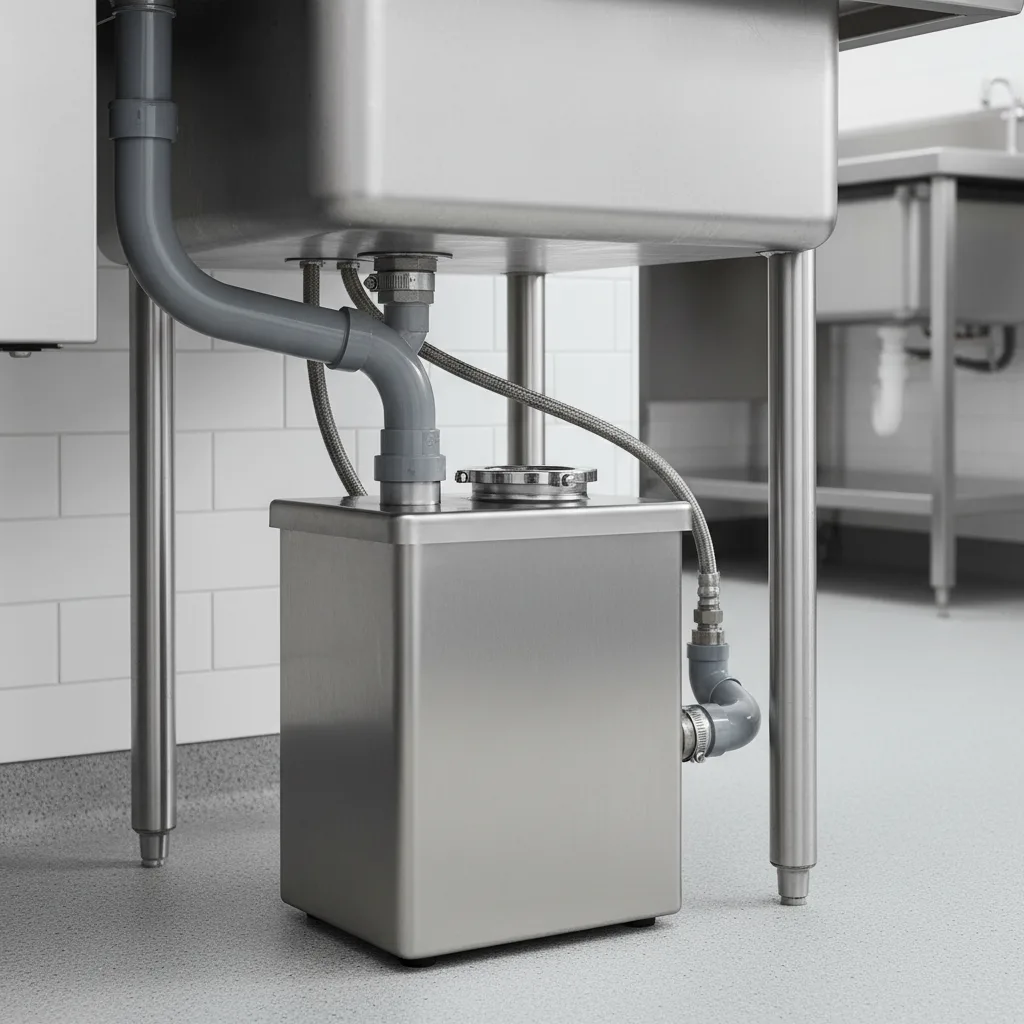
Grease trap service in Boston typically costs between $150 and $600 per cleaning, depending on trap size, accessibility, and service frequency. Boston's strict FOG (Fats, Oils, and Grease) regulations require commercial kitchens to maintain regular cleaning schedules, and choosing the right provider can save you hundreds of dollars annually while keeping you compliant with city codes.
What Determines Grease Trap Service Costs in Boston?
Grease trap service pricing in Boston follows a tiered model based primarily on trap capacity and service complexity. A standard 50-gallon under-sink trap costs $150–$250 per cleaning, while a 1,500-gallon outdoor interceptor can run $400–$600 or more. These prices reflect the labor, equipment, and disposal fees required to properly pump, clean, and haul FOG waste to approved processing facilities.
Boston's dense urban layout adds a cost factor most other markets don't face. Providers factor in parking challenges, building access restrictions, and limited maneuvering space for pump trucks. A restaurant in the North End with narrow alley access will often pay 15–20% more than a comparable facility in a suburban commercial park. Service providers also charge premium rates for emergency cleanings outside regular business hours — expect to pay 1.5 to 2 times the standard rate for after-hours or weekend service.
Schedule cleanings during slower kitchen hours (typically 10 AM–2 PM) to avoid rush periods and reduce the likelihood of needing premium emergency service later.
Trap condition plays a major role in pricing. If you've allowed grease to solidify or let a trap go months past its recommended cleaning interval, the provider may need specialized equipment or extended labor to remove hardened buildup. Some Boston providers include a surcharge of $75–$150 for heavily neglected traps. Regular maintenance prevents these penalties and extends the functional life of your trap by preventing corrosion and mechanical failure.
Understanding grease trap cleaning cost by city helps benchmark whether your Boston provider is pricing competitively, though local regulations and cost-of-living factors justify some premium over national averages.
How Often Do Boston Restaurants Need Grease Trap Service?
Boston's Public Works Department requires grease traps to be cleaned when they reach 25% capacity with FOG — a standard that typically translates to monthly service for high-volume kitchens and quarterly service for lower-volume operations. The city uses this threshold because FOG accumulation beyond 25% significantly increases the risk of sanitary sewer overflows and blockages in Boston's aging wastewater infrastructure.
High-volume establishments like steakhouses, fried food restaurants, and Asian cuisine kitchens often need bi-weekly or weekly service. These facilities produce enough FOG in a single busy weekend to fill a 100-gallon trap to the 25% threshold. Mid-volume operations — cafeterias, sandwich shops, bakeries — typically fall into the monthly cleaning category. Low-volume facilities such as coffee shops with minimal food prep may qualify for quarterly service, though you'll need documentation proving lower FOG production rates.
Your service contract should specify cleaning frequency based on a waste characterization study or historical usage data. Boston inspectors will verify your maintenance records during FOG inspections, and gaps in service documentation can result in fines of $300 per violation. Keep all service receipts and manifests for at least three years — the minimum retention period required by the city's FOG program.
Weather also impacts service needs in Boston. Winter freeze-thaw cycles can cause FOG to solidify faster in outdoor interceptors, potentially requiring an extra cleaning between December and February. Summer heat accelerates bacterial breakdown and odor development, making timely service even more critical during peak tourist season when your kitchen runs at maximum capacity.
Comparing Boston Grease Trap Service Providers
Boston's grease trap service market includes regional specialists, national chains, and local environmental services companies. Regional providers often offer the best balance of price and responsiveness — they understand Boston's specific permitting requirements and have established relationships with local wastewater treatment facilities. National chains provide consistent service quality and may offer bundled pricing if you operate multiple locations, but they typically charge 10–15% more than regional competitors.
When evaluating providers, verify they hold a Massachusetts Septage Hauler License and carry minimum insurance coverage of $1 million general liability. Boston requires service providers to use licensed waste haulers and dispose of FOG waste only at approved facilities. A provider who can't produce these credentials shouldn't be on your shortlist, regardless of their pricing.
The cheapest service quote often becomes the most expensive choice when providers cut corners on disposal compliance or skip critical cleaning steps that lead to trap failure.
Service contracts vary significantly in what they include. Basic contracts cover pumping and hauling only — the technician removes FOG waste and leaves. Comprehensive contracts include trap inspection, gasket replacement, cleaning of baffles and outlet tees, and detailed service reports with photographic documentation. The price difference is usually $25–$50 per service, but comprehensive service catches small problems before they become expensive emergencies.
For businesses managing multiple locations across the state, exploring grease trap services in Massachusetts helps identify providers with statewide coverage who can offer volume discounts and centralized billing.
Boston FOG Compliance Requirements and Penalties
Boston operates under a FOG Control Program that requires all food service establishments to register with the Boston Water and Sewer Commission. Registration includes submitting facility diagrams showing grease trap locations, capacity specifications, and your planned maintenance schedule. New establishments must complete this registration before receiving an occupancy permit, and existing facilities must update their registration whenever they modify kitchen equipment or change service providers.
Boston inspectors can enter your facility without advance notice to inspect grease traps and service records. Non-compliance fines start at $300 and can reach $10,000 for repeat violations or instances causing sewer system damage.
The city requires service manifests for every cleaning — detailed records showing the date, volume of waste removed, disposal facility, and hauler license number. Your service provider should automatically provide these documents within 48 hours of service. Missing manifests during an inspection triggers immediate violation notices, even if the trap was actually cleaned on schedule.
Boston's FOG program also mandates best management practices beyond trap maintenance. You must install screens on all sink drains, provide employee training on proper grease handling, and post signage about FOG prevention. Inspectors verify these requirements during facility visits. The comprehensive FOG compliance guide covers all required practices to help you avoid violations.
Penalty escalation is substantial. A first offense typically results in a warning and 30-day correction period. Second violations within 12 months carry $300–$500 fines. Third violations can reach $1,000 plus mandatory daily monitoring until compliance is restored. If your facility causes a sanitary sewer overflow due to FOG discharge, you face cost recovery charges for the city's cleanup efforts — bills that can exceed $25,000 for major incidents.
Boston Grease Trap Service Pricing by Facility Type
Pricing structures vary based on your operation type and trap configuration. The table below shows typical monthly service costs for common Boston food service establishments:
| Facility Type | Monthly Service Cost |
|---|---|
| Coffee shop (minimal cooking) | $150–$200 quarterly |
| Fast casual restaurant | $200–$350 monthly |
| Full-service restaurant | $300–$450 monthly |
| High-volume kitchen (fried foods) | $400–$600 bi-weekly |
| Hotel/institutional kitchen | $500–$800 monthly |
These ranges assume standard service during business hours with normal trap access. Add 20–30% for difficult access situations or after-hours service requirements. Some providers offer annual contracts with discounted per-service rates — typically saving 10–15% compared to on-demand pricing. However, verify the contract includes provisions for schedule adjustments if your kitchen volume changes seasonally.
Request itemized quotes showing separate line items for pumping, hauling, disposal, and service fees. This transparency helps you compare providers accurately and identify where cost differences actually exist.
Additional services add to base pricing. Trap installation for new facilities runs $2,500–$8,000 depending on size and complexity. Repair services for damaged baffles, gaskets, or inlet/outlet pipes typically cost $200–$600. Emergency cleanings for overflowing traps start at $350 and increase based on cleanup requirements. Some providers bundle minor repairs into their service contracts, while others charge separately — clarify this before signing.
Frequently Asked Questions
How much does grease trap cleaning cost in Boston?
Grease trap cleaning in Boston costs $150–$250 for small under-sink traps (50–100 gallons) and $300–$600 for larger outdoor interceptors (500–1,500 gallons). Pricing varies based on trap size, accessibility, service frequency, and whether you need standard or emergency service.
Can I clean my own grease trap in Boston?
Boston regulations require commercial grease traps to be serviced by licensed septage haulers who dispose of waste at approved facilities. Self-cleaning is not permitted for food service establishments, and attempting it can result in FOG program violations and fines starting at $300.
How often do Boston restaurants need grease trap service?
Boston requires grease trap cleaning when FOG levels reach 25% of trap capacity — typically monthly for most restaurants and bi-weekly for high-volume kitchens. Coffee shops and low-volume facilities may qualify for quarterly service with proper documentation of reduced FOG production.
What happens if I miss a grease trap cleaning in Boston?
Missing scheduled cleanings violates Boston's FOG program and can result in fines starting at $300 per violation. Repeat violations increase penalties to $500–$1,000, and causing sewer system damage due to missed maintenance can trigger cost recovery charges exceeding $25,000.
Do Boston grease trap services include disposal fees?
Most Boston providers include disposal fees in their quoted price, but always verify this before signing a contract. Some companies charge disposal separately at $0.08–$0.12 per gallon, which can add $50–$150 to your bill depending on trap size and waste volume.
Find verified grease trap services in your area to compare licensed providers, read customer reviews, and get competitive quotes for your Boston food service facility.
Find verified, local contractors who handle cleaning, pumping, and FOG compliance — in your area.
