Grease Trap Size by Restaurant Type: 2026 Sizing Guide

5 Apr 2026 10 min read No comments Grease Trap Basics
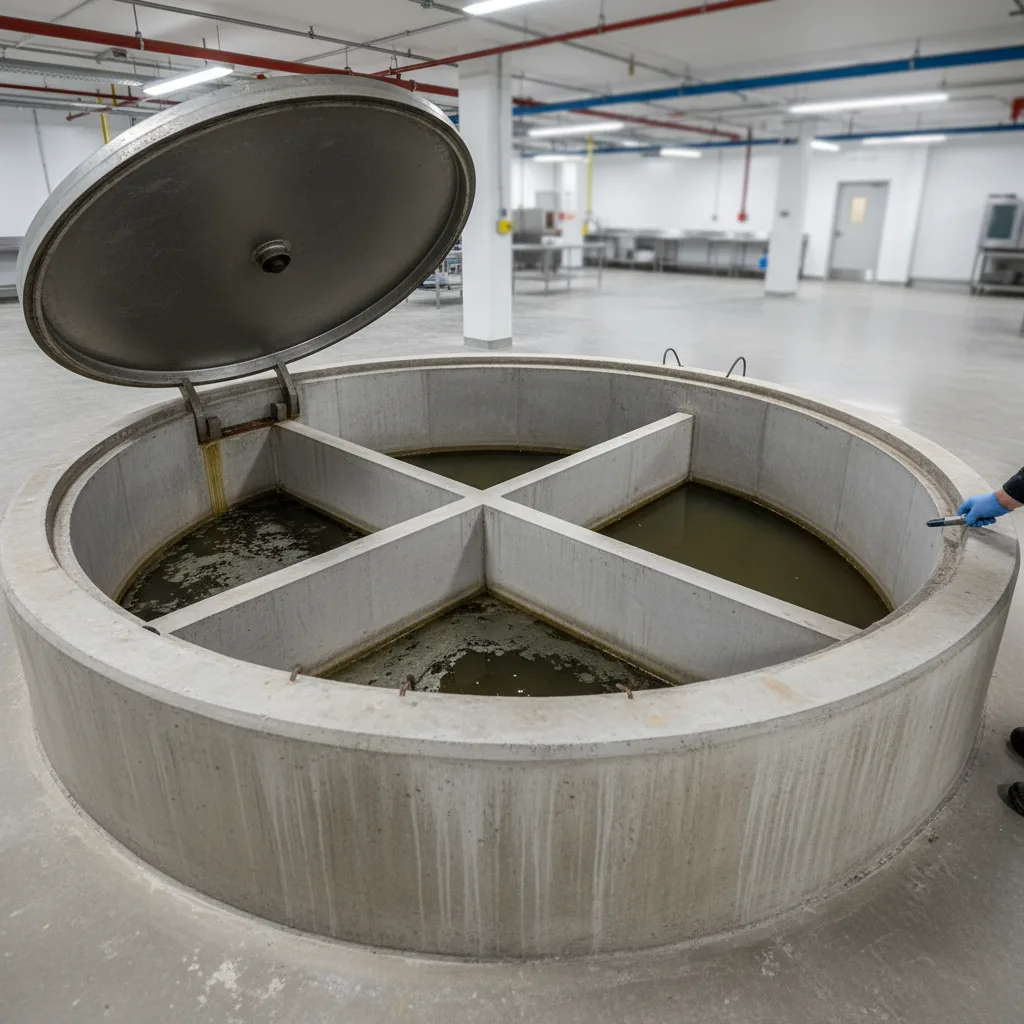
Featured image

Grease Trap Size by Restaurant Type: How Much Capacity You Actually Need

Two restaurants. Same 1,800 square feet. Same 60 seats. One is a sushi bar; the other is a wing shop. The sushi bar runs fine on a 750-gallon interceptor. The wing shop needs 2,000. Size by floor plan instead of cuisine and one of them fails inspection within six months.

This guide gives cuisine-specific GPM and gallon recommendations for the twelve restaurant types we see most often. Use it as a sanity check on whatever your plumber, GC, or franchisor handed you. For the underlying math — fixture units, flow rate, retention time — see our general grease interceptor sizing methodology. This page is the cuisine-aware companion.

Why Cuisine Drives Sizing More Than Square Footage

Square footage tells you how many people can sit. It tells you almost nothing about how much fats, oils, and grease will hit your trap. Three things drive grease load:

  • Cooking method. Frying produces the most FOG per cover, then grilling, sautéing, steaming. A wok station outputs about a third of the grease of a flat-top griddle running the same hours.
  • Ingredient profile. Cheese (pizzeria), rendered fat (BBQ), chicken skin (wing shop), bacon (brunch) are the big offenders. Plant-forward and raw-prep menus (sushi, salad, juice) sit at the bottom.
  • Dish-pit volume. Plate-heavy concepts discharge more dishwasher water than counter-service or to-go. Dishwasher hot water carries more emulsified FOG into the trap than any other fixture.

Combine those three and the differences are large. A 60-seat sushi spot might generate 4 pounds of FOG per peak hour. A 60-seat fried chicken concept can hit 14.

Quick-Lookup Table: Grease Trap Size Chart by Cuisine

Use this as a starting estimate. Confirm with a fixture-unit calculation and your local code before ordering equipment. All figures assume single-brand, single-shift operation.

Restaurant Type Seats / Covers GPM Gallons Notes
Café / coffee shop 20–40 20 40–75 (under-sink) Hydromechanical OK in most jurisdictions.
Bakery 15–35 20 50–100 Butter, lard. Watch oven hood condensate routing.
Sushi / Japanese 40–80 20–25 500–750 Low FOG. Dish pit drives sizing.
Pizzeria / Italian 40–100 20–25 750–1,000 Cheese fat dominates. Wood-fired produces less.
Mexican / Tex-Mex 50–120 25–35 1,000–1,500 Carnitas, chip oil, refried beans.
Burger / American grill 50–100 25–35 1,000–1,500 Griddle + fryer. Add 250 gal for shake program.
BBQ / smokehouse 40–100 30–35 1,250–1,750 Rendered brisket and pork fat.
Wing shop / fried chicken 30–70 35–50 1,500–2,000 Highest FOG-per-cover ratio.
Full-service casual dining 80–150 35–50 1,500–2,500 Size for the heaviest item, not the average.
Hotel kitchen / banquet 150–400 50–75 2,500–3,500 Multiple service periods. Pre-rinse spray adds load.
Ghost kitchen (3 brands) 0 (delivery) 40–60 1,500–2,500 Size for combined peak, not lobby footprint.
Institutional cafeteria 300–800 75–100+ 3,000–5,000+ Engineer review required.

Some jurisdictions enforce minimums that override these numbers. California municipalities typically mandate a 750-gallon gravity interceptor floor for any new commercial food permit. New York City's 15 RCNY §19-11 sets its own thresholds. Always check before you buy.

Pizzeria & Italian: Cheese Fat Is the Hidden Load

A 70-seat pizzeria with two ovens, three prep sinks, and a small dish pit pencils out at roughly 22 GPM under a standard fixture-unit calculation. The right size is closer to 25 GPM, 1,000 gallons.

The reason is mozzarella. Cheese fat emulsifies in dish-machine hot water and survives the first pass through any borderline-sized interceptor. Operators who undersize report the same symptom: 60-day pump-out cycles slipping to 30 days inside the first year. Wood-fired ovens generate less FOG than gas-deck operations — wood-fired-only kitchens can usually stay at 750 gallons; add a gas line for breadsticks or pasta and push to 1,000.

Burger Joint & American Grill: Fryer Plus Griddle Volume

Burgers are the dual-source case. The flat-top drains rendered beef fat continuously into the trough; the fryer adds vegetable oil from fries, onion rings, and chicken tenders. Together they push a 100-seat operation to 1,500 gallons. Three numbers to verify before you sign:

  • Griddle size. A 48-inch griddle running lunch and dinner adds about 4 pounds of FOG per day. A 72-inch griddle adds 7 to 9.
  • Fryer count. Each 50-pound fryer adds roughly 2 pounds of FOG per service when you account for filter-line spillage.
  • Shake program. Hard ice cream and milkshakes increase dish-pit dairy fat by an order of magnitude. Add 250 gallons if shakes are a big seller.

If you're the fifth location for the same operator, the franchisor has a standard spec. Verify it — many older brand specs assume a 25 GPM trap that no longer satisfies modern codes for the actual cover count.

BBQ & Smokehouse: Post-Cook Rendered Fat

BBQ is the highest fat-by-weight cuisine on this list. Brisket loses 30 to 40 percent of its mass during a 14-hour cook, and most of that loss is fat. Smokers usually drain into a holding pan, then a floor drain, then the trap.

A 60-seat BBQ joint with two smokers needs at least 1,500 gallons. Some operators specify 1,750 to extend pump-out intervals from 30 to 45 days, which pays for itself within two years. One non-obvious factor: BBQ sauce. Tomato-based sauces emulsify fat in dishwasher hot water and slow separation. If the menu is sauce-forward, push to 1,750 gallons regardless of seat count.

Sushi & Japanese: Low FOG, Dishwasher-Heavy

Sushi is the easy case. Raw prep generates almost zero FOG. The kitchen's main wastewater contributor is the dish pit — sushi service is plate-heavy, with small ceramic dishes and sake cups stacking up fast.

A 60-seat sushi restaurant typically lands at 20 GPM and 750 gallons. If your jurisdiction enforces a 750-gallon minimum (most California cities do), you'll size to the floor regardless. Don't oversize beyond 1,000 gallons unless you're adding teppanyaki — at low flow, larger interceptors actually perform worse because solids settle slower. Tempura-heavy menus push the math toward 25 GPM, 1,000 gallons. The fryer is the deciding fixture.

Mexican & Tex-Mex: Carnitas, Fryer, Chip Oil

Mexican kitchens run three FOG sources at once: a flat-top for fajitas, a fryer for chips and chimichangas, and slow-cooked lard items (carnitas, refried beans). The combination is heavier than most operators expect.

An 80-seat Tex-Mex spot should plan on 30 GPM and 1,250 gallons. Authentic taquerias serving carnitas all day need 1,500 — pork lard accumulates differently than vegetable oil and requires more frequent pump-outs at any given size. Chip oil note: spent fryer oil should never enter the trap. It goes into the rendering bin or yellow-grease tank. If your dish-pit crew has been pouring used oil down the floor drain, you've been overloading whatever trap you have.

Wing Shop & Fried Chicken: Highest FOG Per Cover

Wing shops break the rules. A 40-seat wing concept can produce more FOG than a 120-seat full-service restaurant. The math is brutal:

  • Bone-in chicken loses 8 to 12 percent of its weight to rendered fat during frying.
  • Wing-only operations cycle fryer oil every 5 to 7 days — twice as fast as a burger joint.
  • Sauce-tossing emulsifies butter plus chicken fat plus hot sauce — the worst-case combo for separator efficiency.

A 50-seat dedicated wing shop needs 35 to 50 GPM and at least 1,500 gallons. Add 250 to 500 if there's a real dish pit. National franchise specs frequently come in undersized — we've seen 25 GPM hydromechanical units recommended for locations that needed 1,500-gallon gravity interceptors. If you're pumping every 30 days and still hitting 25-percent-rule violations, the trap was wrong from day one.

Café, Coffee Shop & Bakery: The Smallest Footprint

Cafés are the only category where a hydromechanical under-sink unit is usually the right answer. A 30-seat coffee shop with no hot food line can typically pass with a 20 GPM, 40-gallon under-sink trap. Add a panini press or breakfast sandwich program and move toward 50 to 75 gallons.

Bakeries depend on what's leaving the oven. Bread-only retail can stay under-sink. Butter croissants, danish, or fried doughnuts push toward a 100-gallon hydromechanical or a small 500-gallon gravity unit. Doughnut shops in particular are mis-sized constantly — they read like bakeries on the permit but generate fryer-shop FOG loads.

Ghost Kitchen & Cloud Kitchen: The Special Case

Ghost kitchens are where cuisine-based sizing matters most because there's no dining room to anchor your intuition. A 1,200-square-foot footprint might run three brands: wings, burgers, and Mexican. At peak Friday 7 PM, all three fryers and both griddles are active.

Size for the additive peak, not any one brand. Wings alone want 35 GPM. Stack burgers and you're at 50. Add Mexican and you're at 65 to 75. A 1,500-gallon interceptor is the floor; 2,500 is more typical for three-brand operations. Watch out for commissary buildings — those often size for the original tenant. When a wing brand moves into a space designed for a salad concept, the trap fails inside 60 days. Re-verify capacity against your specific menu before signing the lease.

When the Table Doesn't Fit Your Concept

Three categories outgrow this table:

  • Multi-cuisine concepts. Asian fusion, Mediterranean with grill and fryer, anything combining two heavy categories. Take the larger cuisine recommendation and add 25 percent.
  • High-volume institutional. Hospital cafeterias, university dining halls. Engineered sizing required; the Grease Production Sizing Method (GPSM) is usually the compliant approach.
  • Unusual fixture configurations. Open kitchens with multiple cooking lines, central commissaries, food trucks with on-board interceptors. Get a licensed plumbing engineer involved.

For everything else, the fastest sanity check is our grease trap sizing calculator. Pair the calculator output with the cuisine row above and use the larger number.

Don't fall for these three sizing mistakes:

  • Sizing for today, not the menu you'll have in two years. Adding a fryer to a no-fryer concept can shift the trap from compliant to undersized overnight.
  • Trusting the franchisor spec without checking local code. National brand specs assume IPC; many western jurisdictions enforce UPC plus local amendments that push capacity higher.
  • Ignoring climate. Outdoor interceptors in cold climates separate FOG more slowly. Add 25 percent above the base recommendation if your trap sits above the frost line in a sub-freezing region.

Standards that matter when verifying a recommendation: the Uniform Plumbing Code Appendix H, International Plumbing Code §1003.3, and Plumbing and Drainage Institute standard PDI G-101 for hydromechanical units. If your installer can't tell you which standard their recommendation is based on, get a second quote.

Get Help Sizing or Servicing Your Trap

Once you have a size in mind, find a qualified installer or pumping company that knows your local code. Use our directory of grease trap service operators to find vetted local options, or browse the operators index to compare service providers by city. For the math behind these recommendations, the general sizing methodology guide walks through the fixture-unit and flow-rate calculations. To skip the manual work entirely, run your fixtures through the grease trap sizing calculator — it takes about three minutes.

Frequently Asked Questions

What size grease trap do I need for my restaurant?

Size depends on cuisine, not square footage. A 60-seat sushi restaurant typically needs a 750-gallon interceptor at 20 GPM. A 60-seat wing shop with the same footprint needs 1,500 to 2,000 gallons at 35 to 50 GPM. Always pair the cuisine estimate with a fixture-unit calculation and confirm with your local Authority Having Jurisdiction.

What are the different types of grease traps for restaurants?

Three types: hydromechanical (under-sink) units rated 20 to 50 GPM for cafés and small QSRs; gravity grease interceptors, in-ground units rated 750 to 5,000+ gallons for full-service and high-volume kitchens; and automatic grease recovery units (GRUs) that skim FOG continuously, sized like hydromechanical units.

What is the 25 percent rule for grease interceptors?

A grease interceptor must be pumped when the combined depth of floating grease and settled solids reaches 25 percent of total liquid depth. Most jurisdictions enforce this during inspections. A correctly sized unit hits 25 percent within your scheduled service interval — typically 30, 60, or 90 days. Sooner means undersized.

How many gallons is a restaurant grease trap?

Restaurant traps range from 40-gallon under-sink units (cafés, small QSRs) to 5,000+ gallons (institutional cafeterias). Most full-service restaurants land between 750 and 2,000 gallons. A 1,200-gallon trap is normal for a 100-seat burger joint but undersized for a 60-seat fried chicken concept.

Does ghost kitchen sizing work the same way?

No. A ghost kitchen running three brands from one footprint can produce as much FOG as a 200-seat restaurant. Size for the combined fryer, griddle, and dishwashing load of all brands at peak — not for the small lobby.

Why does my fixture-unit calculation give a different answer than the cuisine table?

The Drainage Fixture Unit (DFU) method counts plumbing connections; the cuisine table accounts for actual FOG load and dish-pit volume. Use the larger number. A pizzeria with three prep sinks may DFU-calc to 15 GPM, but the cheese-fat load means 20 GPM is the practical floor.

Do California restaurants have a minimum grease interceptor size?

Many California municipalities mandate a 750-gallon minimum gravity grease interceptor for any new commercial food permit, regardless of fixture-unit calculation. Los Angeles, San Francisco, and San Diego all enforce variations. Under-sink hydromechanical units usually do not satisfy the requirement.

Grease Trap Locator Editorial Team
Author: Grease Trap Locator Editorial Team

The Grease Trap Locator editorial team covers FOG compliance, grease trap maintenance, and commercial kitchen regulations across the US and Canada. Our guides are written for restaurant owners, facility managers, and food service operators who need practical, accurate information without the fluff.

Need a Licensed Grease Trap Service?

Find verified, local contractors who handle cleaning, pumping, and FOG compliance — in your area.

Find a Verified Contractor