
Reviewed August 16, 2026. Slow drainage, odor, gurgling, residue, or a backup can indicate a grease interceptor or plumbing problem, but none of those symptoms measures how full the interceptor is.
The defensible service decision uses the local wastewater program, manufacturer instructions, device type, service records, and accumulation measured by a qualified or locally authorized provider.
Why symptoms are not a fill gauge
- Slow drainage can involve the interceptor, internal plumbing, a downstream line, or another restriction.
- Odor can involve retained organic material, a cover or seal, venting, leakage, or another plumbing condition.
- Gurgling can accompany several drainage or venting problems.
- Greasy residue warrants assessment but does not locate the cause.
- A wastewater or sewage backup is an urgent food-safety condition, but it does not prove which component failed.
Do not convert these observations into a percentage, a guaranteed diagnosis, or an exact service deadline.
The 25% rule is not universal
Some local FOG programs require service when floating FOG and settled solids reach a combined percentage of the interceptor’s liquid depth. Portland, Oregon, says most interceptors need cleaning at 25%, while some approved high-efficiency hydromechanical units can accumulate more.
That example shows why a national statement is unsafe. Another authority may use a different definition, interval, device-specific rule, permit condition, or manufacturer limit. Obtain the rule for the facility’s sewer authority and exact equipment.
How accumulation should be checked
Use the measurement method required by the local program and equipment documentation. A qualified provider may measure floating grease and settled solids, review operating condition, and document the result. The required provider registration, license, manifest, and report vary by jurisdiction.
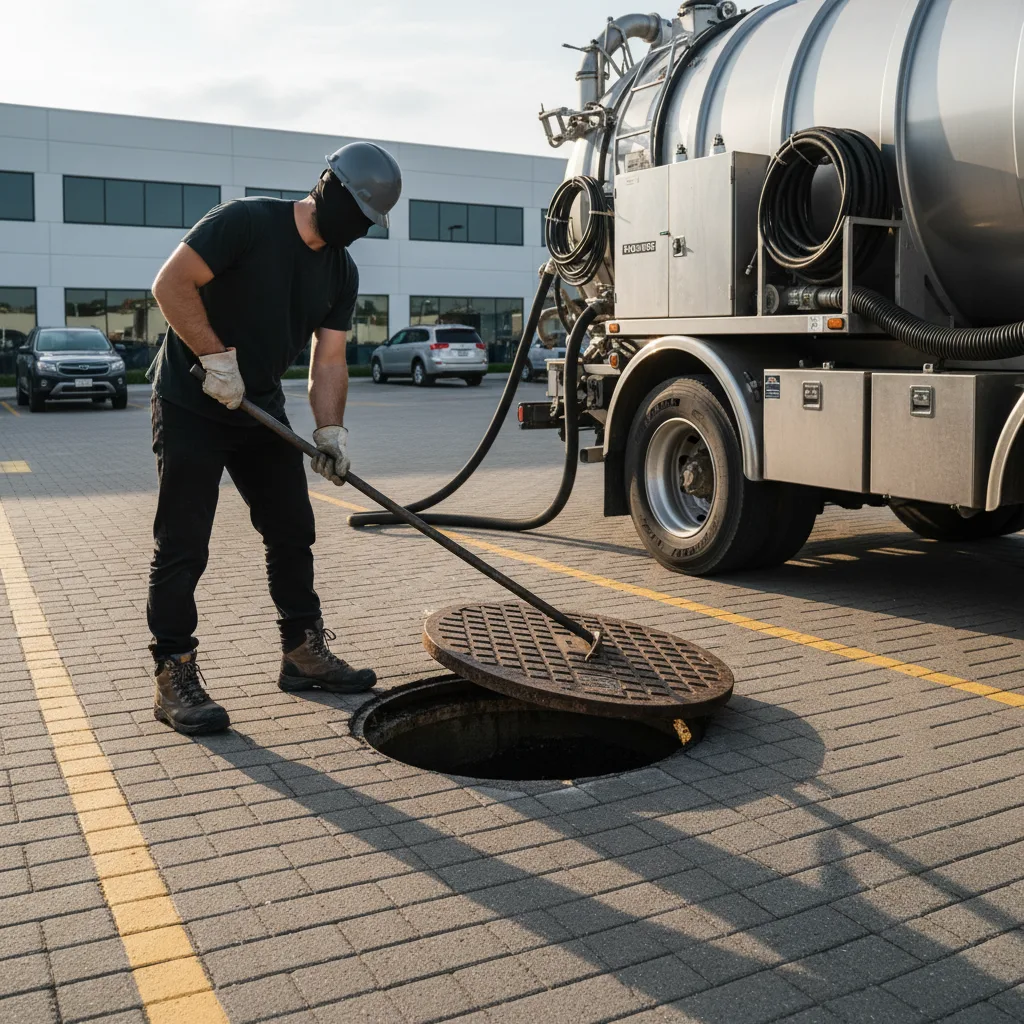
Restaurant staff should not open an interceptor or remove a cover under a generic online instruction. OSHA identifies cover, fall, gas, engulfment, and possible confined-space hazards. Do not enter, reach into, or lean over an access opening.
Safe observations between service visits
- keep the latest service and inspection records accessible;
- record which fixtures have slow drainage, gurgling, odor, residue, or backup;
- note when the symptom began and whether it changed after recent service;
- report a displaced or damaged cover from a safe distance and restrict access; and
- arrange qualified assessment instead of opening the unit or running extra water as a test.
When the symptom is an emergency
If wastewater or sewage is backing up into a food area, stop affected operations, keep people and food away, and contact qualified service and the local health or wastewater authority. If a strong sewer-like odor is accompanied by dizziness, headache, nausea, eye or breathing irritation, or confusion, move people away, keep others out, avoid ignition sources, and follow the facility’s emergency plan or call emergency services as appropriate.
Use the emergency response guide for an active incident and the slow-drain guide for safe information to collect before service.
Frequently asked questions
What are the signs that a grease trap is full?
There is no symptom that reliably measures fullness. Slow drainage, odor, gurgling, residue, or backup can justify assessment, but a qualified provider should measure accumulation under the local rule.
Can staff open the lid to check the grease level?
Do not rely on a generic instruction to open a grease interceptor. Follow the employer’s safety program, local requirements, and equipment instructions, and use qualified personnel.
Is a grease trap automatically in violation above 25%?
Not nationwide. Some local programs use a 25% threshold, while device-specific exceptions and different rules exist. The controlling local authority determines compliance.
Does a sewage backup prove the grease trap is full?
No. Treat the backup as urgent, but have a qualified provider determine whether the cause is the interceptor, internal plumbing, downstream drainage, or another condition.
Official sources
- U.S. EPA: Controlling FOG discharges from food service establishments
- City of Portland: maintenance thresholds and device exceptions
- OSHA: Grease Trap Hazards
- U.S. FDA: 2022 Food Code

Author: Grease Trap Locator Editorial Team
The Grease Trap Locator editorial team covers FOG compliance, grease trap maintenance, and commercial kitchen regulations across the US and Canada. Our guides are written for restaurant owners, facility managers, and food service operators who need practical, accurate information without the fluff.
Find local contractors who handle cleaning, pumping, and FOG compliance — in your area.