
The grease trap industry doesn't get written about much outside of trade publications and market research reports, but it's a substantial and stable segment of the environmental services sector. Driven almost entirely by regulatory compliance requirements, it operates on a recurring-revenue model that makes it resilient to economic cycles. For contractors already in the space, facility managers evaluating vendors, or operators trying to understand who they're working with, a clear picture of how this industry is structured is useful context.
This overview covers the scale of the FOG services market, who the main participants are, what drives demand, where technology is headed, and what the industry's structural challenges look like. For the operator-focused view of compliance requirements, see the FOG compliance guide.
The Scale of the FOG Services Market
The grease trap and FOG services market is larger than most people outside the industry realize. Market research estimates value the U.S. grease trap services segment — pumping, cleaning, inspection, and maintenance — at several hundred million dollars annually, with a growth trajectory driven by increasing restaurant counts, stricter municipal enforcement, and expanded FOG programs in jurisdictions that previously had minimal requirements.

The equipment segment (interceptor manufacturing and installation) is a separate and somewhat smaller market. The services segment is the more significant and faster-growing portion, reflecting the recurring compliance obligation that every covered food service establishment faces indefinitely.
North America accounts for a disproportionate share of global FOG services demand. This is partly because the U.S. has a dense commercial kitchen infrastructure — over one million food service establishments are subject to some form of FOG control requirement — and partly because FOG programs in the U.S. have been in place for decades, creating a mature compliance culture and well-developed service provider network.
Industry Participants: Who Does What
The FOG services industry involves several distinct types of operators, often overlapping in smaller markets:
Grease Trap Service Contractors
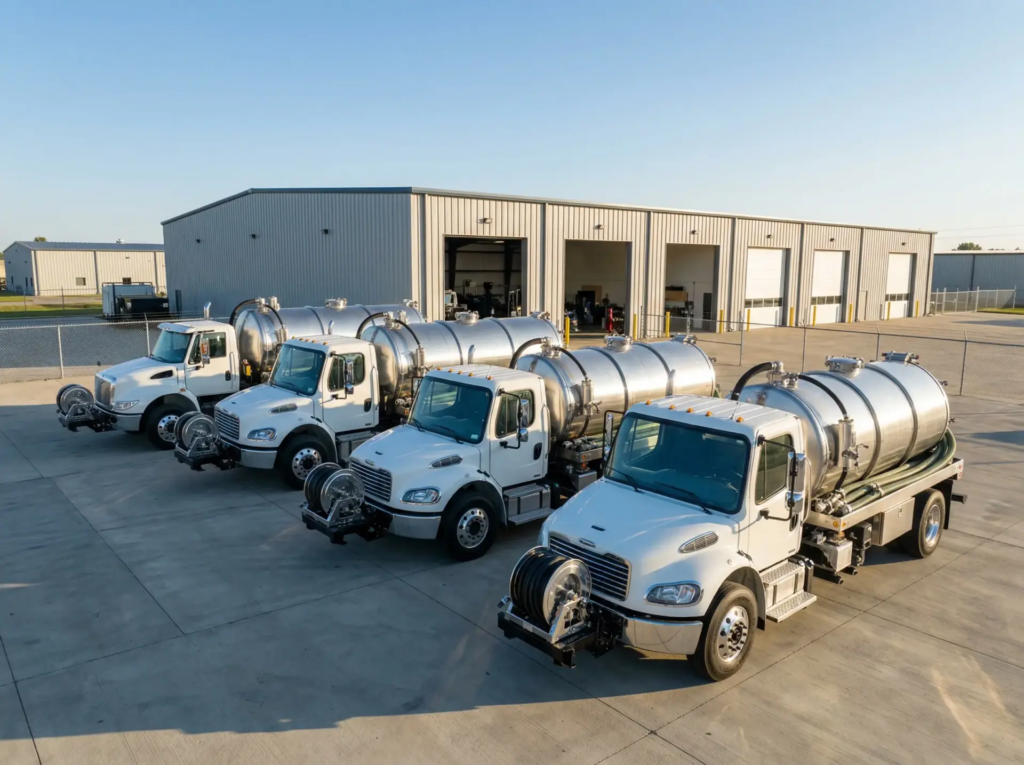
The core of the service market. Licensed waste haulers who pump, clean, and document grease interceptor service. They operate vacuum trucks, generate manifests, and transport waste to licensed disposal facilities. In dense urban markets, these companies may be specialized grease-only operators; in smaller markets, they may be part of a broader septic or environmental services operation.
Plumbing and Installation Contractors
Handle interceptor installation, replacement, and repair. Licensed plumbers who understand FOG code requirements are a separate skill set from service haulers. Some markets have contractors who do both; in others, installation and ongoing service are handled by different companies.
Environmental Compliance Consultants
Particularly relevant for large multi-unit operators (chains, hotel groups, institutional food service). These firms help develop and manage FOG compliance programs across multiple sites, handle regulatory correspondence, and manage documentation systems.
Waste Processing and Recycling Facilities
The destination for extracted FOG. Rendering plants, biodiesel processors, and permitted waste treatment facilities receive the brown grease and solids collected by haulers. As the biodiesel market has developed, some facilities compete for FOG feedstock — the commodity value of collected grease varies with fuel prices and rendering markets.
Equipment Manufacturers
Produce the interceptors themselves — hydromechanical units, gravity tanks, and automated systems. Major manufacturers include Thermaco, Highland Tank, Jay R. Smith, and others. Equipment is typically installed by licensed plumbing contractors, not directly by manufacturers in the service market.
What Drives Demand: The Regulatory Engine
FOG services demand is not market-discretionary. It's compliance-driven. Every food service establishment covered by a local FOG ordinance is required to have its interceptor serviced, documented, and maintained. They don't have the option to stop buying the service. This makes the grease trap services market structurally stable in a way that consumer-discretionary markets are not.
Three factors have driven growth beyond baseline compliance:
Expanding FOG Programs
Municipalities that had informal or unenforced FOG requirements have, over the past two decades, moved toward active FOG programs with permitting, inspection, and enforcement. This converts previously non-compliant operations into active service demand. Each new enforcement program in a previously unregulated jurisdiction expands the addressable market.
Restaurant and Food Service Growth
The number of commercial food service establishments — restaurants, fast food locations, institutional kitchens, prepared food departments in grocery stores — has grown consistently over the long term. Each new establishment represents a new and permanent service account.
Tighter Enforcement Standards
Even in jurisdictions with longstanding FOG programs, enforcement intensity has generally increased. Larger fines, more active inspection programs, and requirements for digital manifest tracking have all increased the cost of non-compliance and pushed previously non-compliant operators into regular service relationships.
For a detailed look at the regulatory framework that drives this demand, see the FOG compliance guide and grease trap regulations by state and region.
The Recycling Dimension: Brown Grease and Biodiesel
The FOG collected from grease traps — called "brown grease" to distinguish it from "yellow grease" (used cooking oil) — historically had limited value as a commodity. Its quality is lower than used cooking oil due to contamination with water and food solids. For decades, it was primarily a disposal problem for haulers.

The development of advanced rendering and biodiesel processing technology has changed this calculus somewhat. According to the National Renewable Energy Laboratory, billions of pounds of grease produced by U.S. restaurants annually are processed into biodiesel or heating fuel. Brown grease can be a feedstock for this production, though its value per pound is lower than yellow grease due to processing complexity.
The practical implication for service contractors is that some brown grease disposal now generates modest commodity revenue rather than pure cost. This has created a segment of the industry focused on grease recovery — operators who compete for the FOG stream as a feedstock resource, sometimes at reduced or subsidized pump-out rates. For large-volume commercial kitchens, bundled used-cooking-oil collection plus grease trap service from a single contractor is increasingly common, with the oil collection value partially offsetting the trap service cost.
Technology Trends: From Manual to Monitored
Historically, grease trap management has been almost entirely manual — periodic service visits by a technician with a vacuum truck, followed by paper manifests. The technology layer has been minimal.
Two trends are changing this in the higher end of the market:
IoT Fill Monitoring
Sensors installed in interceptors that measure FOG and solids depth in real time, transmitting data to operators and service providers. These systems allow service scheduling based on actual fill level rather than calendar intervals — reducing both over-servicing (unnecessary visits) and under-servicing (allowing traps to exceed 25%). For large multi-unit operators managing dozens of locations, centralized monitoring dashboards reduce the compliance management burden significantly.
Digital Manifest Systems
Electronic manifesting replaces paper records, provides automated transmission to regulators in jurisdictions that support it, and creates easily searchable compliance documentation. Several municipalities have moved toward required electronic reporting for FOG service manifests, driving adoption.
These technologies are primarily relevant for larger operations and multi-site operators. Small single-location food service businesses continue to operate on traditional manual service relationships.
Structural Challenges in the Industry
Geographic Service Coverage
FOG service is local. A vacuum truck can realistically service customers within a limited radius of its base of operations. In dense urban markets, multiple licensed contractors compete for accounts. In rural or lower-density markets, coverage may be limited to one or two operators, reducing competitive pressure and sometimes leaving operators with limited options for emergency service.
Licensing and Compliance Complexity
Service providers must hold waste hauler licenses from state environmental agencies. Requirements vary by state. Operating across multiple states requires maintaining multiple licenses. Disposal facilities are also state-regulated, meaning a hauler must identify and maintain relationships with permitted disposal options in each operating area.
Illegal Disposal
Unlicensed or under-licensed haulers who improperly dispose of extracted FOG waste — including discharging directly to storm drains or sewer systems rather than licensed facilities — create environmental violations that harm the entire industry's reputation. For operators, using an unlicensed hauler creates liability exposure: as the waste generator, you retain some responsibility for proper disposal even if you hired a third party. This is why verifying hauler licensure is a core due diligence step. See how to choose a grease trap company for what to verify.
The Contractor Landscape by Market Type
In large urban markets — major metro areas like texas/dallas/">Dallas, TX, Houston, Los Angeles, Chicago, New York — the contractor landscape is competitive. Multiple licensed operators serve the market, service agreement pricing is competitive, and operators generally have options for emergency coverage. The challenge in these markets is vetting quality among many choices.
In suburban and secondary markets, the landscape is more concentrated. Two to five licensed operators may serve a significant geographic area, with less price competition but also less risk of encountering unlicensed operators who undercut on price.
In rural markets, coverage can be genuinely sparse. Operators may need to work with contractors who travel significant distances for service, pay premium rates for that coverage, and be more proactive about scheduling to avoid situations that require emergency response.
Grease Trap Locator indexes verified FOG contractors across all market types, including rural and secondary markets where coverage is harder to identify through conventional search. Search by location to find licensed operators in your area.
Frequently Asked Questions
“The operators who thrive in this industry are not the cheapest — they are the most reliable. Restaurants pay a premium for contractors who show up on schedule and provide clean paperwork.”
How large is the grease trap services industry?
The U.S. grease trap services market — cleaning, pumping, inspection, and maintenance — is estimated by market research reports to be worth several hundred million dollars annually, with the broader North American FOG market significantly larger when equipment, recycling, and related services are included. The services segment is the largest and fastest-growing portion, driven by recurring compliance obligations from commercial food service operations.
What type of contractor handles grease trap service?
Licensed waste haulers are the primary service providers. They hold state-issued waste hauler permits and operate vacuum trucks for extraction and transport. In many markets, these companies also handle related services such as septic pumping or used cooking oil collection. Installation and repair of interceptors is typically handled by licensed plumbing contractors rather than haulers.
Who are the major grease trap equipment manufacturers?
In the equipment (interceptor manufacturing) segment, notable companies include Thermaco, Highland Tank, Jay R. Smith, Canplas, and others. These companies produce the physical interceptors — from small under-sink hydromechanical units to large gravity interceptors. Equipment manufacturers generally don't provide ongoing service; that's the domain of licensed waste haulers and service contractors.
Is the grease trap industry growing?
Yes, though steadily rather than dramatically. Growth is driven by increasing commercial food service establishment counts, expanding FOG enforcement programs in jurisdictions that previously had minimal requirements, and tighter compliance standards in established programs. The services segment grows faster than the equipment segment because recurring service demand compounds over the installed base of interceptors.
What is brown grease and why does it matter to the industry?
Brown grease is the FOG and solids mixture extracted from grease traps, as distinguished from yellow grease (used cooking oil). Brown grease has historically been a disposal cost rather than a commodity. With advances in rendering and biodiesel processing, some brown grease is now processed into fuel, giving it modest commodity value. This has driven development of a grease recovery segment within the FOG services industry, where some operators compete for the FOG stream as a biodiesel feedstock.
Find verified grease trap contractors in your area — Search the Grease Trap Locator directory

Author: Grease Trap Locator Editorial Team
The Grease Trap Locator editorial team covers FOG compliance, grease trap maintenance, and commercial kitchen regulations across the US and Canada. Our guides are written for restaurant owners, facility managers, and food service operators who need practical, accurate information without the fluff.
Find verified, local contractors who handle cleaning, pumping, and FOG compliance — in your area.