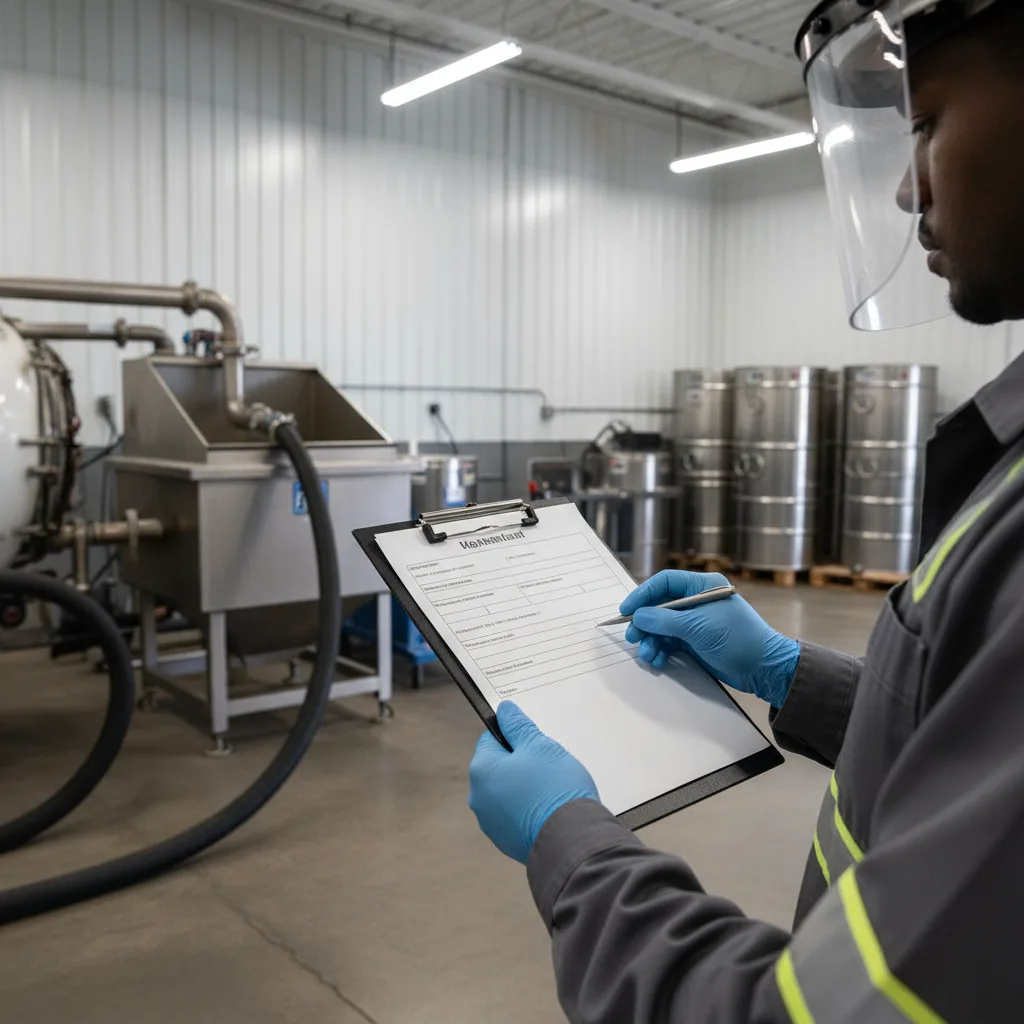

Opening a restaurant means navigating health permits, zoning approvals, and fire inspections, and grease trap installation and FOG (fats, oils, and grease) management belong on that list too. Missing a requirement can hold up your opening, and fines can be steep: in Toronto, a corporation convicted under the Sewers By-law can be fined up to $100,000. This checklist walks you through the main grease trap steps to check with your local authority before you flip your "Open" sign.
Understanding New Restaurant Grease Trap Requirements
Many cities, including Toronto and Calgary, and regions such as Metro Vancouver, require food service establishments to install a grease trap or interceptor before discharging to the sewer. Requirements vary by location, so check whether a grease trap is required where you are. Some cities require an interceptor for any kitchen that prepares food; Calgary, for example, says there is no minimum amount and it does not give exemptions.
Don't assume a coffee shop or bakery is exempt; some cities cover them too. Before assuming your concept doesn't need FOG management, confirm in writing with your local authority.
FOG rules are mostly local. In the United States, federal pretreatment rules prohibit discharges that cause pass through or interference, including solid or viscous pollutants in amounts that obstruct flow and result in interference. In Canada, check the provincial or territorial and municipal rules that apply. For example, Toronto has a Food Service Establishment Environmental Code of Practice, Metro Vancouver has Food Sector Grease Interceptor Bylaw No. 365, and Calgary's rules are in its Wastewater Bylaw. Hydromechanical interceptors are rated by flow; gravity interceptors are sized under the local plumbing or building code. Your local authority will say which type and standard it accepts.
Pre-Construction Planning and Permit Requirements
The time to address grease trap compliance is during lease negotiation and space planning — not after construction begins. A good first step is to contact your municipal wastewater authority about its FOG requirements. Some cities offer pre-application meetings; ask whether yours does.
It helps to bring your menu, kitchen equipment list (including dishwashers and sinks) and a preliminary plumbing layout. Sizing is based on your fixtures and flow; in Calgary, for example, a licensed plumber determines the size.
Schedule your FOG consultation before signing a lease. Some older buildings lack space for the required interceptor, and retrofitting can add significant cost.
Once sizing is determined, get the required grease trap installation permits before plumbing work begins. Check what the permit covers and whether separate plumbing, building or equipment approvals are also required. Ask what the application needs; it may include drawings and a specification sheet showing the interceptor meets the standard your authority accepts (Toronto, for example, cites CSA B481.1:22). Tenants may also need the landlord's written approval. Ask your local office how long processing takes and apply early.
Installation Standards and Inspection Requirements
Grease interceptor installation must comply with both plumbing codes and local FOG ordinances. Common requirements include proper venting and easy access for maintenance and inspection; your plumbing code and local rules set the details.
Smaller indoor interceptors fill quickly. Toronto, for example, requires hydromechanical units to be serviced at least every four weeks, or sooner if grease and solids reach 25%, and Calgary requires all grease interceptors to be cleaned monthly unless Water Services sets another interval. Larger outdoor interceptors are pumped on a schedule set by local rules; Metro Vancouver, for example, requires pumping every 90 days or when grease and solids exceed 25% of the liquid depth, whichever comes first.
Inspection scheduling varies by jurisdiction. Ask your building or plumbing department which inspections your installation needs. Book inspections early so a missed appointment doesn't hold up your opening.
Establishing Your Maintenance and Record-Keeping System
FOG compliance doesn't end at installation — it's an ongoing operational requirement. Many rules use a 25% threshold. Toronto, for example, combines a 25% threshold with a normal four-week servicing interval for hydromechanical units, and Metro Vancouver requires pumping every 90 days or when grease and solids exceed 25% of the total liquid depth, whichever comes first.
Many rules require you to keep service records; keep dates, what was removed, the service company and disposal receipts. How long you must keep them varies: Toronto requires at least seven years, while Metro Vancouver and Calgary require two years. Check your local rule. Keeping records digitally can make them easier to find when an inspector asks.
Never falsify service records, and use a hauler that meets local rules. Toronto, for example, requires most kitchens to use a provincially approved waste carrier, and Florida regulates grease-waste haulers by statute.
Staff training forms another critical compliance component. Kitchen employees must understand proper waste disposal procedures: scraping plates into trash receptacles before washing, never pouring fryer oil down drains, and using sink strainers consistently. A comprehensive FOG compliance program with regular staff refreshers helps keep these habits in place.
Planning for FOG Compliance Costs
Costs depend on the interceptor type and size, the installation work and local permit fees. Get written quotes from more than one local company and ask your municipality about fees.
Ongoing costs include regular pumping and any emergency calls. Ask local companies for quotes based on your interceptor size and the servicing frequency your local rules require.
Build grease trap maintenance into your monthly P&L as a fixed operating expense rather than treating it as discretionary spending. Deferred maintenance can lead to emergency calls, cleanup bills and penalties.
Some jurisdictions charge additional fees, such as permit or re-inspection fees; Metro Vancouver, for example, can charge re-inspection fees of up to $500. Ask your municipality what applies. Exact costs depend on your interceptor and your city, so get local quotes and fee information before you sign a lease.
Common Compliance Pitfalls for New Operators
One pitfall is opening without every permit or approval your city requires. Confirm before opening that nothing is outstanding. Some operators also assume their landlord's existing interceptor satisfies their compliance obligations without verifying capacity and maintenance status.
Equipment misuse creates another violation pathway. Some rules bar connecting garbage disposals to a grease interceptor; Toronto, for example, says not to connect them unless they discharge to a solids interceptor first. Ground solids settle in the interceptor and fill it faster. Some cities restrict additives. Calgary prohibits enzymes, bacteria, emulsifiers, solvents, hot water or any other agent in a grease interceptor, and Toronto says not to use chemicals or other agents to help grease pass through. Check your local rules before using any additive.
In cold climates, ask your installer or service company whether an outdoor interceptor needs any winter precautions.
Frequently Asked Questions
Do I need a grease trap if I'm only operating a coffee shop with light food service?
Requirements vary by municipality. Some cities, such as Calgary, give no exemptions for any site that prepares food. Always confirm with your local wastewater authority in writing before assuming you are exempt.
How long does grease trap permit approval take?
It varies by jurisdiction and by how complete your application is. Ask your local office for current timelines and apply early in your construction schedule.
Can I use the previous tenant's grease trap for my new restaurant?
Possibly, but check first. The existing interceptor must meet current rules, be sized for your flows and be in good condition. Some cities can require a new interceptor if the existing one is not adequate; ask your local authority what it needs from a new operator.
What happens if I fail my first FOG compliance inspection?
It depends on your city. You'll need to fix the problems and may face a re-inspection, fees or fines. For example, Calgary's Wastewater Bylaw lists fines of $500 to $1,500 for failing to maintain or clean a grease interceptor.
Are grease trap costs tax deductible?
In the United States, IRS rules generally require improvements to be capitalized, while routine repairs and maintenance are generally deductible. Rules differ in Canada. Ask your accountant how they apply to your business.
FOG compliance might seem overwhelming during your restaurant launch, but establishing proper systems from day one protects your investment and prevents costly violations down the road. From permit applications through ongoing maintenance scheduling, treating grease management as a core operational requirement, not an afterthought, helps you get through inspections without surprises. Find grease trap services in your area at https://www.greasetraplocator.com and compare local companies.

Author: Grease Trap Locator Editorial Team
The Grease Trap Locator editorial team covers FOG compliance, grease trap maintenance, and commercial kitchen regulations across the US and Canada. Our guides are written for restaurant owners, facility managers, and food service operators who need practical, accurate information without the fluff.
Find local contractors who handle cleaning, pumping, and FOG compliance — in your area.