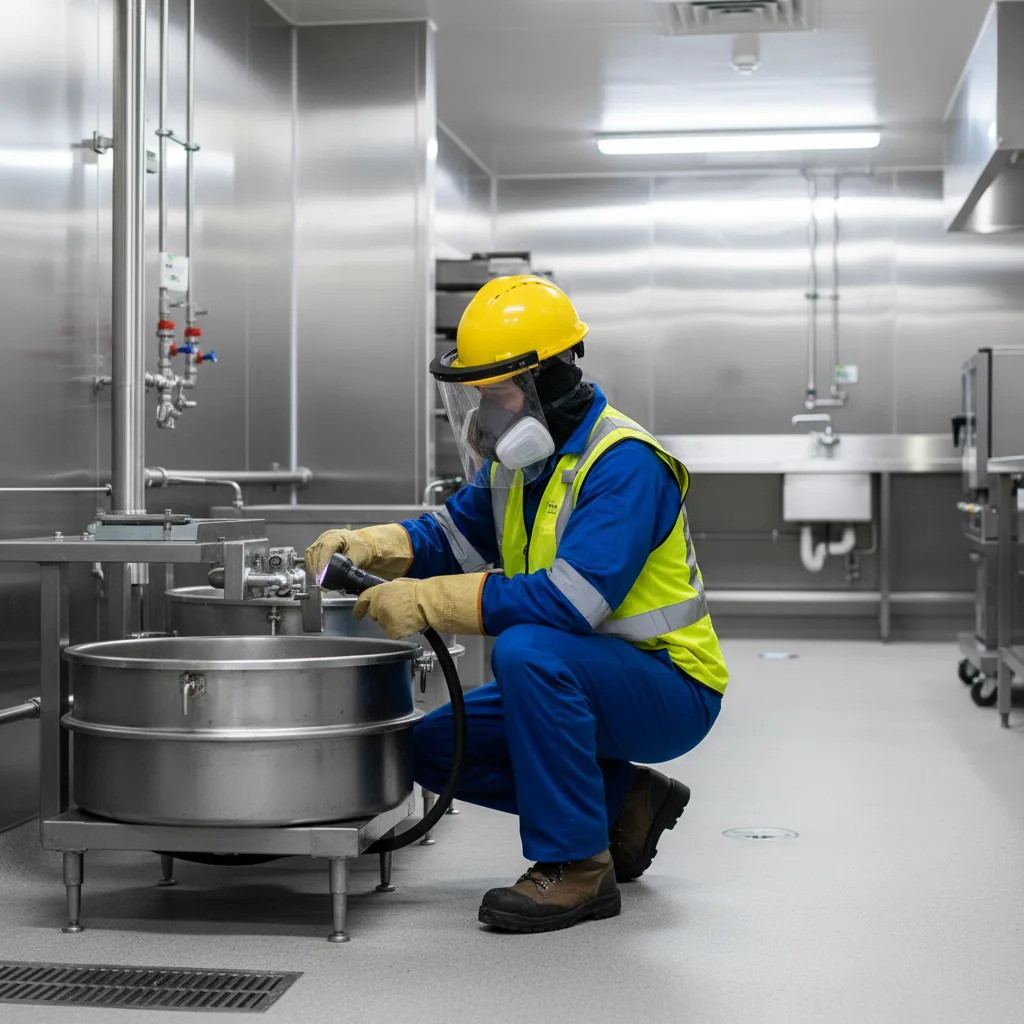
Institutional kitchens in schools, hospitals, nursing homes, and government facilities face the same grease management challenges as restaurants — but with stricter regulatory scrutiny and higher stakes for compliance failures. These high-capacity operations produce substantial FOG (fats, oils, and grease) waste while serving vulnerable populations who cannot afford service disruptions. This guide covers grease trap requirements, sizing considerations, and maintenance protocols specifically designed for institutional food service environments.
Why Institutional Kitchens Require Different Grease Management Approaches
Unlike commercial restaurants that operate for profit, institutional kitchens serve captive populations with fixed meal schedules and budget constraints. A hospital cafeteria cannot simply close for repairs when a grease trap fails, and a school district cannot afford emergency plumbing costs that drain educational budgets. Most municipalities classify these facilities under the same regulations that govern restaurants in the broader commercial food service industry, but enforcement often focuses more heavily on institutions because of their public funding and community impact.
Hospital kitchens typically operate 24/7 with multiple serving lines, dietary departments, and patient meal preparation areas. Schools may serve breakfast and lunch to hundreds or thousands of students daily, with peak loads concentrated in narrow windows. These operational patterns create unique grease accumulation profiles that standard restaurant-sized equipment may not handle effectively.
Correctional facilities, military bases, and university dining halls add another layer of complexity with extended hours and varied menu offerings. Many institutions also lack dedicated facilities staff with grease trap expertise, relying instead on contracted maintenance providers who may not prioritize preventive service.
Federal, State, and Local Grease Trap Requirements for Public Institutions
Institutional food service facilities must comply with the same foundational regulations that apply to all commercial kitchens, but public funding sources often impose additional requirements. The EPA's guidelines for FOG management apply nationally, while state plumbing codes establish minimum trap sizing and installation standards. Local sewer authorities typically enforce the most stringent rules through permits that specify maintenance schedules, discharge limits, and documentation requirements.
Understanding whether your facility requires a grease trap starts with evaluating your daily meal volume and preparation methods. Schools serving more than 150 meals per day almost universally require interceptor systems, while smaller facilities may qualify for passive traps. Hospitals with multiple kitchens often need separate systems for dietary services, cafeterias, and floor kitchenettes — each sized according to fixture unit calculations.
Public institutions receiving federal nutrition program funding (like USDA school meal programs) face additional oversight. Health department inspections specifically check grease trap maintenance records, and violations can jeopardize program eligibility and reimbursement rates.
Most jurisdictions require institutional kitchens to maintain pumping logs, inspection certificates, and waste manifests for minimum retention periods of three to seven years. These documents must be available during health inspections and often require submission to multiple regulatory agencies. Schools typically coordinate compliance through facilities departments, while hospitals assign responsibility to plant operations or environmental services teams.
Proper Sizing and Capacity Planning for High-Volume Operations
Undersized grease traps represent the most common compliance failure in institutional settings. Standard sizing formulas based on fixture units work for restaurants with predictable service patterns, but institutional kitchens experience dramatic load variations. A school cafeteria might process 80% of its daily volume between 11:00 AM and 1:00 PM, creating surge conditions that overwhelm marginally-sized equipment.
Professional engineers use several calculation methods to size institutional grease interceptors:
Flow rate method: Measures peak drainage volume in gallons per minute from all connected fixtures. Hospital kitchens typically require 2-4 minute retention times at peak flow, while schools need 3-5 minutes. A cafeteria draining 50 GPM requires minimum capacity of 150-250 gallons.
Meals-per-day method: Estimates grease load based on food service volume. Industry standards suggest 0.75 to 1.5 gallons of interceptor capacity per meal served. A school serving 800 lunches daily needs 600-1,200 gallons of effective capacity, depending on menu composition and preparation methods.
Fixture unit method: Assigns drainage values to each connected fixture and calculates total load. This approach works best for smaller institutional kitchens with straightforward plumbing configurations but often underestimates requirements for high-volume facilities.
Add 25-30% capacity buffer to calculated minimums for institutional applications. This margin accommodates special events, menu changes, and equipment upgrades without requiring system replacement. Hospital kitchens should plan for 50% buffer to handle emergency capacity needs.
Location matters significantly in institutional settings. Exterior in-ground interceptors handle larger capacities but require accessible maintenance access that doesn't disrupt patient care or student activities. Interior under-sink traps work for satellite kitchens and beverage stations but need more frequent service. Many institutions use hybrid approaches with large primary interceptors and point-of-use devices for specific high-grease applications.
Maintenance Protocols and Service Frequency Requirements
Institutional grease traps require more frequent maintenance than restaurant systems because consequences of failure affect public health and safety. Most codes require pumping when grease and solids accumulate to 25% of total capacity, but best practice for schools and hospitals calls for service before reaching 20% — particularly during high-use periods.
The cost of preventive grease trap maintenance represents roughly 2-3% of total kitchen operating expenses — while emergency repairs and downtime can consume 15-20% of annual budgets.
Typical service intervals by institution type:
K-12 schools: Monthly service during school year, quarterly during summer. Weekly inspections by staff for overflow conditions. Many districts schedule maintenance during breaks to avoid disrupting meal service.
Hospitals: Bi-weekly to monthly service depending on capacity and census levels. Emergency backup plans required because kitchen shutdowns directly impact patient care. Larger facilities often maintain service contracts with guaranteed response times.
Universities: Weekly to bi-weekly for main dining halls, monthly for smaller facilities. Service schedules coordinate with academic calendar to address peak loads during terms and reduced maintenance during breaks.
Nursing homes: Monthly service with weekly staff monitoring. These facilities face particular scrutiny because residents depend entirely on uninterrupted food service, and regulatory violations can trigger license actions.
Staff training significantly impacts system performance. Kitchen employees should understand what materials can safely enter drains, how to use strainers and scrapers properly, and when to report potential problems. Many violations occur because untrained staff discard grease improperly or ignore early warning signs of trap failure.
Budget Considerations and Long-Term Cost Management
Institutional purchasers typically evaluate grease management systems through total cost of ownership rather than initial purchase price. A larger interceptor costs more to install but requires less frequent pumping and delivers longer service life — often the more economical choice over 10-15 year planning horizons.
Budget planning should account for regular pumping ($150-$500 per service), annual inspections ($200-$400), minor repairs ($300-$800), and eventual replacement ($8,000-$25,000 for large interceptors). Many institutions find that automated grease recovery devices reduce long-term costs despite higher upfront investment because they eliminate pumping expenses and minimize labor requirements.
Grant funding and energy efficiency programs sometimes offset costs for institutional upgrades. School districts may access facilities improvement bonds, while hospitals can often capitalize major equipment purchases through plant operations budgets. Some municipalities offer rebates for high-efficiency grease management systems that reduce burden on wastewater treatment infrastructure.
Frequently Asked Questions
Do small school kitchens that only reheat prepared foods need grease traps?
Most jurisdictions require grease traps for any commercial food service facility discharging to municipal sewers, regardless of whether cooking occurs on-site. Satellite kitchens reheating pre-cooked meals typically need smaller capacity systems than full production kitchens, but exemptions are rare. Check with your local health department and sewer authority for specific requirements, as some areas exempt facilities serving fewer than 50 meals daily or those using only convection ovens and microwaves.
Can hospitals use the same grease trap for multiple kitchen areas?
Consolidating multiple kitchen drains into a single large interceptor is technically possible and often more cost-effective than installing separate units. However, plumbing configurations must ensure proper flow rates and retention times for all connected fixtures. Many hospitals use one primary interceptor for the main cafeteria and dietary kitchens, with smaller point-of-use devices for floor pantries and beverage stations. This approach balances maintenance efficiency with compliance requirements.
What happens if a school's grease trap fails during the academic year?
Grease trap failures require immediate response because schools cannot suspend meal service for students who depend on nutrition programs. Emergency protocols should include backup kitchen facilities, temporary trap systems, or expedited repair contracts with guaranteed response times. Most school districts maintain relationships with multiple service providers to ensure availability. Violations resulting from trap failure can trigger health department citations that require costly remediation and public disclosure.
How do institutional kitchens handle grease trap requirements differently than restaurants?
Institutional facilities face more stringent documentation requirements because of public funding oversight and their service to vulnerable populations. They typically need larger capacity systems to handle peak loads during compressed serving periods, more frequent inspections to maintain continuous operation, and backup plans that restaurants don't require. Budget processes also differ significantly — institutions plan maintenance costs years in advance through capital and operating budgets rather than managing expenses month-to-month like restaurants.
Are automated grease recovery systems worth the investment for institutional kitchens?
Automated systems cost 2-3 times more than conventional interceptors initially but can deliver 30-40% lower total ownership costs over their service life. They work particularly well for hospitals requiring 24/7 operation and schools with limited facilities staff. These systems automatically separate and collect grease, reducing pumping frequency from monthly to quarterly or less. The decision depends on meal volume, available maintenance labor, and long-term budget planning — facilities serving 1,000+ meals daily typically see ROI within 4-6 years.
Institutional kitchens require grease management solutions that balance regulatory compliance, operational reliability, and fiscal responsibility. Whether you're managing a school cafeteria, hospital dietary department, or any other public food service facility, professional assessment and regular maintenance protect your investment while ensuring uninterrupted service to the communities you serve. Find verified grease trap services in your area at https://www.greasetraplocator.com.
Find verified, local contractors who handle cleaning, pumping, and FOG compliance — in your area.
