Grease Traps for Restaurants: Requirements, Sizing, and What to Expect

25 Apr 2026 8 min read No comments Grease Trap Basics
Featured image


Most restaurants require a grease trap — either by local plumbing code, municipal wastewater ordinance, or both. The right grease trap for your restaurant depends on your kitchen's fixture count, menu type, and wastewater discharge volume, but all commercial kitchens handling animal fats or cooking oils need some form of FOG (fats, oils, and grease) capture. Here's what you need to know about requirements, sizing, installation, and ongoing compliance.

Why Restaurants Need Grease Traps

Grease traps prevent fats, oils, and grease from entering municipal sewer systems. Without a grease trap, FOG accumulates in sewer lines, causing blockages, backups, and environmental contamination. When wastewater flows through a grease trap, the device slows the water velocity, allowing grease to cool, rise to the surface, and separate from wastewater. Solids settle to the bottom, and cleaner water exits to the sewer.

Commercial kitchens produce significant FOG volumes daily. Fryers, griddles, dishwashers, and prep sinks all discharge grease-laden water. Most municipalities hold restaurant owners legally responsible for sewer line blockages caused by FOG discharge. Fines for non-compliance range from $500 to $25,000 per violation, and repeat offenses can result in permit suspensions. Our FOG compliance guide covers enforcement practices across major U.S. cities.

Important
Cities like Los Angeles, New York, and Chicago require grease trap permits and regular inspection records. Operating without proper permits can result in immediate closure orders until compliance is achieved.

The legal requirement isn't universal across all restaurant types. Coffee shops that only brew beverages and bakeries that don't fry or cook with oils may be exempt in some jurisdictions. However, any kitchen that prepares meat, uses deep fryers, or operates commercial dishwashers typically falls under grease trap requirements. To determine if your specific operation needs one, review our resource on is a grease trap required for your restaurant.

Types of Grease Traps for Restaurant Kitchens

Restaurants use two main categories of grease capture devices: traditional grease traps and grease interceptors. Traditional grease traps are smaller units (typically 10–100 gallons) installed under sinks or directly adjacent to fixtures. These handle individual fixture loads like three-compartment sinks or prep stations. Grease interceptors are larger systems (500–2,000+ gallons) installed outside the building or in mechanical rooms, treating wastewater from the entire kitchen.

Under-sink grease traps work well for smaller operations with limited fixture counts. These units sit directly beneath prep sinks or dishwashing stations, capturing grease before it enters the drain line. Installation is straightforward, but these traps require weekly or bi-weekly cleaning due to limited capacity. Chain restaurants and ghost kitchens often use under-sink models when space is limited.

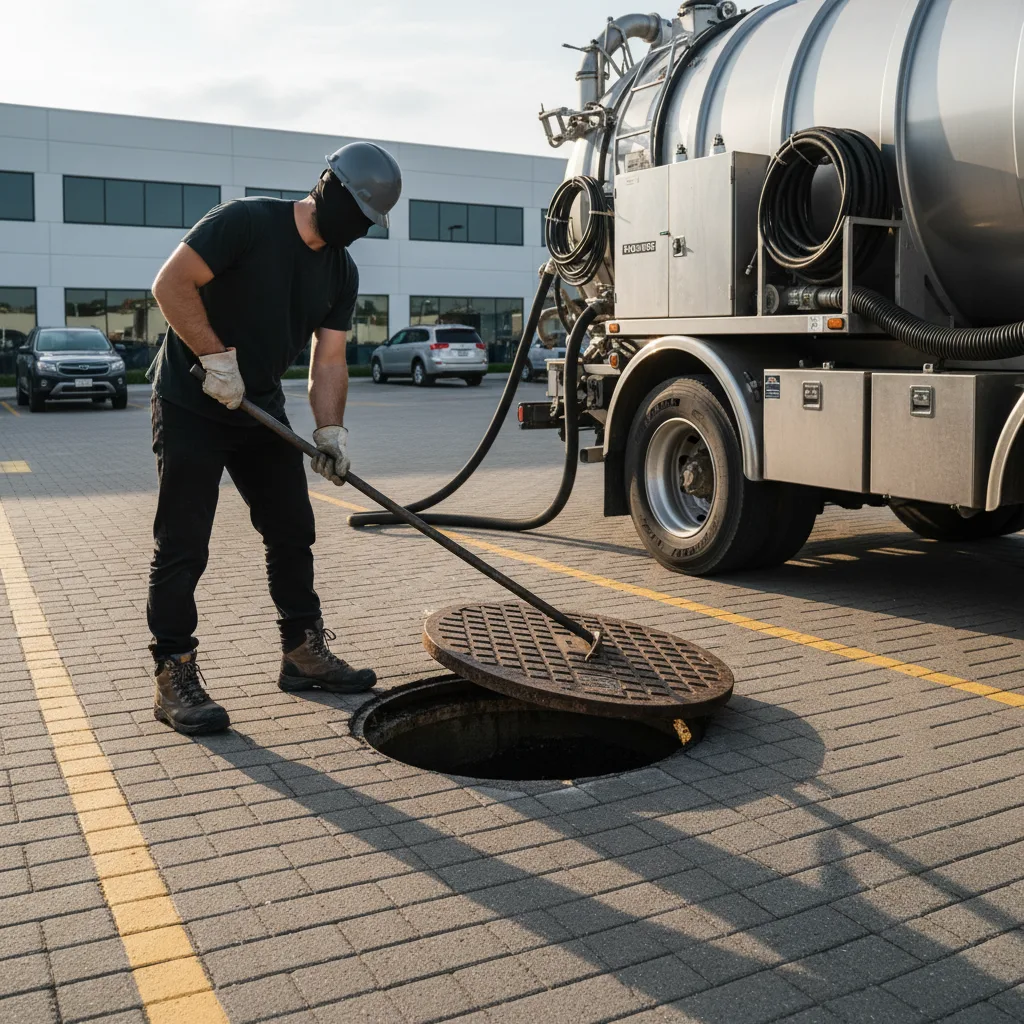
In-ground grease interceptors handle higher flow volumes and serve entire kitchens. These units are installed underground in parking lots or service areas, connected to all kitchen drains through a single waste line. While more expensive upfront, in-ground interceptors require less frequent pumping (typically monthly or quarterly) and comply with stricter municipal flow requirements. Most full-service restaurants with fryers and high-volume dishwashers need interceptor-level capacity.

Best Practice
Match your grease trap type to your building infrastructure. Retrofitting an existing restaurant often requires under-sink units due to concrete slab limitations. New construction should plan for in-ground interceptors when kitchen volumes exceed 50 meals per day.

Automatic grease removal units (AGRUs) represent a newer technology gaining traction in high-volume operations. These systems use mechanical skimmers to remove accumulated grease automatically, reducing manual cleaning frequency. While AGRUs cost more initially, they lower long-term labor costs and reduce the risk of overflow violations. Fast-casual chains with consistent daily volumes see the fastest return on investment with automatic systems.

How to Size a Grease Trap for Your Restaurant

Grease trap sizing depends on three factors: fixture flow rate (gallons per minute), trap retention time (typically 20–30 minutes), and storage capacity for accumulated grease. Undersized traps overflow during peak service, sending grease directly to the sewer. Oversized traps cost more upfront and may not function efficiently if flow rates are too low to trigger proper separation.

The most common sizing method uses fixture unit counts. Each kitchen fixture — sinks, dishwashers, mop sinks — has an assigned fixture unit value based on its drain size and expected flow. Local plumbing codes specify minimum trap capacity based on total fixture units. For example, a kitchen with 12 fixture units might require a 40-pound grease trap (approximately 20 gallons) under one jurisdiction, but a 75-pound trap (approximately 37 gallons) under another.

Proper grease trap sizing prevents 90% of compliance violations. An undersized trap fails during peak hours; an oversized trap develops odor problems from insufficient flow turnover.

Menu type significantly affects sizing requirements. A pizzeria using minimal frying oil needs less capacity than a fried chicken restaurant with identical fixture counts. Most codes include a "grease factor" multiplier for high-grease operations. Kitchens with char-broilers, wok ranges, or multiple fryers should size traps 25–50% larger than baseline calculations suggest. Our detailed grease trap sizing guide walks through calculation methods for different restaurant types.

Don't rely on generic online calculators. Work with a licensed plumber or kitchen consultant who understands local code requirements. Many cities require engineering stamped drawings for grease interceptors over 500 gallons. Submitting incorrect sizing calculations delays permit approval and pushes back construction timelines.

75%
of restaurant sewer backups stem from inadequate grease trap maintenance, not improper sizing — according to EPA municipal wastewater studies

Installation Requirements and Costs

Grease trap installation requires plumbing permits, inspection approval, and coordination with wastewater authorities. Most jurisdictions won't issue a restaurant operating permit until the grease trap passes final inspection. Plan for 2–6 weeks between installation and approval, depending on inspector availability and municipal workload.

Under-sink grease trap installation typically costs $800–$2,500 per unit, including the trap, labor, and basic plumbing modifications. These installations take 4–8 hours and rarely require structural changes. In-ground grease interceptor installation costs $5,000–$15,000 for standard installations, with expenses rising to $25,000+ for large-capacity systems requiring excavation, concrete work, and lift station integration. Detailed cost breakdowns are available in our grease trap installation cost resource.

Location matters. Traps must be accessible for cleaning but close enough to fixtures to maintain proper drain slope (typically 1/4 inch per foot). Under-sink traps require cabinet modifications. In-ground interceptors need vehicle access for pump trucks and must be positioned to avoid utility line conflicts. Site complications like shallow bedrock, high water tables, or restrictive easements increase installation costs significantly.

Best Practice
Install grease traps with removable risers that extend to finished grade. Flush-mount lids simplify access for cleaning and reduce trip hazards in high-traffic areas. Spring-loaded lids prevent unauthorized disposal of waste materials into the interceptor.

Expect ongoing operating costs beyond installation. Grease trap pumping runs $100–$400 per service for under-sink units (every 2–4 weeks) and $250–$800 per service for interceptors (monthly to quarterly). Annual compliance costs — including manifest tracking, inspection fees, and FOG program permits — add another $500–$2,000 depending on your municipality. Budget 3–5% of your monthly wastewater costs for grease trap maintenance and compliance.

Maintenance and Compliance Expectations

Grease traps require regular pumping, cleaning, and inspection to function properly and meet code requirements. Most jurisdictions mandate pumping when the trap reaches 25% capacity — the "25% rule." Waiting until a trap is completely full violates most FOG ordinances and increases the risk of backups during peak service hours.

Daily operational maintenance includes scraping plates before washing, using sink strainers to catch food solids, and avoiding chemical drain cleaners that emulsify grease (causing it to pass through the trap). Train kitchen staff to recognize warning signs: slow draining fixtures, persistent odors near floor drains, and gurgling sounds when water flows. These symptoms indicate a trap approaching capacity or a downstream line blockage.

Documentation is non-negotiable. Maintain service manifests, pumping receipts, and inspection reports for at least three years. Many cities conduct random audits, and missing documentation results in fines even if your trap is properly maintained. Digital record-keeping systems integrated with your grease trap service provider simplify compliance and provide audit trails. Our complete guide to grease traps covers record-keeping best practices for multi-unit operators.

Enzyme and bacteria additives marketed as "grease trap maintenance" products don't eliminate pumping requirements and may violate local codes. These products can emulsify grease, allowing it to pass through the trap and accumulate in sewer lines. Most wastewater authorities explicitly prohibit enzyme additives. Stick with mechanical pumping and proper kitchen practices.

Frequently Asked Questions

What size grease trap does a restaurant need?

Restaurant grease trap size depends on fixture units, flow rate, and local code requirements — typically ranging from 20 to 100 gallons for under-sink units and 500 to 2,000 gallons for in-ground interceptors. A full-service restaurant with fryers usually needs at least a 1,000-gallon interceptor, while a small café might only require a 40-gallon under-sink trap.

How often do restaurant grease traps need to be cleaned?

Under-sink grease traps require cleaning every 1–4 weeks, while in-ground interceptors need pumping every 30–90 days, depending on kitchen volume and trap size. Most codes require pumping when grease and solids reach 25% of total capacity. High-volume operations with heavy frying should clean traps at the shorter end of these ranges.

Can a restaurant operate without a grease trap?

No, most restaurants cannot legally operate without a grease trap if they prepare food involving fats, oils, or grease. Exceptions exist for operations like coffee shops or bakeries that don't cook with oils, but full-service restaurants, fast-food establishments, and any kitchen with fryers must have FOG capture systems to comply with plumbing codes and wastewater ordinances.

What happens if a restaurant doesn't maintain its grease trap?

Restaurants that fail to maintain grease traps face fines from $500 to $25,000 per violation, potential closure orders, and liability for municipal sewer repair costs. Unmaintained traps overflow during service, causing backups in the kitchen and potentially contaminating the municipal sewer system. Repeat violations can result in operating permit suspension.

Do food trucks need grease traps?

Food trucks typically don't need onboard grease traps but must discharge wastewater at approved dump stations equipped with grease interceptors. Mobile operations cannot dump wastewater into storm drains or onto the ground. Some municipalities require food trucks to maintain service contracts with commissary kitchens that have proper FOG capture systems.

Find verified grease trap services in your area at https://www.greasetraplocator.com.

Grease Trap Locator Editorial Team
Author: Grease Trap Locator Editorial Team

The Grease Trap Locator editorial team covers FOG compliance, grease trap maintenance, and commercial kitchen regulations across the US and Canada. Our guides are written for restaurant owners, facility managers, and food service operators who need practical, accurate information without the fluff.

Need a Licensed Grease Trap Service?

Find verified, local contractors who handle cleaning, pumping, and FOG compliance — in your area.

Find a Verified Contractor
In This Article
Find a Grease Trap Contractor

Search our directory of verified licensed FOG contractors serving your area.