-
Schier Great Basin Interceptors: Current Models and Documents
This guide summarizes current Schier Great Basin documents without ranking the brand or prescribing a restaurant size. Schier's product line includes base models and alternate configurations whose ratings are not…
by Grease Trap Locator Editorial TeamMay 17, 2026Updated No comments -
Endura Grease Interceptors: Current Models and Official Documents
This guide is a map to current Canplas Endura product documents, not a restaurant-size prescription or an installed-price estimate. Endura specifications vary by model, material and installation configuration. Confirm the…
by Grease Trap Locator Editorial TeamMay 17, 2026 No comments -
Watts Grease Interceptors: Current WD and GI-K Documents
This guide separates three current Watts document families—WD, WD-A and GI-K—so their names and specifications are not mixed. It does not choose a restaurant size, predict installed cost or replace…
by Grease Trap Locator Editorial TeamMay 16, 2026 No comments -
Grease Trap Service Near Me: How to Compare Written Proposals
A company name, badge, public permit entry, or insurance certificate does not by itself prove that a provider is suitable for a particular grease trap job. Compare current written proposals…
by Grease Trap Locator Editorial TeamMay 15, 2026 No comments -
Grease Trap Baffle Replacement: Model-Specific Parts and Safe Service
Grease interceptor internal parts are model-specific. Some designs use removable baffle assemblies, some use flow-control plates or other components, and the number, position, material, and fastening method can differ. Do…
by Grease Trap Locator Editorial TeamMay 14, 2026 No comments -
Grease Trap Lid Replacement: How to Match the Cover and Protect the Opening
A grease interceptor cover is a safety component, not a generic lid. The correct replacement depends on the exact interceptor model, frame, gasket, fasteners, installation, and the loads the cover…
by Grease Trap Locator Editorial TeamMay 13, 2026 No comments -
Grease Trap Planning for Fast-Food Restaurants
A fast-food grease-control plan should start with the real menu, fixtures, peak operations, and local rules—not a national size or pumping schedule. Keep used cooking oil separate from interceptor waste,…
by Grease Trap Locator Editorial TeamMay 13, 2026 No comments -
Cooking Oil Recycling Programs: How to Join and Compare Terms
A commercial cooking-oil recycling program is an arrangement for storing used fryer oil separately and having a collector remove it. The container, pickup timing, fees or rebates, contamination rules, records,…
by Grease Trap Locator Editorial TeamMay 12, 2026 No comments -
Grease Interceptor Capacity: What Gallons Do—and Do Not—Tell You
A gallon label describes liquid capacity for a named product. It does not, by itself, select a grease interceptor for a restaurant or other food-service project. Manufacturer records list liquid…
by Grease Trap Locator Editorial TeamMay 11, 2026Updated No comments -
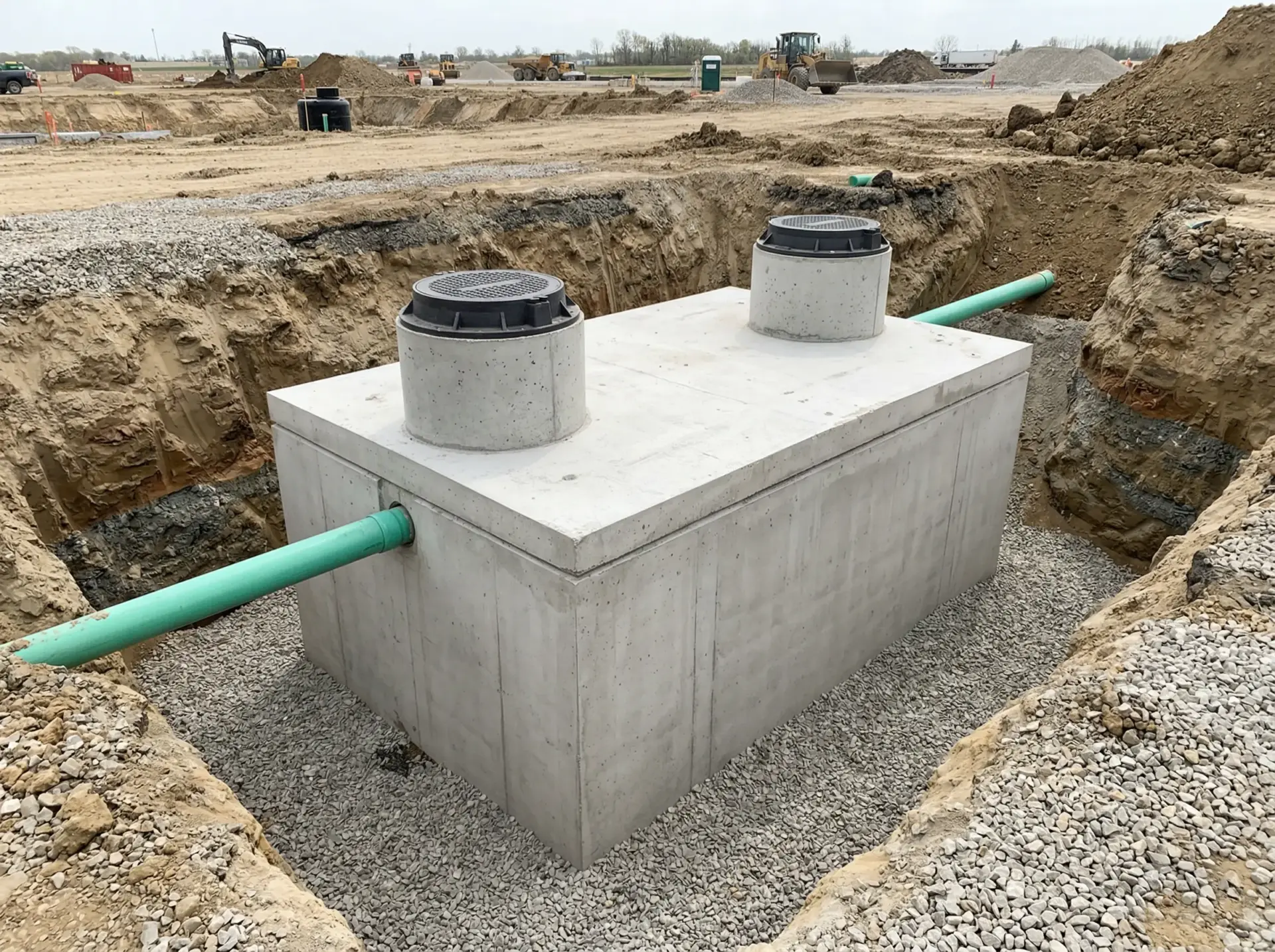
Above-Ground and In-Ground Grease Interceptors: Plan-Review Questions
An above-ground or in-ground label does not select a grease-interceptor configuration for a restaurant. This page does not provide a capacity range, a restaurant-type selector, or installation instructions. Start with…
by Grease Trap Locator Editorial TeamMay 10, 2026Updated No comments -
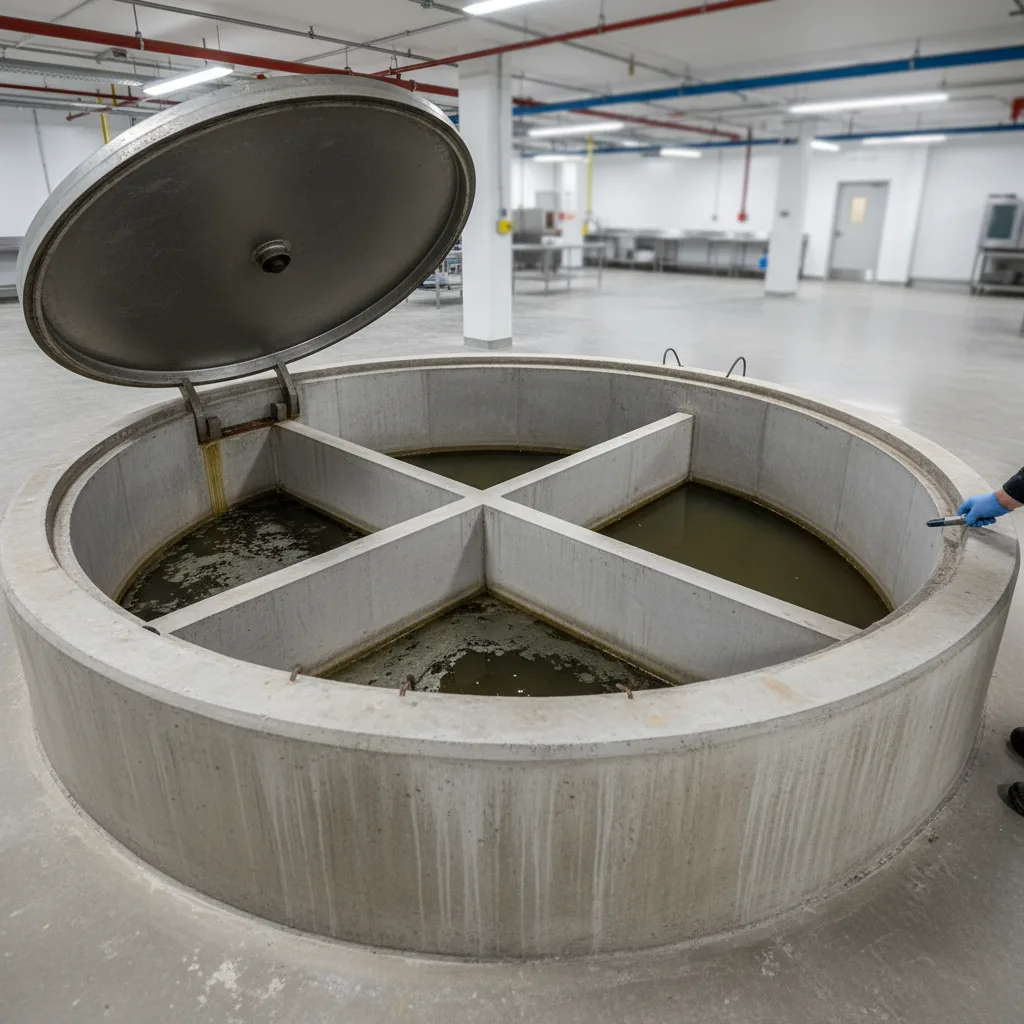
Gravity Grease Interceptors: Local Approval and Documentation Guide
A gravity grease interceptor is one type of grease-interceptor system considered during a commercial food-service project. The approved size, configuration, connected fixtures, and records for a specific project come from…
by Grease Trap Locator Editorial TeamMay 9, 2026 No comments -
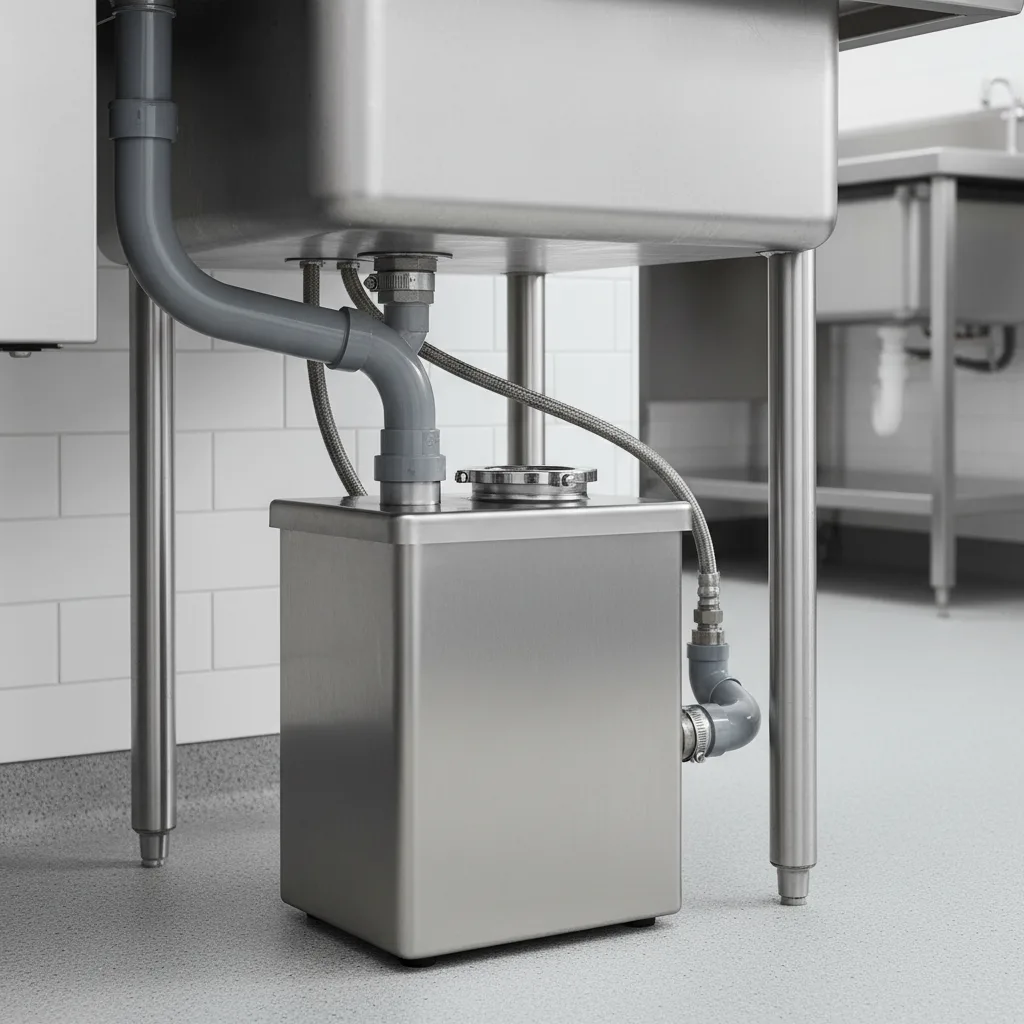
Hydromechanical Grease Interceptors: Ratings, Labels, and Local Approval
The City of Toronto describes a hydromechanical grease interceptor as a small, point-of-source unit. That is a Toronto/Ontario example, not a universal definition. For another project, use the responsible local…
by Grease Trap Locator Editorial TeamMay 9, 2026 No comments