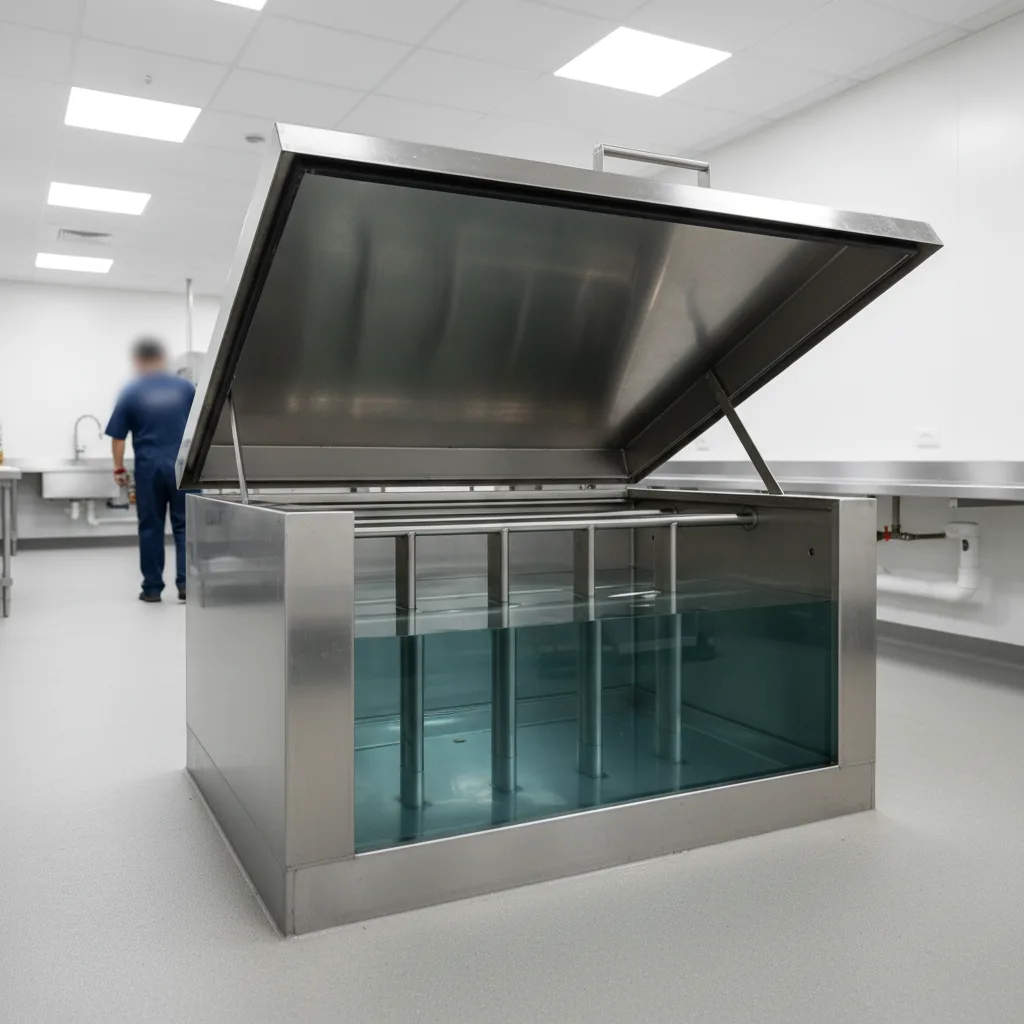

A grease trap does its job silently — until it doesn't. The failure mode for a neglected interceptor is predictable: slow drains, then odors, then backups, then a notice of violation or an emergency pump-out call on a Friday night. None of these are difficult to prevent. What they require is a maintenance program that's consistent, documented, and calibrated to your kitchen's actual output.
If your trap is already overflowing, jump to our Grease Trap Overflow Emergency Checklist — every minute counts.
This guide covers the core maintenance requirements for commercial grease traps: the 25% rule, how to set a service schedule, what professional cleaning includes, what your staff can do between service visits, and how to build documentation that satisfies inspectors. For foundational background, see the complete guide to grease traps.
The 25% Rule: The Standard Cleaning Threshold
The 25% rule is the near-universal industry and regulatory standard for grease trap cleaning. When the combined depth of floating FOG and settled solids equals 25% of the interceptor's total liquid depth, the trap should be serviced.
The logic is straightforward: once FOG and solids occupy more than a quarter of the trap's volume, the effective separation chamber shrinks. Retention time decreases. Grease begins bypassing the interceptor and entering the sewer lateral. At this point, the trap is present but no longer performing its function.
Most regulatory inspectors carry a dipstick to measure fill level on-site. A trap found at or above 25% during an inspection is typically an automatic violation, regardless of how recently it was last serviced. The 25% threshold isn't a suggestion — it's a hard compliance line in most FOG ordinances.
Understanding this threshold also clarifies why a fixed calendar schedule isn't always the right approach. A high-volume fried food restaurant may hit 25% in three weeks. A sandwich shop may take three months. Your cleaning schedule should be calibrated to your actual fill rate, not to a default interval.
How to Set a Cleaning Schedule for Your Operation
The starting point for any maintenance schedule is understanding how quickly your specific trap fills. If you're new to a location, the previous operator's service records are useful baseline data. If you're starting fresh, the general guidance by trap type is:

- Small under-sink hydromechanical interceptors (HGIs): High-volume operations may need weekly or biweekly service. Lighter-use kitchens may stretch to monthly.
- Floor-pit HGIs at moderate volume: Monthly to bimonthly service is typical.
- Large outdoor gravity interceptors (GGIs): Quarterly service is common, though high-volume operations may require more frequent pump-outs.
Monitor fill level between scheduled service visits, especially when you first establish a schedule. If the trap is consistently hitting 25% well before service is due, shorten the interval. If the trap is consistently at 10-15% at service time, you may have room to extend — but confirm this is acceptable under your local ordinance before doing so.
For a detailed breakdown of frequency by kitchen type and trap size, see how often to clean a grease trap.
Warning Signs Your Grease Trap Needs Service Now
Between scheduled visits, your kitchen staff are your first line of detection. Train them to recognize these indicators that the trap needs attention before the next scheduled service:
Slow Drains
If sinks or floor drains in the kitchen are draining noticeably slower than usual, the trap may be at or near capacity. Slow drainage upstream of the interceptor indicates the trap is restricting flow. Don't treat this with drain chemicals — schedule service and investigate the actual fill level.
Odors in the Kitchen
A full grease trap produces hydrogen sulfide gas as FOG and organic matter decompose. The smell is distinctive — sulfurous, like rotten eggs — and tends to intensify during warm weather or when the kitchen is in active use. Persistent drain odors that don't resolve after normal cleaning are a reliable indicator of a trap approaching capacity.
Grease Backing Up Into Sinks
If greasy water or solids are backing up into floor drains or sinks during peak kitchen activity, the trap has likely overflowed its capacity. This is an emergency service situation, not a "schedule it for next week" situation. Call your licensed contractor for same-day or next-day service and document the incident.
Pest Activity Near Drains
A neglected grease trap is an attractive environment for cockroaches, flies, and rodents. If pest activity is concentrated around kitchen drains without another obvious source, the trap's condition may be a contributing factor. Full service and inspection of the trap and drain lines is appropriate in this situation.
For a full breakdown of failure indicators, see signs your grease trap is full.
What Professional Grease Trap Service Actually Includes
Professional grease trap service — also called pumping, pump-out, or cleaning — is more than emptying the tank. A proper service visit by a licensed waste hauler includes:

- Full extraction of floating FOG, middle effluent layer, and settled solids
- Interior cleaning of trap walls, baffles, inlet and outlet components
- Inspection of baffles, lids, and inlet/outlet pipes for damage
- Manifest generation — the signed documentation of waste volumes, hauler identity, and disposal destination
- Waste disposal at a licensed facility — typically a rendering plant or approved FOG processing facility
The manifest is your compliance record. It's what you show an inspector to document that service occurred. Make sure your hauler provides a signed manifest at every visit and that you file it. A verbal "we were here" doesn't satisfy a regulatory inspection.
For a full breakdown of what service costs and what affects pricing, see the grease trap cleaning cost guide. For guidance on choosing a qualified contractor, see how to choose a grease trap company.
Staff Practices That Reduce Maintenance Burden
Every commercial kitchen has two lines of defense against grease trap problems: the interceptor itself and the kitchen staff. Staff practices that reduce FOG entering the drain system directly extend the interval between pump-outs and reduce long-term service costs.
Dry Wipe Before Washing
Train staff to scrape or dry-wipe cookware, plates, and utensils before they go into the sink or dishwasher. Paper towels capture residual FOG that would otherwise enter the drain. This is the single highest-leverage staff behavior for reducing FOG load.
Cooking Oil Disposal
Used fryer oil and cooking oil should never be poured down drains. Store spent cooking oil in sealed containers and arrange for pickup through a licensed cooking oil recycler. Many markets have cost-effective or even free cooking oil collection programs — the oil has commodity value as a biodiesel feedstock.
Avoid Garbage Disposals
Garbage disposals grind food solids into small particles that pass through interceptors more easily and accumulate faster in trap bottoms. If code permits, removing or disabling garbage disposals reduces solid accumulation significantly and extends service intervals.
Cold Water Rinsing
When using the sink near a grease trap, run cold rather than hot water. Hot water liquefies FOG and helps it flow past the trap's separation zone. Cold water keeps FOG solidified, allowing better capture.
Building a Compliant Maintenance Record System
Regulatory inspectors reviewing your FOG compliance expect to see organized records. What should be in your file:
- Signed service manifests from every pump-out, retained for a minimum of three years (confirm your local ordinance for the specific retention period)
- Any inspection records or notices of violation received from your wastewater authority
- Your current grease interceptor permit
- Contractor contact information and current license status
A simple binder or shared digital folder is sufficient. The goal is to be able to produce any record within minutes of an inspection notice. Inability to produce records is itself a violation in many jurisdictions. For the full compliance picture, see the FOG compliance guide.
Maintenance Across Different Trap Types
The maintenance fundamentals are consistent, but the practical details differ by trap type:
Under-Sink Hydromechanical Interceptors
Accessible without excavation. Frequent service — sometimes weekly for high-volume operations — is the norm. Staff can sometimes perform visual checks between professional service, though extraction requires a licensed hauler. For information on pumping specifically, see grease trap pumping explained.
Outdoor Gravity Interceptors
Require access lids and may involve a vacuum truck for extraction. Less frequent service (typically quarterly for most operations) but each service is a more involved operation. Inspect lids and risers periodically for damage — a damaged lid creates both safety and odor problems.
Automatic Grease Removal Units (AGRUs)
Require monitoring of the collection container and periodic mechanical inspection of the skimming system. The collection container must be emptied by a licensed hauler — do not dispose of collected grease as ordinary waste.
Operators in high-activity markets like Dallas, TX typically have access to multiple licensed contractors with flexible service schedules. In less populated markets, scheduling in advance is essential — emergency availability is limited.
Frequently Asked Questions
Log every service visit in a dedicated maintenance binder or digital record: date, contractor name, gallons pumped, and manifest number. Two minutes of record-keeping is your legal protection during inspections.
How often should a commercial grease trap be cleaned?
The threshold-based answer: when FOG and solids reach 25% of the trap's capacity. In practice, cleaning frequency ranges from weekly for small under-sink units in high-volume kitchens to quarterly for large outdoor gravity interceptors in moderate-volume operations. The right schedule depends on your kitchen's FOG output and trap size. Monitor fill levels after establishing a schedule and adjust accordingly.
Can kitchen staff clean the grease trap themselves?
In some jurisdictions and for small under-sink traps, kitchen staff may perform cleaning. However, the extracted grease and solids still require disposal through a licensed waste hauler — you cannot legally dispose of FOG waste as ordinary trash. For large interceptors, professional equipment is required and DIY cleaning isn't practical. Most operators use licensed contractors for all service to ensure proper manifesting and disposal.
What is the 25% rule for grease traps?
The 25% rule is the standard threshold for grease trap cleaning: when the combined depth of floating FOG and settled solids reaches 25% of the interceptor's total liquid depth, the trap should be serviced. Beyond this point, the effective separation volume is too small for adequate FOG capture, grease bypasses the trap, and you're at risk of both compliance violations and sewer lateral blockages.
What chemicals can I use to clean a grease trap?
Most professional guidance advises against using chemical degreasers in grease traps. These products don't remove FOG — they emulsify it, breaking it into small droplets that pass through the trap into the sewer. Biological enzyme treatments may be appropriate as a supplemental maintenance measure between pump-outs, but they don't replace mechanical extraction. Professional service with mechanical pumping is the accepted standard for grease trap cleaning.
How do I keep grease trap service records?
Request a signed manifest from your hauler after every service visit. The manifest should include the service date, volumes removed, hauler name and license number, and disposal destination. File manifests in chronological order and retain them for at least three years (check your local ordinance for the specific retention requirement). Keep your current interceptor permit in the same file. This is your compliance documentation — have it accessible for inspections.
Find verified grease trap contractors in your area — Search the Grease Trap Locator directory

Author: Grease Trap Locator Editorial Team
The Grease Trap Locator editorial team covers FOG compliance, grease trap maintenance, and commercial kitchen regulations across the US and Canada. Our guides are written for restaurant owners, facility managers, and food service operators who need practical, accurate information without the fluff.
Find local contractors who handle cleaning, pumping, and FOG compliance — in your area.